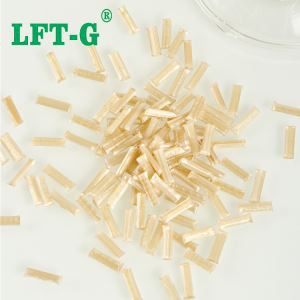

LFT Fiber Automotive Thermoplastic Solutions
Against the backdrop of global energy conservation, emission reduction and the rapid development of new energy vehicles, automotive light weighting has become an important technical direction in the industry. This is not only about improving energy efficiency, but also a key path to achieving the goal of carbon neutrality. Against this backdrop, long-fiber reinforced composites, with their unique performance advantages, are quietly transforming the material landscape of automotive manufacturing, offering a highly competitive alternative to traditional metal materials.
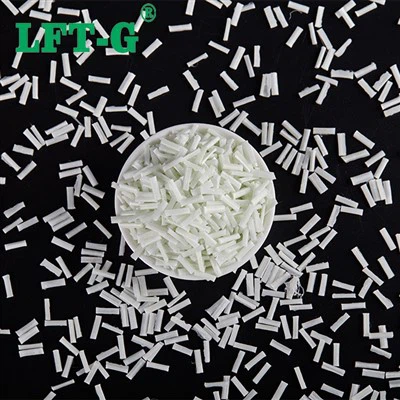
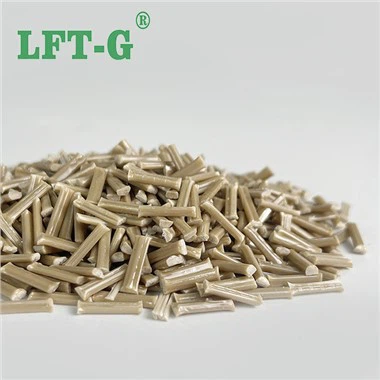
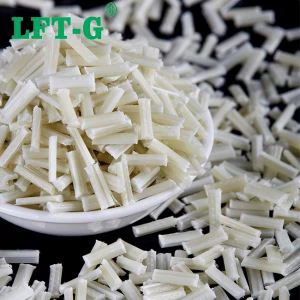
Long fiber reinforced materials are composite materials formed by embedding continuous or long-cut fibers (usually with a length >10mm) into thermoplastic (such as polypropylene PP, nylon PA) or thermosetting resins (such as epoxy resin) as the matrix. Compared with short-fiber reinforced materials, long fibers form a more complete network structure in the matrix, thereby significantly improving the mechanical properties of the material.

What are the core advantages of long fiber materials ?
Outstanding mechanical properties: High strength and high stiffness, Strong bearing capacity.
Good impact resistance: Long fibers can effectively prevent crack propagation.
Excellent corrosion resistance and durability: Long-fiber environments have natural resistance to certain specific environments and are less prone to rusting and other conditions.
Wear resistance: Under dynamic loads (such as suspension components), its lifespan is longer than that of metals.
Light weight: The density is lower than that of metallic materials.
High design freedom:Capable of integrally forming complex structures.
Environmental protection and sustainability: Long fiber pellets can be recycled, which is in line with the concept of environmental protection.
When the fiber length reaches the critical length, its reinforcing efficiency can double or even multiply several times. This has contributed to the superior performance of long-fiber materials. The long fiber materials of LFT®-G have been well-known to many customers. According to the data we provide, the most suitable content of materials can be found more reasonably and effectively. Now, we will share and refer to the technical data of LGF40 PA6 (nylon 6) material as a representative.
Mechanical PropertiesProperty |
Value |
Unit |
Test Standard |
|---|---|---|---|
| Tensile Strength | 180-200 | MPA | ISO 527 |
| Tensile Modulus | 12000-14000 | MPA | ISO 527 |
| Elongation at Break | 1.5-3 | % | ISO 527 |
| Flexural Strength | 280-300 | MPA | ISO 178 |
| Flexural Modulus | 9500-9700 | MPA | ISO 178 |
| Notched Izod Impact Strength | 30-40 | kJ/m² |
ISO 180
|
| Melt Temperature |
243~270
|
°C |

Which auto parts can be made of long fiber materials?
Structural components: front-end module, seat frame, bumper beam, battery bracket
Interior parts: dashboard, door inner panels, center console brackets
Power and chassis components: battery housing, engine hood, oil pan, suspension control arm
Exclusive components for new energy
Battery system: Battery housing (flame retardant, electromagnetic shielding requirements)
Hydrogen fuel storage tank: Long carbon fiber wound reinforced, high pressure resistant and anti-permeation

Viewing Long Fiber Materials From Different Perspectives
From the perspective of materials science, the mystery of long-fiber reinforced composites lies in their unique structural design. This material has created mechanical properties far exceeding those of a single material by organically combining high-strength fibers with a polymer matrix. When the material is subjected to external forces, the fibers bear the main load, while the matrix is responsible for fixing the position of the fibers and transmitting the stress. In practical applications, this type of material demonstrates astonishing properties, featuring high strength while maintaining low density.

In the field of automotive manufacturing, the application of long-fiber composite materials is expanding from individual components to the overall vehicle architecture. BMW began to use carbon fiber reinforced plastic to build the passenger cabin, achieving a significant weight reduction effect. The continuous innovation of production processes has paved the way for the wide application of long-fiber composite materials. These technological advancements are constantly breaking through the bottlenecks in the mass production and application of composite materials.
From the perspectives of economic and environmental benefits, long-fiber composite materials are demonstrating increasingly strong competitiveness. Although the initial material cost may be slightly higher, considering the long-term energy-saving benefits brought by weight reduction, its comprehensive cost advantage gradually emerges. Life cycle assessment indicates that this type of material consumes less energy during the production stage, has a significant emission reduction effect during the usage stage, and also has obvious advantages in recycling and utilization.
Through reasonable material selection, process optimization and design innovation, long-fiber materials can significantly enhance the performance of automotive parts and reduce the full life cycle cost. Multiple perspectives indicate that choosing long-fiber materials as raw materials for automotive parts is a reasonable and driving choice.
Conclusion
This automotive materials revolution led by long-fiber composites is profoundly changing the face of the entire industry. From the initial alternative attempts to today's system applications, every breakthrough has been expanding the boundaries of possibilities in automotive design. Just as a renowned materials scientist once said, the engineering revolution of the 21st century will begin in the microscopic world of materials design. In the journey of automotive light weighting, long-fiber composite materials are writing their own brilliant chapters, contributing unique material solutions to sustainable travel.
The evolution process of this material tells us that technological innovation often stems from the cross-integration of different fields. The development of long-fiber composite materials cannot be separated from theoretical breakthroughs in materials science, but also requires continuous optimization of engineering applications and collaborative innovation among all links of the industrial chain. In the future, with the continuous increase in R&D investment and the accumulation of application experience, such materials are bound to play a more important role in the automotive industry and provide solid technical support for achieving green travel.