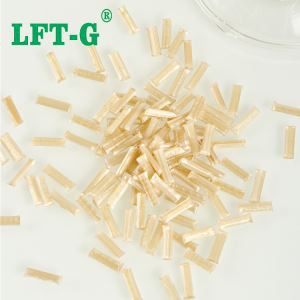

In the field of high-performance modified plastics, most materials are striving for "harder, stronger, and more heat-resistant", such as LGF-PP or LGF-PA. However, the emergence of LGF-TPU (Long Glass Fiber Reinforced Thermoplastic Polyurethane) has broken the paradox in traditional thinking that "high strength" and "high toughness" cannot be achieved simultaneously.
Why was LGF TPU created to solve a certain problem?
To understand LGF-TPU plastic pellet, one must first understand its base material - TPU (thermoplastic polyurethane). TPU is renowned for its excellent elasticity, wear resistance, and oil resistance, and is typically regarded as a "soft" material.
However, in many application scenarios (such as safety shoe caps, mechanical components, sports equipment), pure TPU is too soft and lacks structural support; while traditional rigid plastics (such as nylon, PP) are hard enough, they are prone to cracking at low temperatures and lack texture and resilience.
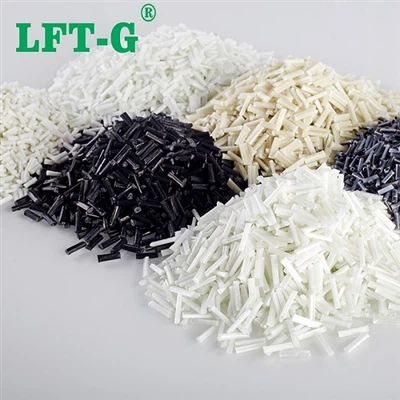
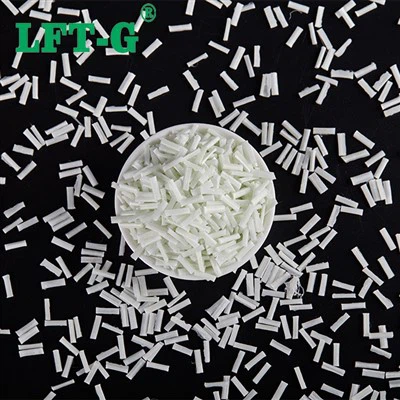
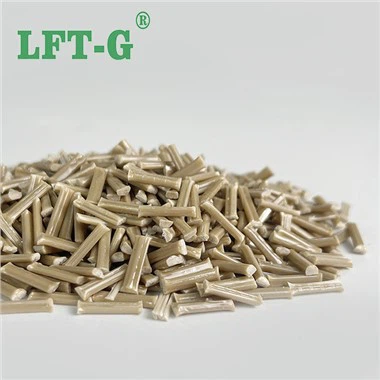
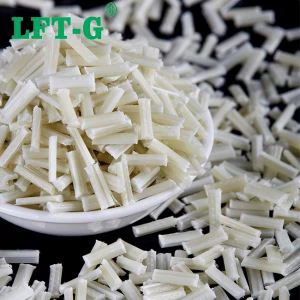
LGF-TPU (long glass fiber reinforced thermoplastic polyurethane) compound resin emerged at the right time. It uses the "pulling process" (Pultrusion) to immerse continuous long glass fibers and seal them within the TPU matrix.
Key difference: Unlike short glass fibers (SGF), the length of LGF is typically maintained at 5-25 mm (with a longer length retained in the final product).
Microstructure: The long fibers are intertwined within the TPU matrix, forming a three-dimensional "skeletal network".
This skeletal network endows the material with the rigidity similar to that of metal, while the TPU matrix retains the flexibility for absorbing impact energy. It is like implanting strong bones (LGF) within the soft muscles (TPU polymer).
LGF TPU: In-depth Analysis of Performance
In industry exchanges, we should not only focus on the data, but also pay attention to the physical behaviors behind the data. The core competitiveness of LGF-TPU is reflected in the balance of the following dimensions:
1. Ultra-high fatigue resistance and dynamic performance
This is the most distinctive feature of LGF-TPU compared to LGF-PP/PA. In environments with repeated bending and high-frequency vibration, materials with excessive rigidity are prone to developing micro-cracks and expanding. However, LGF-TPU utilizes the high elasticity of the matrix to effectively dissipate stress and prevent crack growth.
2. High impact resistance at low temperatures
Ordinary engineering plastics tend to become brittle (subject to glass transition) in low-temperature environments and break easily upon impact. TPU itself has excellent low-temperature resistance, and combined with the reinforcing effect of long glass fibers, LGF-TPU can still maintain extremely high toughness and impact resistance in freezing environments.
3. Coexistence of Rigidity and Soft Touch
Generally, the surface of materials with added glass fibers becomes rough and hard (fiberglass floating problem). However, LGF-TPU, due to the characteristics of its matrix, can maintain a high modulus (resistance to deformation) while still allowing the surface of injection-molded products to retain a relatively soft touch, and it also has certain noise reduction and shock absorption functions.
4. Exceptional creep resistance
Compared to unmodified TPU, the long glass fibers significantly inhibit the sliding of polymer chain segments. This means that when subjected to continuous weight-bearing, the parts made of LGF-TPU will not undergo permanent deformation over time, unlike ordinary rubber or plastic.
The market positioning of GF TPU Material
When introducing LGF-TPU compound resin to customers, we are not merely selling a material, but providing an alternative solution for materials.
1. Replacing metals (plastic instead of steel/aluminum)
Challenges: Metals are heavy, have high processing costs, and are not corrosion-resistant.
Advantages of LGF-TPU: Its density is lower than that of steel, and it can be molded through injection molding in one step, significantly reducing production costs and weight, while still having sufficient structural strength to replace some aluminum alloy castings.
2. Alternative to the secondary molding process of "hard plastic + soft encapsulation rubber"
Challenges: The traditional process requires first injecting a hard framework (such as nylon), and then covering it with a layer of soft rubber (TPE/TPU). The process is complex, and the adhesion is prone to failure. Advantages of LGF-TPU: It is inherently a "soft material with inherent rigidity" or a "hard material with inherent toughness", and can be directly molded in a single process, simplifying the production process.

What is GF TPU Used For?
The application of LGF-TPU composite is not limited to any particular industry. It can be found in any field that involves "strength and balance":
High-end shoe materials (core market):
Safety toe (Safety Toe): A substitute for steel toe. LGF-TPU plastic pellet not only passed the anti-shatter test, but is also lighter than steel toe, does not conduct heat (keeps feet warm in winter), and due to its toughness, it has rebound space after being under heavy pressure and is not likely to trap the toes.
Midsole support plate (Shanks): Provides arch support and resists fatigue fractures.
Automotive industry:
Interior structural components: Shift lever base, door handle frame. They must have structural strength and should not produce sharp fragments that could cause injury in case of fracture.
Chassis system: Shock absorption buffer block, dust cover clamp.
Industries and Tools:
Heavy-duty casters: They can bear greater weight compared to pure TPU wheels, and are quieter and less likely to damage floors compared to nylon wheels. Electric tool handle: Resists breakage upon impact, offers a comfortable grip, and reduces the transmission of motor vibrations.