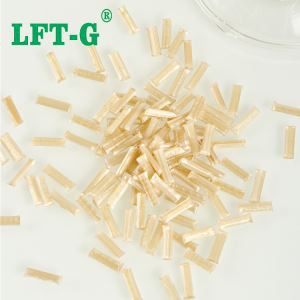

Introducing LGF TPU Material in GF TPU Field
Glass Fiber-Reinforced Thermoplastic Polyurethane (GF TPU) is a high-performance composite material that ingeniously combines the excellent elasticity, wear resistance, and flexibility of thermoplastic polyurethane (TPU) with the high strength, rigidity, and dimensional stability of glass fibers (GF). The emergence of this material has significantly expanded the application boundaries of engineering plastics, especially in demanding conditions where "rigidity and flexibility" are required. GF TPU composite is now becoming a key solution to replace traditional metals, rubber, and other engineering plastics.
Short Glass Fiber (SGF) vs. Long Glass Fiber (LGF)
This is an important industry distinction point:
SGF TPU (short glass fiber): The fiber length is usually less than 1 mm. It is easy to process and has a better surface finish, but the performance improvement is limited. It mainly improves rigidity.
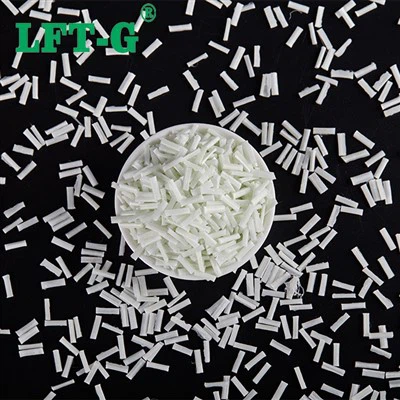
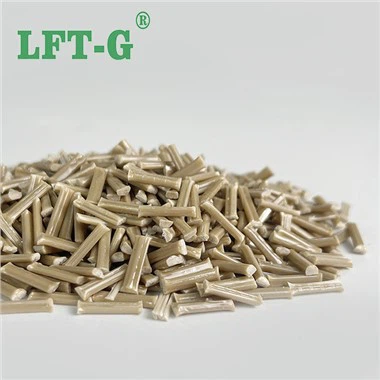
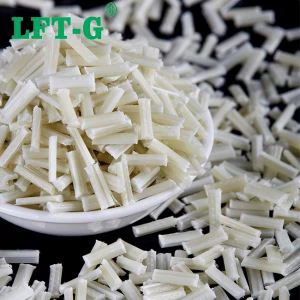
LGF TPU (long glass fiber): The fiber length can be maintained at 5 mm or even more than 25 mm (in the final component). LGF forms a three-dimensional framework structure inside the component, significantly improving impact strength (Impact Strength), creep resistance (Creep Resistance), and fatigue durability (Fatigue Durability). LGF TPU material is the main force for achieving "metal substitution".
What is GF TPU Good For?
Outstanding impact resistance: When the component is subjected to impact, this three-dimensional fiber framework can disperse the impact energy to a larger volume for transmission and absorption, and effectively prevent the expansion of microcracks.
Excellent anti-rust performance: Under long-term continuous loads (such as bolt preload or continuous load-bearing), the fiber matrix of LGF can effectively "support" the entire structure, significantly inhibiting the flow of the polymer matrix, allowing the component to maintain its shape and preload force for a long time.
Outstanding fatigue resistance and durability: When subjected to millions of cycles of load (such as vibration, bending), the fiber network of LGF can effectively inhibit the initiation and propagation of fatigue cracks, enabling its service life to exceed that of SGF composite materials. It is highly suitable for dynamic transmission components or vibration environments.

Lower warping and higher dimensional stability: Although all glass fibers reduce the coefficient of thermal expansion (CLTE), the long fibers of LGF interlock in a more three-dimensional and random manner within the mold cavity, resulting in similar contraction rates in the FD and TD directions. This significantly reduces component warping, making it particularly suitable for manufacturing large and precise structural components.
To shine brightly for various industries
Automotive Industry:
NVH and Chassis: Engine mounts (engine brackets), suspension system bushings, shock absorber covers, spring vibration isolators.
Powertrain and Fluids: Transmission cable connectors, sensor housings, fuel system clips, high-pressure fuel pipe joints.
Structure and Interior/Exterior: Door lock actuators, air suspension system components, pneumatic pipe joints for heavy-duty trucks.
Industrial Manufacturing & Automation:
Heavy-duty components: Heavy-duty casters (industrial/medical), industrial rollers, conveyor belt scrapers.
Power transmission: Couplings, industrial gears, pneumatic grippers (Grippers).
Harsh environments: Mining screen nets, agricultural machinery components, hydraulic seals and joints.
Electronics & Electrical:
Power tools: The casings of high-end power tools (especially LGF TPU).
Cables and connectors: The sheaths of robot and automation conveyor cables, as well as high-durability connector casings.
Sports & Leisure:
Skiing equipment: Buckles, sole plates and rear supports of alpine skiing boots.
Unmanned aircraft and equipment: Arm of unmanned aircraft frame, landing gear, structural components of sports cameras.
LGF TPU: Challenges and Control of Processing Techniques
Absolutely Critical: Drying
TPU has a strong hygroscopic property. If the moisture is not adequately removed before processing, during the high-temperature melting process, the moisture will hydrolyze the TPU polymer chains, resulting in:

Hydrolysis degradation: The molecular weight decreases, and the mechanical properties are severely damaged.
Component defects: Bubbles appear, and even (in LGF TPU) the fibers may be exposed. Therefore, using an efficient dehumidification drying machine for several hours of pre-drying is a mandatory process step.
Wear and Shear
Screw wear: Glass fiber is a highly abrasive material. When processing GF TPU compound resin, a hardened screw and a reverse valve (such as a bimetallic screw) must be used; otherwise, the production line lifespan will be extremely short.
Control shear: Excessive screw rotation speed and back pressure can generate a strong shear force, which is fatal in LGF TPU composite processing - it will excessively disrupt the long fibers, causing them to lose the performance advantages of LGF. Therefore, a "low shear, low back pressure" processing window must be adopted.
Mold Design and Injection
Gate Design: The position and size of the gate directly determine the melt filling pattern, which in turn determines the final orientation of the fibers in the component (as mentioned earlier, this is the anisotropy). Proper mold venting must be implemented to prevent burning or insufficient filling caused by trapped gases (including residual moisture in the material).
Surface Appearance: GF TPU plastic pellet often exhibits a "floating fiber" phenomenon, resulting in a rough surface. This limits its direct application on A-grade appearance components and usually requires post-spraying or the use of special modifications (such as adding surface lubricants).
LGF TPU plastic pellet is a highly engineered material, far from being a simple "plastic with added glass fibers". Its value lies in precisely balancing rigidity, toughness, damping, and durability. A thorough understanding of the chemical differences between polyester and polyether, the microstructure of LGF/SGF, the design constraints brought about by anisotropy, and the stringent processing conditions is crucial for enterprises to successfully utilize this high-performance material as an alternative to metals, reduce costs, and achieve product innovation.