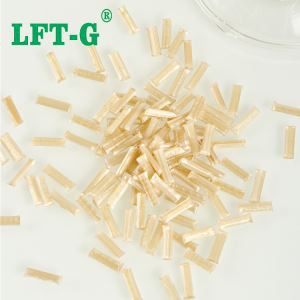


What is LFT Polymer?
LFT (Long-Fiber Reinforced Thermoplastic) polymer is an advanced composite material where fibers longer than 10mm-typically glass, carbon, or basalt-are embedded in thermoplastic matrices like PP, PA, or PPS. First conceptualized in the 1980s, LFT technology gained momentum in the 2000s as automakers sought lightweight metal alternatives. Unlike traditional short-fiber composites, LFT preserves fiber length during processing, delivering 2-3x higher impact strength and 30% better dimensional stability. The global LFT market now serves automotive, aerospace, and consumer goods industries, with innovations like bio-based PA410 driving sustainable manufacturing.
Why LFT Outperforms Conventional Materials?
The magic of LFT lies in fiber critical length (L0). For PP composites, fibers shorter than 3.1mm simply pull out under stress-like weak anchors. LFT maintains fibers >10mm through specialized processing:
- Direct Processing (LFT-D): Fibers are impregnated with molten polymer in-mold, minimizing breakage.
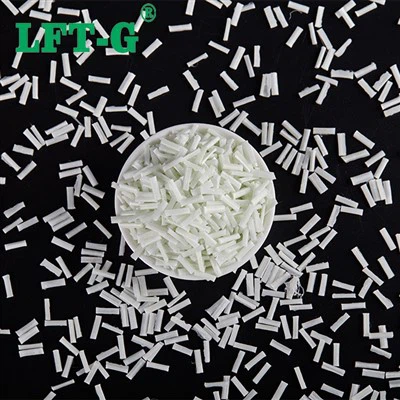
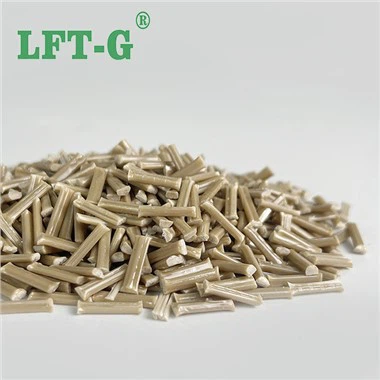
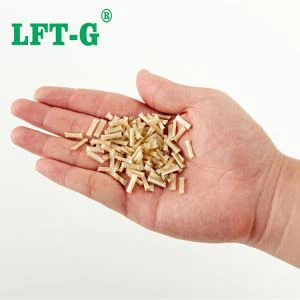
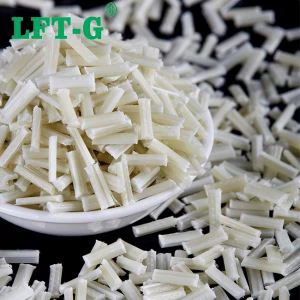
- Granule Form (LFT-G): Pre-cut pellets preserve 5-25mm fibers for injection molding.
This structural integrity enables LFT to achieve 500 MPa tensile strength-rivaling aluminum at 1/3 the weight. Automotive front-end modules using LFT-PP reduce mass by 40% vs steel while absorbing 30% more crash energy.

LFT in Action: Industry Applications
🚗 Automotive: Battery trays, seat frames, door modules (30% lighter than metal)
⚡ Electronics: 5G antenna housings, drone components
🏋️ Sports: Carbon-fiber PA6 ski bindings, bicycle crankarms
🏗️ Construction: Prefab concrete templates, corrosion-resistant pipes

Key Advantages of LFT Polymers
- ⏱️ 50% faster production vs thermoset composites
- ♻️ 100% recyclable - regrind for non-structural parts
- 🌡️ Withstands -40°C to 200°C (PA410 grades)
- 📉 0.2% molding shrinkage vs 1.5% for SMC
Optimize Your Design with LFT Solutions