What is Carbon Fiber
Nylon?
In the world of advanced materials, the quest for components that are both incredibly strong and exceptionally lightweight is relentless. This pursuit has led to the development of remarkable composites, and among the most promising is carbon fiber nylon. This material isn't just a simple mixture; it's a sophisticated synergy between one of the strongest synthetic fibers ever created and one of the most versatile engineering polymers. When this combination is elevated through Long Fiber Thermoplastic (LFT) technology, such as our LFT-G® PA LCF materials, the result is a game-changer for industries from automotive to aerospace.
This article will provide a comprehensive, professional overview of carbon fiber reinforced nylon. We will explore its fundamental composition, differentiate between short and long carbon fiber reinforcements, and detail the exceptional properties that make this composite a superior choice. We will also present a technical comparison showcasing why our LFT-G® carbon fiber nylon series stands out in the competitive landscape of high-performance thermoplastics.
Understanding the Core Components: Carbon Fiber and Nylon
To truly appreciate the composite, we must first understand its constituents. Each brings a unique set of properties to the table, and their combination results in a material that is greater than the sum of its parts.
The Powerhouse: Carbon Fiber
Carbon fiber is a polymer comprised of long, thin strands of carbon atoms. These atoms are bonded together in microscopic crystals that are aligned parallel to the long axis of the fiber. This alignment is crucial, as it gives the fiber its extraordinary strength-to-weight ratio. A single strand is incredibly thin, typically 5–10 micrometers in diameter, which is thinner than a human hair. To form a usable material, thousands of these filaments are twisted together to form a tow, which can then be woven into a fabric or, in our case, co-extruded with a polymer matrix.The key characteristics of carbon fiber include:
- High Stiffness and Tensile Strength: It resists stretching and breaking under tension exceptionally well.
- Low Weight: density significantly lower than steel or aluminum.
- High Chemical Resistance: Most chemicals and solvents.
- Low Thermal Expansion: maintains size/shape on wides range temperatures.
- Excellent Fatigue Resistance: withstands repeated cycles of stress without failure.

The Workhorse: Nylon (Polyamide)
Nylon, the common name for the family of synthetic polymers known as polyamides (PA), is a thermoplastic known for its toughness, durability, and resistance to abrasion and chemicals. It was first commercialized by DuPont in the 1930s and has since become a staple in engineering applications. The numbers associated with nylon, such as in PA6, PA66, or PA12, refer to the number of carbon atoms in the monomers that form the polymer chain. This variation in chemical structure leads to different properties:
- PA6: Known for its good surface finish, elasticity, and toughness.
- PA66: Offers higher mechanical strength, stiffness, and better thermal stability compared to PA6.
- PA12: Exhibits the lowest moisture absorption, excellent chemical resistance, superior dimensional stability, albeit with slightly lower strength than PA66.
The LFT Advantage: Why Long Carbon Fiber Matters
While standard nylon is robust, it lacks the stiffness and strength required for high-load structural applications. This is where reinforcement becomes essential. Reinforcing nylon with carbon fibers can be done in two primary ways: using short carbon fibers (SCF) or long carbon fiber (LCF). While both improve the base polymer's properties, the difference in performance is substantial. LFT (Long Fiber Thermoplastic) technology is a specialized process that ensures the reinforcing fibers maintain their length throughout the compounding and molding process.
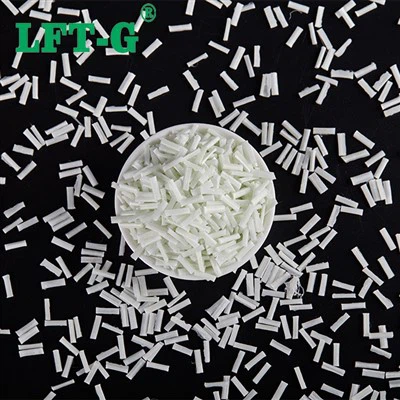
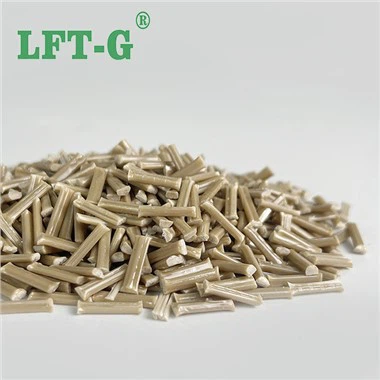
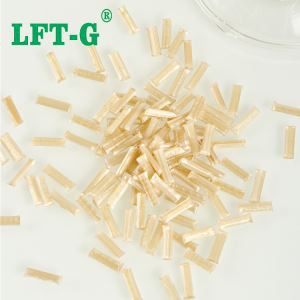
In LFT, the fibers run continuously through the length of the pellet, creating an internal "skeleton" within the molded part. This skeletal structure is the key to LFT's superior performance. When a part made from LFT-G® carbon fiber nylon is subjected to stress, the load is efficiently transferred and distributed along the long fibers. This leads to dramatic improvements in impact resistance, stiffness, and creep resistance compared to short-fiber-filled materials, where the load transfer is far less efficient.
Introducing LFT-G® PA LCF: The Pinnacle of Carbon Fiber Nylon
LFT-G®Carbon Fiber Nylon
Our product line, the LFT-G® PA LCF series, represents the cutting edge of long carbon fiber reinforced nylon technology. By integrating precisely controlled lengths of high-strength carbon fibers into different nylon matrices, we offer tailored solutions for the most demanding applications. Our portfolio includes:
LFT-G® PA6 CF Compound
As the general carbon fiber additive of nylon6,an excellent balance of strength, toughness, and value, ideal for automotive structural components, industrial machinery, and consumer goods that require high durability.
LFT-G® PA66 CF Compound
Engineered for higher-temperature environments and applications demanding maximum stiffness and strength. It is a preferred choice for under-the-hood automotive parts, aerospace components, and load-bearing electrical housings.
-
Name: LFT-Carbon fiber Nylon 66
- Carbon type:long carbon fiber T800/T1200
- Content:30-50%
- Resin: Polyamide6 Nylon66
- Feature:High modulus, high strength, excellent chemical resistance.
Learn More carbon fiber Nylon66
LFT-G® PA12 CF Compound
The premium choice for applications requiring exceptional dimensional stability, low moisture absorption, and excellent chemical resistance, even in harsh environments. Perfect for precision gears, fuel line components, and medical devices.
-
Name: LFT-Carbon fiber Nylon 12
- Carbon type:long carbon fiber T800/T1200
- Content:30-50%
- Resin: Polyamide6 Nylon66
- Feature:High modulus, high strength, excellent chemical resistance, low water absorption
Learn More carbon fiber Nylon12
Data-Driven Comparison: LFT-G® PA66-LCF vs. Competitors
To quantify the advantages of our LFT-G® carbon fiber nylon, let's compare the typical properties of our LFT-G® PA66-LCF40 (40% Long Carbon Fiber) with standard unfilled Nylon 66 and a competitor's short carbon fiber (SCF) reinforced PA66.
| Property (Test Method, Units) |
Standard
Unfilled PA66
|
PA66 + 30%
Short Carbon Fiber (SCF)
|
LFT-G® PA66-LCF40
(LCF Product)
|
| Density (ISO 1183, g/cm³) |
1.14 |
1.28 |
1.25 |
| Tensile Modulus (ISO 527, GPa) |
3.1 |
18.5 |
24.0 |
| Tensile Strength (ISO 527, MPa) |
85 |
210 |
285 |
| Notched Izod Impact (ISO 180, kJ/m²) |
6.0 |
12.0 |
25.0 |
|
Heat Deflection Temperature
@ 1.8 MPa (ISO 75, °C)
|
90 |
245 |
255 |
| Mold Shrinkage, Flow (%, 3mm) |
1.2 - 1.8 |
0.3 - 0.5 |
0.1 - 0.3 |
Note: Data presented are typical values sourced from international material databases and are intended for comparison purposes. Actual values may vary based on specific processing conditions.
The data clearly demonstrates the superiority of the long carbon fiber structure. The LFT-G® PA66-LCF40 exhibits a 30% increase in tensile modulus and a staggering 108% improvement in notched impact strength compared to the short fiber alternative. This dramatic leap in impact performance is a direct result of the long fiber network's ability to absorb and dissipate energy, preventing catastrophic failure. Furthermore, the lower mold shrinkage provides superior dimensional stability and predictability in complex molded parts.

Applications and Industry Impact
The unique combination of properties offered by LFT-G® carbon fiber nylon makes it an ideal metal replacement material and a solution for challenging design problems across various sectors.
Automotive Part:
For lightweighting initiatives to improve fuel efficiency and performance. Applications include front-end modules, seat structures, pedal boxes, battery housings for EVs, and engine covers.
Sporting Goods& Industrial & Machinery
For high-performance equipment such as bicycle frames, ski bindings, tennis racquets, and protective gear.For durable and wear-resistant parts like gears, bearings, pump housings, and robotic arm components.
Electronics& Aerospace & Drones
Where strength-to-weight ratio is paramount. Used for internal cabin components, brackets, UAV (drone) frames, and propellers.
For creating thin, strong, and lightweight housings for laptops, tablets, and other portable devices that also require EMI/RFI shielding.
Processing and Design Considerations
While LFT-G® PA LCF materials offer immense benefits, achieving optimal performance requires an understanding of their processing characteristics. Due to the long fibers, injection molding parameters must be carefully controlled to minimize fiber breakage. This includes using low-shear screws, generously sized gates and runners, and optimized injection speeds and pressures.
Partnering with a knowledgeable supplier like us ensures you receive not only a superior material but also the technical support needed to succeed. We provide comprehensive guidance on part design, mold flow analysis, and processing optimization to help our clients unlock the full potential of long carbon fiber technology.
Conclusion: The Future is Strong, Light, and Long
In conclusion, carbon fiber nylon is a premier class of engineering composite. When produced using Long Fiber Thermoplastic (LFT) technology, its capabilities are elevated to an entirely new level. The internal fiber skeleton created in LFT-G® PA LCF parts provides unparalleled stiffness, strength, and impact resistance while maintaining a low component weight.
From the versatile and tough PA6-LCF to the high-stiffness, high-temperature PA66-LCF, and the dimensionally stable PA12-LCF, our portfolio offers a solution for nearly any high-performance application. By choosing LFT-G® carbon fiber nylon, you are not just selecting a material; you are investing in a performance advantage that enables lighter, stronger, and more durable products. This technology is a key enabler for innovation, allowing engineers to push boundaries and redefine what is possible in modern manufacturing.
Contact With Carbon Fiber Nylon Expert