
As a new material technology, the composite material has been widely used in military aircraft.
In the 1960s, glass fiber-reinforced composite materials first began to be used in aircraft fairing, flaperon. At this time, the mechanical properties of composite materials are relatively low, and the aircraft parts made of composite materials are small and force level.
In the late 1960s, boron fiber/epoxy composites began to be used in aircraft structures. For example, the F-14 began to apply boron fiber-reinforced epoxy resin composites to the flat tail in 1971.
In the mid-1970s, a high-performance composite material with carbon fiber as the reinforcement was born, which opened the large-scale application of composite materials in aircraft. Carbon fiber-reinforced composites with excellent high specific strength, high specific modulus, corrosion resistance and fatigue resistance are very suitable for aviation equipment requirements. Carbon fiber reinforced composite materials are gradually used in the vertical tail and flat tail of military aircraft with large forces and large sizes, such as the composite tail and vertical tail of F-15, F-16, Mig-29, Mirage 2000, F/A-18 and other aircraft. Since the 1970s, foreign military aircraft tail fins have all used composite materials. The flat tail and vertical tail made of composite materials generally account for 5%-7% of the total structural weight of the aircraft.
After the tail fin entered the composite material era, the application of composite materials began to develop to the wings, fuselage and other major components of military aircraft with large structural forces and large sizes. McDonnell Douglas pioneered the F/A-18 composite wing in 1976 and entered service in 1982, increasing the composite use to 13%. Since then, the wings of military aircraft developed by various countries are almost all made of composite materials. For example, AV-8B, B-2, F/A-22, F/A-18E/F, F-35 of the United States, Rafale of France, JAS-39 of Sweden, Typhoon jointly developed by four European countries, S-37 of Russia, and so on.
At present, the amount of composite materials in the world's advanced military aircraft accounts for 20%-50% of the weight of the whole aircraft structure. The main parts of composite materials include fairing, flat tail, vertical tail, flat tail box, wing, front fuselage and so on. If composite materials make up about 50% of the total weight of the aircraft, then most of the structural parts of the aircraft are made of composite materials, such as the B-2 stealth bomber.
In 2020, the ratio of carbon fiber demand in the aerospace field to the carbon fiber demand in the aerospace field is 1.80%. The demand base is small, but the high-performance demand is strong, and the application is widely used. At the same time, with the rapid development of China's long-range strategic weapons, it is expected to expand the application ratio of carbon fiber composites.
Wave-absorbing stealth: ordinary carbon fiber is a reflector of electromagnetic waves, and does not have a wave-absorbing function, through the surface modification of carbon fiber (such as nickel plating, coated with silicon carbide coating, etc.), the development of new carbon fiber (such as special-section carbon fiber, spiral carbon fiber, porous carbon fiber, carbon nanotubes, etc.), can significantly improve its electromagnetic performance.
Special carbon fiber is used to make stealth aircraft, such as the B-2 stealth bomber, whose entire fuselage is made of carbon fiber composite except for titanium composite in the main beam and engine compartment. The amount of CFRP used by American stealth fighter F-22 is up to 24%, and the amount of composite material used by British Typhoon fighter jet is up to 40%. The structural carbon fiber absorbing composite is an important development direction of radar stealth materials, which combines the structural advantages of light weight and high strength and absorbing property of composite. Carbon fiber absorbing material is an excellent absorbing material that integrates function and structure. With the improvement and improvement of stealth structural materials, the demand of carbon fiber composite material will continue to grow.
Before the fourth generation of Chinese aircraft, the application scope of composite materials is limited to the tail wing, duck wing and other secondary load-bearing structures, the proportion is less than 10%, the fourth generation aircraft composite material dosage has made an obvious breakthrough, the composite material dosage reaches about 20% of the whole machine structure.
After nearly 40 years of development, advanced resin-based composites for military aircraft have been developed from non-load-bearing components to secondary and main load-bearing components and can achieve a significant weight reduction of 20%~30%. In terms of consumption, the amount of composite materials used in advanced military aircraft has exceeded 30% at present, and the proportion will be stable in the future. In the manufacture of military aircraft, resin-based composite materials can be used to manufacture radome, wing, fuselage, canard, flat tail, and engine outskirts of combat aircraft.


The F-35 itself is built with heavy use of high-strength carbon fiber composites. In particular, carbon fiber composites are creatively used in skin, wing structure and body structure components. Its carbon-fiber composites already account for a quarter of the aircraft's total weight and a third of the wing's. Carbon fiber is arguably the biggest weight loss factor in the F-35.
The stealth jet body is covered with a radar-absorbing material (RAM), such as the B-2 Sprite or F117 Nighthawk, which is designed to convert electromagnetic waves into heat. RAM loses its integrity under heat, moisture, and friction.


The research and development team at North Carolina State University developed a carbon fiber reinforced composite polymer (CFRP) skin to solve problems caused by RAM limitations and was used in the B-21 stealth bomber. The composite is enhanced by carbon nanotubes (CNTs), which are strong and lightweight and can withstand temperatures in excess of, 1800°C and help to conduct incoming electromagnetic energy.
Tests have shown that the new composite material has extremely low emissivity, is almost undetectable, and can absorb more than 90 percent of electromagnetic waves, compared to the 70-80 percent of RAM currently used in stealth aircraft. The new material will be sprayed onto the aircraft and will be 3mm thick.
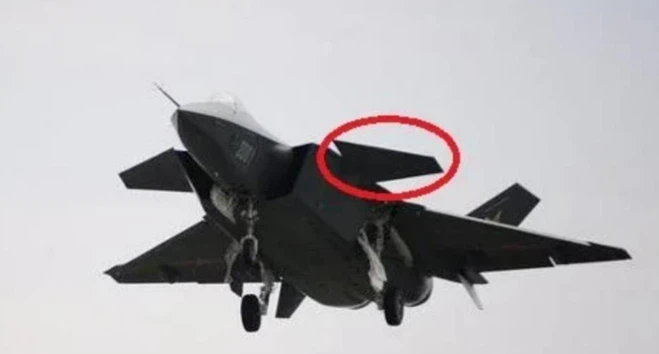
The wings of the J-11 series and Chengfei's J-10 and J-20 series are made of carbon fiber composite materials. China's aviation industry has a lot of successful experience in the manufacturing of carbon fiber laminated parts in the past 20 years.
For China, the J-20 aircraft was developed in the late 1990s and its test flight began at the end of 2010, giving it a technological advantage as a late mover. The canard wings of the J-20's predecessor, the J-10, are made entirely of carbon-fiber reinforced bismaleimide resin composites, which have a much smaller radar signature than metal materials and can be even more stealthy by doping other stealthy materials into the resin matrix. The canard wing of the J-20 will also use subsequent research results, while the F-22's horizontal stabilizer, which is also partly metallic, is not necessarily stealthier. In addition, the canard wing of the J-20 is inverted up and the wing is inverted down, so the radar waves reflected by the leading edge of the canard will not continue to radiate to the leading edge of the main wing and form a secondary reflection, which is also a favorable factor for stealth.