
Systematic Analysis of Long Carbon Fiber Materials

New materials emerging in the era of lightweighting
In the context of the global manufacturing industry continuously evolving towards the "high performance + lightweight + sustainable" direction, the material system is undergoing a round of structural upgrading. From metals to engineering plastics, from short fiber reinforcement to continuous fiber reinforcement, and to today's long carbon fiber composite materials (LCF), the core of material innovation has always revolved around three key words: strength enhancement, weight reduction, and cost optimization.
Especially in the fields of new energy vehicles, aerospace, consumer electronics and industrial structural components, lightweighting is no longer an "optional" choice, but a "mandatory" one. Under this trend, long carbon fiber materials, as the "intermediate form" between short fiber composites and continuous fiber composites, have gradually become an important breakthrough point for industrial upgrading.
It neither has the performance limitations of traditional short-fiber materials, nor is it as expensive and complex in manufacturing process as continuous carbon fibers. Therefore, in engineering applications, it has formed a unique "cost-performance balance point", and gradually established its own industrial position.
Why did LCF come into existence?
1. The contradiction between performance and cost
2. Process manufacturability contradiction
3. Structural upgrading driven by lightweighting requirements
1. Although traditional short carbon fiber reinforced plastics (SCF) have low costs, their mechanical performance is limited due to the short fiber length and random orientation. Particularly, there are significant bottlenecks in terms of impact resistance, fatigue resistance and structural rigidity.
While continuous carbon fiber composite materials (CFRP) have extremely strong performance, their manufacturing cost is high, the processing cycle is long, and they are difficult to be molded through mass injection, which limits their application in large-scale industrial fields.
The industry urgently needs a material system that has "performance similar to continuous fibers, but with costs close to those of engineering plastics".
2. Continuous fiber materials usually rely on processes such as lamination, hot pressing, and curing, and thus cannot be adapted to high-efficiency manufacturing methods like injection molding and extrusion. However, modern industries, especially the automotive industry, have a strong reliance on "second-level molding capabilities".
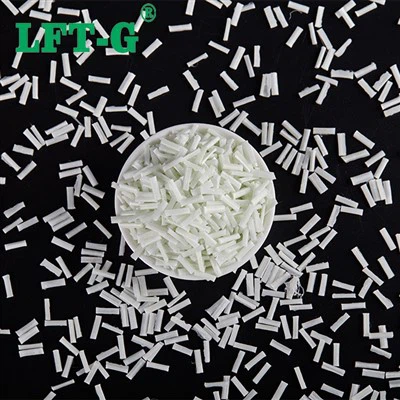
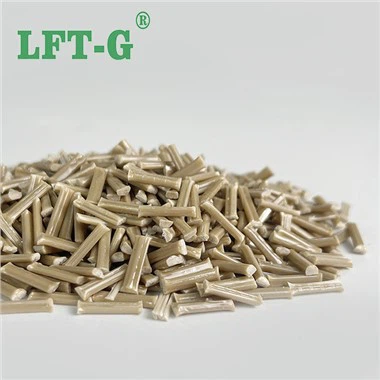
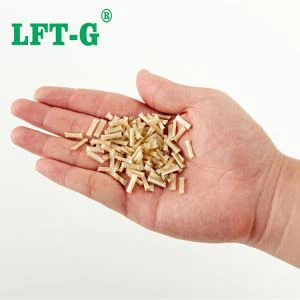
The long carbon fiber material achieves a longer retention length of the fibers within the matrix (typically 5–25mm or even longer) through specific processing techniques, and can be incorporated into the injection molding system, thus balancing performance and efficiency.

3. In new energy vehicles, the increase in battery weight brings pressure to reduce the overall vehicle weight; in aviation structural components, fuel efficiency is directly linked to load efficiency; in industrial equipment, energy consumption and response speed are closely related to weight.
Therefore, the material system must shift from "strength priority" to "strength-to-weight ratio priority". The long carbon fiber material was precisely developed as an engineering solution based on this logic.
The structure and technical nature of LCF materials
The core structure of long carbon fiber composite materials consists of two parts:
Strengthening phase: Long carbon fibers
Carbon fibers with a length ranging from 5 to 25 mm are typically used. By controlling the degree of fracture during the processing, they can maintain a certain continuity while also having good dispersion properties.
Matrix resin
Common matrices include:
PA6 / PA66 (nylon system)
PP (polypropylene system)
PEEK (high-performance engineering plastic)
PPS (high-temperature resistant system)
Different substrates determine the heat resistance, chemical resistance and processing performance of the materials.
Microscopic structure characteristics
The long carbon fiber material has a typical "semi-oriented network structure":
The fibers are arranged in a certain direction, but not completely in a single direction.
There is a three-dimensional random reinforcement effect.
The stress transmission path is longer and more stable.
The crack propagation path is significantly suppressed.
Analysis of Driving Forces
1. New energy vehicles are booming: Electrification brings about a systemic demand for weight reduction.
2. Carbon neutrality policy: Reducing energy consumption and carbon emissions.
3. Manufacturing upgrade: Transition from metals to composite materials.
4. Cost reduction trend: The domestic production of carbon fibers has led to a decrease in material prices.
Industrial Application Analysis
The core implementation direction of LCF material
Automotive Industry
New energy vehicles are the most important growth driver for LCF, and the main applications include:
Battery housing
Chassis structural components
Front module
Seat frame
Structural reinforcement beams
Industrial Equipment
Mechanical Arm Components
Automation Equipment Frame

Electronics and Consumer Goods
Laptop Components
High-end Equipment Enclosures
Drone Components
Aerospace Parts
Currently, continuous carbon fiber is still the main material, but LCF is entering the field of auxiliary structures:
Interior components
Non-load-bearing structural components
The essence of long carbon fiber materials is not merely "strengthened plastic", but rather a crucial transitional material system that connects high-end composite materials and engineering plastics.
It has resolved three core industrial contradictions:
High performance vs Low cost
High strength vs Manufacturability
Lightweighting vs Industrial mass production
From the perspective of industrial evolution, the true value of LCF is not merely "replacing metals", but rather driving the entire manufacturing system towards the era of lightweight structural design.