
The Four Key Stages of Injection Molding
The four core stages of injection molding are mainly the filling stage, the holding pressure stage, the cooling stage and the ejection stage. This article will guide you through these four aspects to help you understand the various matters that need attention at different stages, as well as some potential details that may arise during these stages.
Filling Stage
The filling stage is the process where molten polymer enters the mold and fills the cavity, forming the initial shape of the molded part. It is also one of the stages where appearance defects are most likely to occur.
During this stage, the screw pushes the high-temperature melt forward, allowing it to pass through the nozzle, runner system, and gate before entering the mold cavity. The melt then spreads inside the cavity through a fountain flow pattern, gradually completing the filling process.
The control of injection speed, pressure, and temperature during filling directly influences the surface appearance, defect formation, and overall quality of the final product.
High-Speed Filling
High-speed filling increases the shear rate of the molten polymer, causing a reduction in viscosity due to the shear-thinning effect. This improves melt flowability and reduces filling resistance.
The heat generated during high-speed flow can also slow down the formation of the frozen layer, helping the melt maintain better flow performance. As a result, filling behavior is mainly affected by cavity volume, part geometry, and melt flow characteristics.
Low-Speed Filling
Low-speed filling results in a lower shear rate, higher melt viscosity, and increased flow resistance. Since the melt moves more slowly, heat is transferred more easily to the cooler mold wall, causing a thicker frozen layer to develop.
This thicker solidified layer reduces the available flow channel and increases resistance, which may negatively affect filling performance, especially in thin-wall or complex parts.
Common Filling Stage Defects in Injection Molding
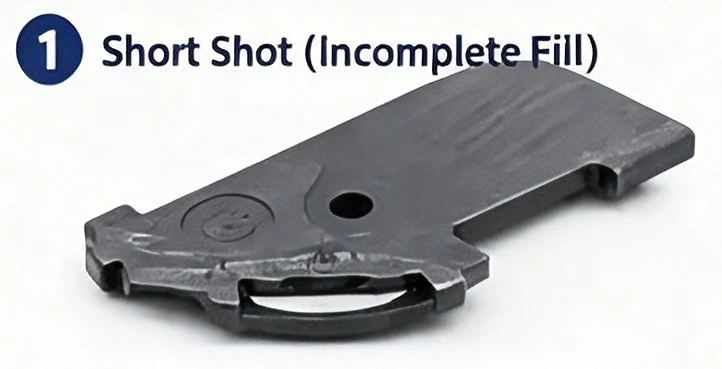
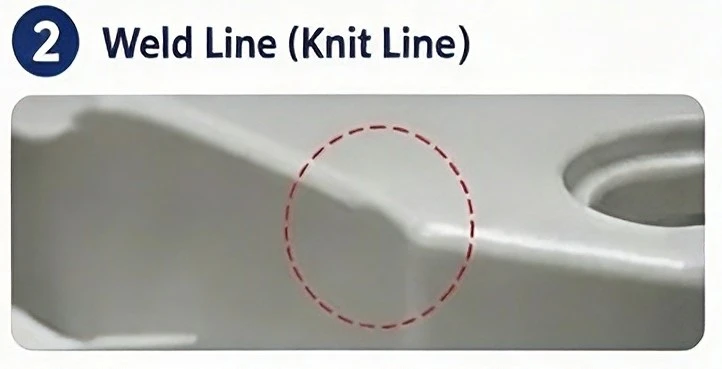
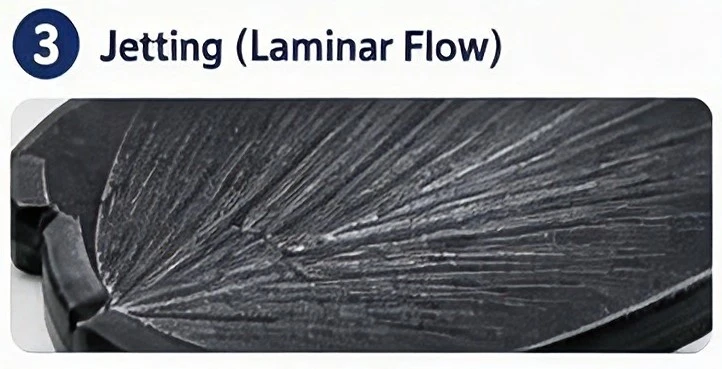
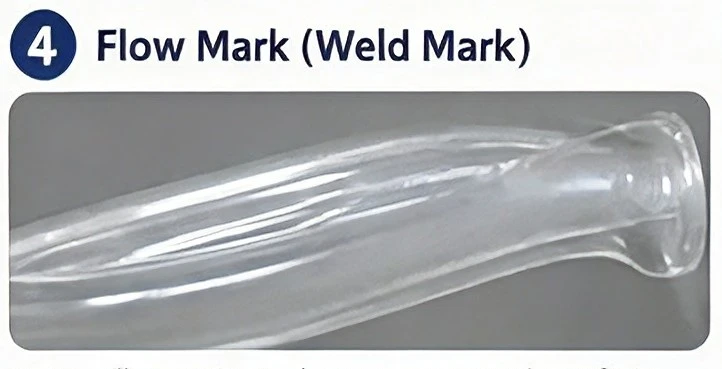
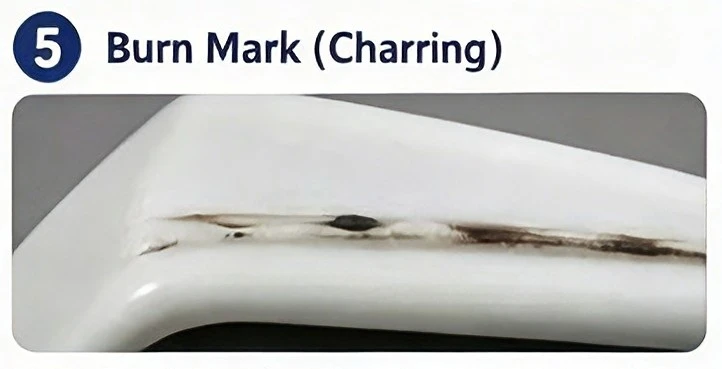
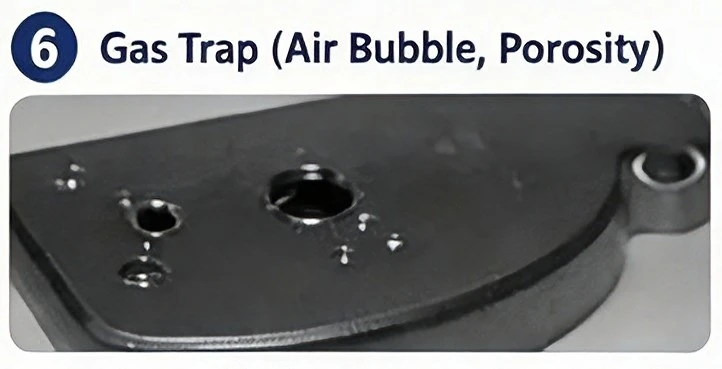
Holding Stage
After the mold cavity is completely filled, the molten polymer begins to cool and shrink. Without continuous pressure compensation and material replenishment, the molded part may develop sink marks, internal voids, and dimensional inconsistencies.
The purpose of the holding stage is to continuously apply pressure to the cavity, compensate for material shrinkage, and increase melt density. During this stage, the polymer still shows partial compressibility due to the high pressure inside the cavity. Areas with higher pressure become denser, while areas with lower pressure remain less compact, resulting in variations in density distribution over time and location.
Unlike the filling stage, melt flow becomes very limited during holding. Pressure, rather than flow behavior, becomes the dominant factor affecting part quality. The already-filled cavity is gradually solidifying, and the remaining molten material acts as a medium for pressure transmission.
In simple terms:
Filling determines the shape, while holding determines the dimensions.
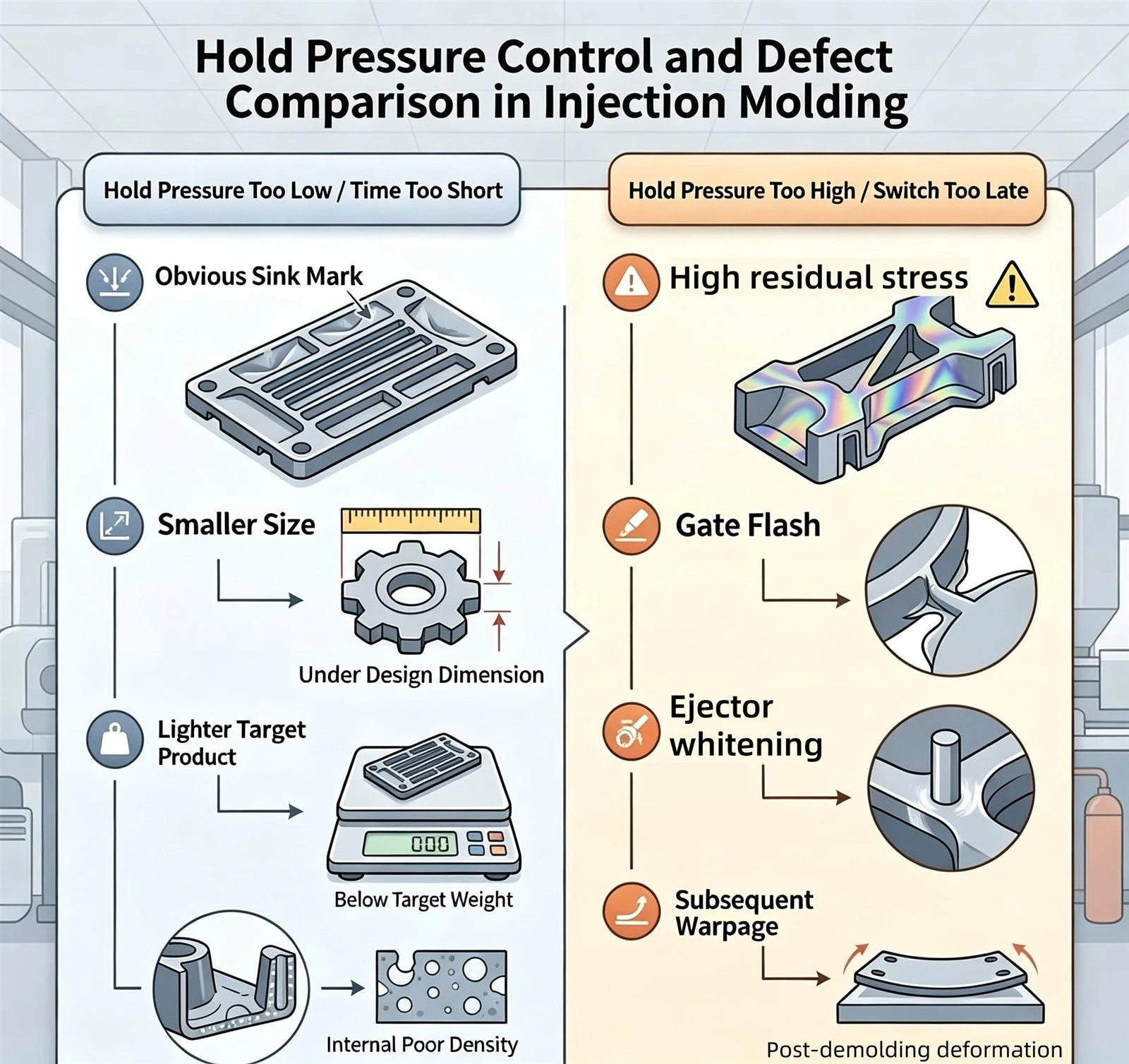
Effects of Improper Holding Parameters
Insufficient holding pressure or holding time may cause:
- More visible sink marks
- Smaller part dimensions
- Lower product weight
Excessive holding pressure or delayed pressure switching may cause:
- Higher residual stress
- Gate flash
- Ejector marks or whitening
- Subsequent warpage and deformation
Proper control of holding pressure and time is essential for achieving dimensional accuracy, reducing internal stress, and maintaining stable part performance.
Cooling Stage
After the holding stage, the molded part enters the cooling stage, where the molten polymer gradually solidifies. Since plastics have relatively low thermal conductivity, cooling occurs from the outside to the inside, causing uneven shrinkage between the surface and core. This difference can lead to residual stress, warpage, and dimensional instability.
Insufficient cooling time may cause soft parts, deformation during ejection, whitening, cracking, and post-shrinkage. Excessive cooling time increases the molding cycle and reduces production efficiency.

Mold temperature also plays an important role in part quality. A higher mold temperature improves surface appearance, reduces internal stress, and helps prevent warpage, but may extend cycle time. A lower mold temperature shortens the cycle but increases the risk of residual stress and deformation.
Demolding Stage
After cooling and solidification, the mold opens and the ejector system pushes the molded part out, completing the demolding process.
Although it is a simple step, it plays a critical role in maintaining the final product quality.
Excessive demolding speed, insufficient cooling, inadequate draft angle, or improper ejector pin layout can lead to defects such as:
Scratches, drag marks, ejector whitening, cracking, mold sticking, and deformation.
In injection molding, not only the material needs to be paid attention to, but also the control at each stage should be ensured. The appropriate materials are necessary to better and more smoothly control each step without any mistakes.