

The Core Pain Point: Range Anxiety vs. Battery Protection
In EV design, every single kilogram matters. Heavy components drain battery power faster, exacerbating consumer "range anxiety." However, the battery enclosure (tray) cannot simply be made thin or weak. It is the vehicle's primary defense line, tasked with protecting highly volatile lithium-ion cells from catastrophic road debris strikes, side-pole impacts, and thermal runaways.
Traditional die-cast aluminum trays provide excellent protection but contribute massively to the vehicle's dead weight. When engineers attempt to replace aluminum with standard plastics like Short Glass Fiber PP (SGF-PP), the trays shatter violently under standardized crash tests due to the brittleness of short fibers.
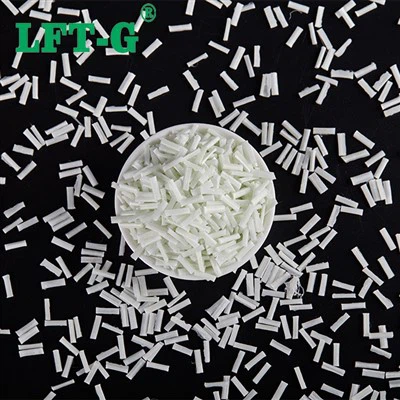
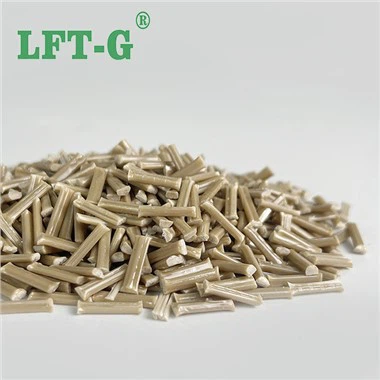
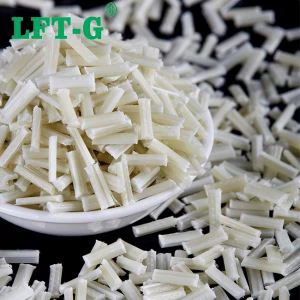
The LGF-PP Solution: Why use LGF-PP (Long Glass Fiber Polypropylene)? Because it is the only material that achieves the "Holy Trinity" of EV engineering: 1. Extreme Weight Reduction (density of 1.15 g/cm³ vs Aluminum's 2.7 g/cm³), 2. Massive Impact Energy Absorption, and 3. Injection-molding cost efficiency.
Why LGF-PP Surpasses Aluminum and SGF Plastics

1. Kinetic Energy Dissipation (The Crash Test)
During a bottom-out collision (e.g., hitting a rock at highway speeds), aluminum tends to dent inward permanently, potentially piercing the battery cells. Standard SGF plastics will crack and shatter, immediately exposing the battery to the elements.
By contrast, the 12mm continuous fiber network inside an LGF-PP tray behaves like a structural net. Upon impact, the material flexes, absorbs the kinetic shockwave by slightly delaminating internally, and then rebounds without shattering. This high notched impact strength is the primary reason automakers are transitioning to long fibers.

Figure 1: LGF-PP matches the light weight of SGF plastics while approaching the impact survivability of Aluminum.
Engineering Data: The Material Comparison
The decision to replace metal with LGF-PP is driven entirely by specific strength (strength-to-weight ratio). Let's review the hard data.
|
Performance Metric |
Die-Cast Aluminum | LGF-PP (30-40% Long Glass) | EV Engineering Advantage |
|---|---|---|---|
| Density (Weight) | ~ 2.70 g/cm³ (Heavy) | ~ 1.15 g/cm³ (Ultra-Light) | Results in a 40% to 50% overall weight reduction for the enclosure. |
| Parts Consolidation |
Requires multi-part welding & bolts |
Single-shot injection molding | Massively reduces assembly line time, BOM complexity, and labor costs. |
| Thermal Insulation | Conducts heat rapidly | Natural Thermal Insulator | Delays thermal runaway propagation; keeps batteries warm in winter. |
| Corrosion Resistance | Requires expensive e-coatings | 100% Corrosion Proof | Impervious to road salt, battery acid, and environmental degradation. |