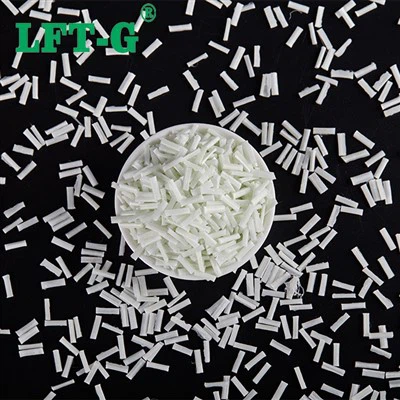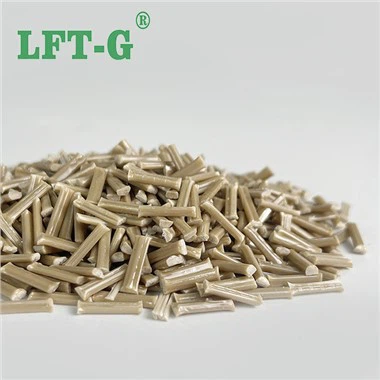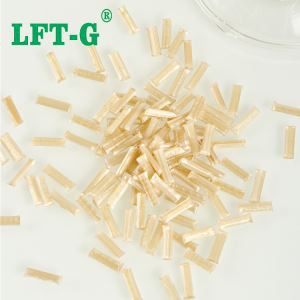

The Development Research of LGF PA6 in Industrial Materials
Material Evolution

Engineering plastics play a critical role in modern industrial systems, acting as a bridge between material performance and product functionality. With increasing demands for automotive lightweighting, electronic miniaturization, and high-performance industrial machinery, engineering plastics are gradually replacing metals and traditional composite materials.
Polyamide 6 (PA6), as a key engineering plastic, is widely used due to its excellent mechanical strength, chemical resistance, and processability. However, standard PA6 suffers from limitations such as insufficient rigidity and relatively low heat deflection temperature under high load and long-term stress conditions, which restrict its use in high-end applications.
To overcome the mechanical limitations of PA6, fiber reinforcement technology was introduced. Compared with short glass fiber, long glass fiber maintains better fiber integrity and load transfer efficiency, significantly enhancing mechanical performance.
As a result, LGF PA6 was developed. The introduction of long glass fibers greatly improves tensile strength, flexural strength, impact resistance, and dimensional stability, enabling PA6 to be used in high-load, high-temperature, and long-life industrial applications where metals or short-fiber composites were traditionally required.
Market Drivers of LGF PA6
Automotive lightweighting: Reducing fuel consumption and emissions by replacing metal parts.
Upgraded electronics demand: Higher thermal resistance and stability requirements in modern devices.
Industrial durability needs: Long-term load-bearing and fatigue resistance requirements.
Environmental regulations and cost pressure: Lightweight materials help reduce carbon emissions and total system cost.
Material Advantages of LGF PA6
Mechanical Performance Advantages
Tensile strength: Improved by 30%–70% due to continuous fiber reinforcement.
Flexural strength and modulus: Enhanced rigidity reduces deformation and improves structural durability.
Impact resistance: Better low-temperature and high-impact performance compared to short-fiber composites.
Thermal Performance and Dimensional Stability
Heat deflection temperature (HDT): Increased by 20%–50%, suitable for engine compartments and electrical housings.
Low thermal expansion coefficient: Ensures excellent dimensional stability in precision components.
Long-term thermal aging resistance: Maintains performance under continuous high-temperature conditions.
Processing Advantages
Compatible with standard injection molding processes.
Optimized fiber distribution enables stable mechanical performance.
Can be compounded with additives such as flame retardants, lubricants, and stabilizers.
Cost Efficiency Advantages
Metal replacement reduces system weight and energy consumption.
Extended service life reduces maintenance and replacement costs.
High production efficiency improves overall manufacturing economics.
LGF PA6 Application

Automotive Industry
Engine components: intake manifolds, fan blades, engine covers.
Structural parts: brackets and support frames.
Interior components: functional and decorative parts requiring strength and aesthetics.

Electronics and Electrical Industry
High-power housings and electronic enclosures.
Precision connectors and structural components.
Heat-resistant and dimensionally stable housings for electrical modules.

Industrial Machinery
Gears and bearing components with high wear resistance.
Pumps, valves, and fluid system components with chemical resistance.
Conveyor system components requiring durability and low friction.

Consumer and Other Applications
Sports equipment such as bicycle parts.
Durable household and office equipment components.
Non-implant medical device housings requiring chemical resistance.
Why Choose LGF PA6?
Performance-oriented selection
When customers select materials, they first pay attention to whether the materials meet the functional requirements of the products. LGF PA6, with its high strength, high rigidity, heat resistance, toughness and dimensional stability, provides customers with more freedom in the design process and can meet the reliability requirements for long-term use.
Cost-benefit-oriented Selection
Overall Cost Consideration: Although the material unit price is higher than that of short-fiber PA6, through lightweight design, transportation costs and energy consumption can be reduced, while the service life is prolonged, resulting in a lower overall cost.
Production Efficiency Enhancement: Short processing cycle and high product accuracy enable customers to reduce the defective rate during production and improve overall efficiency.
Sustainable and Environmental Protection-oriented
Reduce Carbon Emissions: Industries such as automotive and electronics pay attention to environmental regulations. Using lightweight and high-performance materials helps to reduce the carbon footprint of products.
Material Recyclability