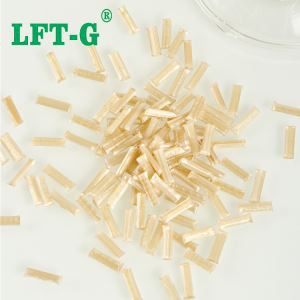

In recent years, with the rapid development of the rail transportation industry, there is more and more research on new materials for rail vehicles, and the proportion of the new material is larger and larger. Among them, the research and application of fiber composite materials are the most prominent. This is because fiber composite materials can be based on the design requirements, through the selection of different matrix and reinforcement materials, different proportions of the deployment, and the use of different forming processes, which can be obtained with different comprehensive properties of new materials, such as good heat insulation, corrosion resistance, wear resistance, high specific modulus, high specific strength, and other properties, this characteristic is unable to meet the traditional single material.
In the design of rail vehicles, composite materials have been widely used in the interior of vehicles, and internal equipment and other parts of the load structure have also been used to a certain extent. The structural parts made of composite materials have the advantages of high strength, lightweight, and high rigidity. The manufacturing process usually adopts the near-final forming technology, which does not need further processing and can greatly reduce manufacturing costs. The application of composite materials can also effectively improve the comfort and safety of rail vehicles, reduce vibration and noise, and reduce body weight. Fiber composite has become an indispensable key material in the field of rail transit.
1
Characteristics of fiber composite materials
The specific modulus and strength of carbon fiber composites are the highest among commonly used materials, and they have obvious advantages in strength, stiffness, and smoke toxicity. The new FRP material has good performance as a flame retardant and sound insulation. And aramid composite materials have flame retardant, high strength, high-temperature resistance, high insulation grade, moisture resistance, and corrosion resistance, stable physical and chemical properties. All kinds of composite materials have different characteristics and are used in different key parts of rail vehicles.

2
Application advantage analysis of composite materials in rail vehicles
2.1 Good mechanical properties
The composite material embodies the comprehensive performance of the matrix material and the reinforcement material, with high strength, lightweight, large rigidity, vibration and noise reduction, fatigue resistance, heat insulation, and other excellent performance, for the vehicle's lightweight design, improve the safety and comfort of the vehicle is of great significance.
2.2 Meet the lightweight development requirements of rail vehicles
In recent years, the operation speed of rail transit vehicles is getting higher and higher, which requires the rail vehicles to achieve lightweight design without reducing safety performance. The composite material is the most effective scheme for rail vehicles.
2.3 Can reduce the cost
With the improvement of rail transit operation speed, people pay more and more attention to maintenance cost and operation costs while paying attention to vehicle safety and comfort. Although the initial investment in the rail transit industry is large, the overall cost of vehicles using composite materials is significantly higher than that of ordinary materials, especially since the research and development of new materials and new processes are bound to require huge investments. However, the operation cycle of rail transit is long. From the perspective of the whole life cycle of vehicles, on the one hand, lightweight vehicles can effectively reduce the energy consumption of vehicles and reduce operating costs. On the other hand, the vibration resistance, fatigue resistance, corrosion resistance, damage tolerance, and collision energy absorption of composite materials are better than that of ordinary metal materials, so the maintenance cycle of the vehicle can be extended, and the maintenance cost can be greatly reduced. Therefore, in the long run, composite materials can effectively reduce the life cycle cost of vehicles.
2.4 Has strong designability
High specific modulus and high specific strength are the most prominent characteristics of fiber composite materials, and the mechanical properties can be varied in a wide range. Therefore, through the selection of composite matrix and reinforcement and changing the forming process of materials, various design requirements can be met. For example, the tensile strength of glass fiber can reach 3500MPa and the elastic modulus is 70GPa. The tensile strength of high-modulus carbon fiber can reach 3900MPa and the elastic modulus is 600GPa. It has been learned through experiments that the best layering structure can be found according to the design requirements in the forming process of structural parts by changing the composite materials with very different properties of matrix materials.
2.5 Good reliability and security
The most important factors affecting the safety of structural parts are the fatigue resistance and notch sensitivity of materials. Previously, composites have been widely used in high-stress fields such as aerospace, precisely because of their excellent fatigue resistance and low-notch sensitivity.
Although common metal materials have high static strength, their strength decreases significantly under severe vibration conditions. For example, metal material structural parts have a gap at a certain point. Under vibration and impact (variable load), the defects will quickly spread until the structural parts are damaged. However, the difference between static strength and vibration strength of composite materials is almost zero. Even if the structural parts are notched, the stress in the material will be transferred to the adjacent layer and will not be destroyed due to long-term variable load. This is one of the reasons that composite parts have a much longer life than metal parts.
3
Application of fiber composite in rail vehicles
3.1 Carbon fiber composites
Although the research and application of carbon fiber materials started late in China, the technology has developed rapidly in recent years, especially in the field of vehicle traffic. For example, CRRC Qingdao Sifang Rolling Stock Co., Ltd. used carbon fiber materials in the design of an equipment cabin of a bullet train. The impact resistance, corrosion resistance, and mechanical properties of the vehicle are guaranteed, and the weight of the equipment cabin is about 35% lower than that of aluminum alloy material.

3.2 Glass fiber composite materials
With excellent noise reduction and flame retardant properties, mechanical strength and stiffness ratio performance is more outstanding. Therefore, it is often used in the seats of rail vehicles, the head cover of the driver's cab, and other parts.

3.3 Aramid fiber composites
Compared with traditional metal materials, aramid composites have excellent properties such as flame retardant, high strength, high insulation grade, moisture resistance and corrosion resistance, and stable physical and chemical properties. They are fully used in motors, transformers, and other positions, and can play a good role in insulation weight reduction.
4
End
The application of composite materials in rail vehicles will be more and more extensive, especially in the vehicle body structure has a good application prospect.