
Performance comparison of long/short glass fiber reinforced PPS composites
PPS filled short glass fiber (SGF) composite materials have the advantages of high strength, high heat resistance, flame retardant, easy processing, low cost, etc., in the automotive, electronics, electrical, mechanical, instrumentation, aviation, aerospace, military and other fields have made applications.
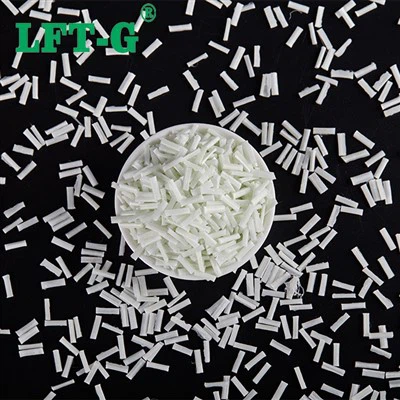
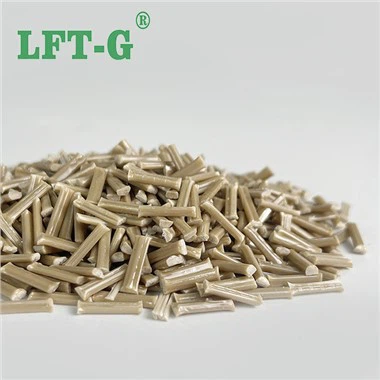
PPS filled long glass fiber (LGF) composite materials have the advantages of high toughness, low warpage, fatigue resistance, good product appearance, etc., can be used for water heater impellers, pump housings, joints, valves, chemical pump impellers and housings, cooling water impellers and housings, home appliance parts.

So what are the specific differences in the performance of short glass fiber (SGF) and long glass fiber (LGF) reinforced PPS composites?
In this paper, the comprehensive performance of PPS/SGF (short glass fiber) composites and PPS/LGF (long glass fiber) composites are compared, in which PPS/LGF composites are prepared by melt impregnation process and PPS/SGF composites are prepared by melt blending twin-screw granulation process, the reason for using melt impregnation process is to achieve the impregnation of fiber bundles in the impregnation die, and the fiber does not damage to the fibers. Finally, the comparison of the mechanical properties of the two data will provide technical support for the application side of the scientists in the selection of materials.
Mechanical performance analysis
The reinforcing fibers added to the resin matrix can form a support skeleton, and when the composite is subjected to external forces, the reinforcing fibers can effectively bear the effect of external loads; at the same time, they can absorb energy through fracture and deformation to improve the mechanical properties of the resin. The following figure shows the tensile and bending properties of PPS/SGF and PPS/LGF composites with different glass fiber contents, respectively.

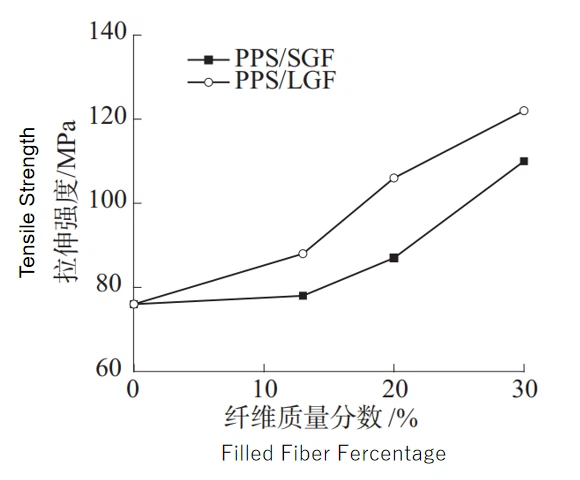

It can be seen that the tensile strength and bending strength of the composites increase gradually by increasing the amount of glass fiber added. The main reason is that when the glass fiber content increases, there are more glass fibers in the composite material to bear the external force, and the resin matrix between the glass fibers becomes thinner due to the increase of the glass fiber quantity, which is more favorable to the construction of the glass fiber reinforced frame; therefore, the increase of the glass fiber content makes the composite material under the applied load, the stress is more transferred from the resin to the glass fibers, which effectively improves the tensile and bending properties of the composite material. The tensile and bending properties of the composite are effectively improved.
The tensile and flexural properties of PPS/LGF composites are higher than those of PPS/SGF composites. At 30% glass fiber mass fraction, the tensile strengths of PPS/SGF and PPS/LGF composites are 110 MPa and 122 MPa, respectively; the flexural strengths are 175 MPa and 208 MPa, respectively; and the flexural modulus of elasticity are 8 GPa and 9 GPa, respectively.
The tensile strength, bending strength and bending modulus of elasticity of PPS/LGF composites were 11.0%, 18.9% and 11.3% higher than those of PPS/SGF composites, respectively. the length retention of glass fiber in PPS/LGF composites was higher, and the composites had better load resistance and mechanical properties under the same glass fiber content.
The figure below shows the notched impact strength and unnotched impact strength of PPS/LGF and PPS/SGF composites.


It can be seen that the impact strength of the composite decreases at lower glass fiber content, mainly because the lower glass fiber content cannot form a better stress transfer network in the composite, which makes the glass fiber exist in the form of defects when the composite is subjected to impact loading, resulting in a decrease in the overall impact strength of the composite.
The above defects are the glass fiber tips or crack tips; the failure of thermoplastic composites is triggered by the glass fiber tips or crack tips, which start to spread from this point until the composite is completely destroyed. When the glass fiber content is small, the glass fiber tip is increased in the composite, and the impact performance will be reduced to a certain extent because the effect of the glass fiber tip on the fracture of the composite is greater than that of the glass fiber reinforcement.
With the increase of glass fiber content, the glass fiber in the composite can form an effective spatial network, and the strengthening effect is greater than the effect of glass fiber tip, which can better transfer the applied load to the reinforcing fiber under the effect of applied load, and then improve the overall performance of the composite. better impact strength. The impact strength of PPS/LGF at 30% glass fiber mass fraction is 19.4% higher than that of PPS/SGF, from 31kJ/m2 to 37kJ/m2, and the notched impact strength is 54.5% higher (from 7.7kJ/m2 to 11.9kJ/m2).
XIAMEN LFT company professional in product (LFT) long fiber thermoplastic reinforced high performance thermoplastic ,and could be applying to auto part,home appliance,aero wing, drone industrial. Our LFT thermoplastic is the best material of injection/extrusion process.
Contact US: candyhu@lfrtplastic.com Whatsapp:+86 13950095707
www.lfrt-plastic.com