
Innovation in the application of composite materials China's large aircraft C919.
C919 large passenger aircraft is the first China's civil aircraft model using T800 grade high-strength carbon fiber composite materials. Compared with the T300 grade material, the T800 grade material has higher strength and modulus, stronger toughness and better impact resistance, and T800 grade carbon fiber composites are used for the more stressed parts on the C919, such as the rear fuselage and flat tail.
According to the introduction, due to the large-scale adoption of advanced materials, the C919 overall weight reduction of about 7%. For the development of China's domestic passenger aircraft, one of the keys is to improve the level of application of advanced materials, and the amount of composite materials is an important sign to judge the advanced nature of civil passenger aircraft.
It is reported that in the C919 "skin", the third generation of aluminum-lithium alloy materials, advanced composite materials amounted to 8.8% and 12% respectively. The proportion of composite parts in the aircraft structure is increasing, so the C919 is considered "a milestone in the field of Chinese materials".
The T800 material used on the C919 uses a toughened epoxy resin matrix, and the reinforcing fiber is T800 carbon fiber, which increases the tensile strength and tensile modulus by about 50% compared with T300, and is also the most widely used composite material for the main bearing structure of civil aircraft in the international arena.

Compared with carbon fiber composites, the mechanical properties of glass fiber composites are slightly lower, but due to the high dielectric constant of carbon fiber, which can affect the work of radar, the radome of C919 large passenger aircraft uses glass fiber composites.
Some other components with less force, such as flaps, also use glass fiber composites. Because the cost of glass fiber composites is lower than that of carbon fiber composites, it can be applied on the parts with less force to meet the design requirements and reduce the manufacturing cost at the same time.
The C919 uses composite materials in the radome, wing leading and trailing edges, movable airfoil, wingtip winglets, wing fairing, rear fuselage, tail and other primary and secondary load-bearing structures, accounting for 11.5% of the total structural weight of the aircraft.
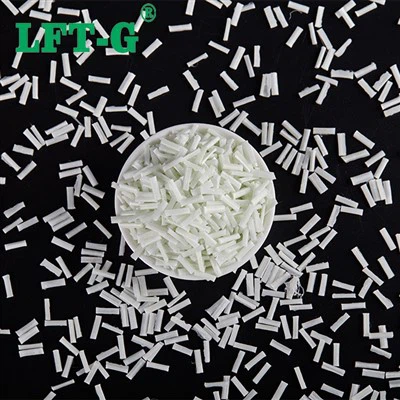
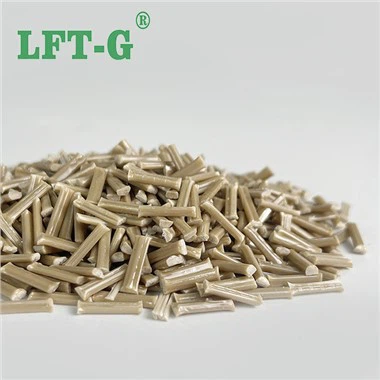
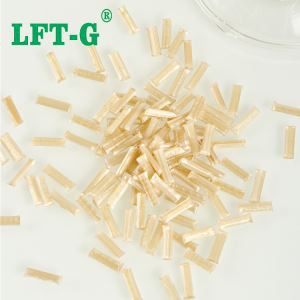
As one of the upstream suppliers of new composite materials in the aircraft manufacturing industry chain, Xiamen LFT-G is a brand company focusing on the independent R&D, production and sales of LFT & LFRT, Long Glass Fiber Series (LGF) & Long Carbon Fiber Series (LCF). Our thermoplastic LFT can be used for LFT-G injection molding and extrusion, and also can be used for LFT-D molding, and can be produced in lengths from 5 to 25mm according to customer requirements.

XIAMEN LFT-G Company's long fiber continuous infiltration reinforced thermoplastic materials have passed the ISO9001&16949 system certification, and the products have obtained a number of national trademarks and patents. In particular, our carbon fiber LFT series have broken the international technology blockade, providing products and technical support for high performance thermoplastic special engineering plastics required in the fields of automotive, military components, photovoltaic power generation, building materials, aerospace, new energy, medical equipment, power wind energy, sports equipment and other new technology innovation industries.

Contact Us:
Email:candyhu@lfrtplastic.com
Whatsapp/wechat/phone/skype:+86 139 5009 5707