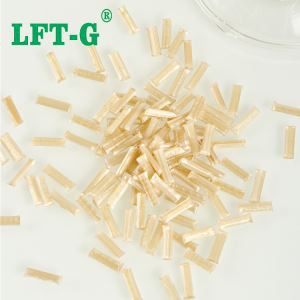

Long Glass Fiber Plastic Typical Application Parts
Xiamen LFT Composite Plastic Co.,Ltd.
---Transforming Applications and Markets with Long Fiber Reinforced Thermoplastic Technology
Founded more than ten years ago by Ming Mingyuan of the thermoplastic composites industry, they knew that the strong, tougher and lighter advantages of long fiber reinforcement technology could be incorporated into new applications and markets to create better products.
LFT-G is focused on developing and delivering innovative, order-produced long fiber reinforced thermoplastic composite solutions to meet application-specific structural performance requirements.
Front-end module
For automotive front-end modules, PP-LGF30 material can be used to integrate more than 10 traditional metal parts such as radiators, horns, condensers, and brackets into a single unit. Compared to metal parts, it is more corrosion-resistant, has a lower density, and has a weight reduction of about 30. %, with a higher degree of design freedom, can be directly recycled without the need for classification processing; the manufacturing cost is reduced and there is a significant cost reduction advantage.

Former foreign brands, such as Volkswagen, Ford, etc., have successfully applied plastics for front-end modules for many years. In recent years, self-owned brand car companies gradually began to carry out independent design and application research of new materials. For example, the FCV-863 project led by SAIC carried out plasticization of the front-end module with a weight reduction of 3.03 kg. Changan Automobile, at the 2011 Auto Show, demonstrated the CX30 compact sedan equipped with an all-plastic front end module, which consists of 22 metal parts to form an injection-molded part, which greatly simplifies the front-end structure of the CX30 model and reduces the weight of the part. Up to 40%, and reduce the total weight of the car about 4kg. Chang An Yidong 2015 plastic front end module 10.13kg original steel parts, plastic parts 6kg, is expected to reduce weight 4.13kg, weight loss rate of 41%; and will be applied to C201, C206, C2X and other mass production models. The latest car produced by Great Wall Motor Co., Ltd. in June 2014 has adopted a plastic front-end module, which reduces the weight by 30% to 4.7kg. JAC is currently also promoting plastic front-end modules and other products in mass production vehicles. In 2011, Chery Automobile undertook the National Science and Technology Support Program for “Development of Fiber-reinforced Plastics Front-end Modules and Its Integration in Targeted Vehicle Models” and systematically developed the plastic front-end modules and successfully applied them to mass production models (such as Ariza 7 )on.
In terms of plasticizing the front-end module of the truck, SABIC and SCANIA have successfully developed a truck front-end frame and formed a modular supply. The weight of the parts was reduced from 5.15kg to 3.29kg, and the weight reduction effect was 33%.
Dashboard body skeleton
For soft dashboard frame materials, the use of LGFPP is stronger than filling PP materials, bending modulus changes, better fluidity, at the same intensity, dashboard design thickness can be reduced to reduce weight, the general weight reduction effect of about 20 %. At the same time, traditional multi-component dashboard bays can be developed into a single module. In addition, in front of the instrument panel, defrosting air duct body and dashboard middle skeleton materials are generally made of the same material as the dashboard body skeleton, which can further increase the weight reduction effect.
2011, Ford Maverick and Ford Kuga Dashboard (made with Trexel MuCell Microcellular Foam Injection Molding Technology and SABIC's PP-LGF20), this application product will reduce each car compared to the ordinary injection molded, filled polypropylene dashboard. 0.45kg, the production time is reduced by 15% and the cost is reduced by 3 US dollars. At present, BMW, Audi and other high-end soft instrument panel skeletons are mostly made of long glass fiber plastics as dashboard material. For example, in the dashboard frame of the BMW 7 Series sedan in 2010, the use of long glass fiber plastic allowed the finished panel product to be 20% lighter than traditional materials. At the same time, the long glass fiber polypropylene material can be compatible with BMW's automated foam injection molding technology; using less raw materials can achieve higher strength and stiffness, and can make the instrument panel have better performance. At present, the BMW 3/5/7 series, Mercedes-Benz E and other high-end car dashboard skeletons are all using LGFPP material.
Among the joint venture car brands, the dashboard frames of various production vehicles such as FAW-Volkswagen, Shanghai Volkswagen and Changan Ford have adopted LGFPP. In its own brand, Great Wall high-end SUV dashboard frame PP-LGF20 instead of modified PP was reduced from 3mm to 2.2mm, and successfully mass production. The dashboard skeletons of passenger vehicles such as BYD Tengshi and SAIC Roewe 550 have also gradually adopted LGFPP materials.
Door module (door middle frame skeleton)
The modern Sonata plastic door module that used SABICSTAMAX long glass fiber polypropylene has won the SPE Innovation Award. The new Ford Fiesta model front door module integrates a variety of functional components such as door locks, door window lifters, speakers, and anti-theft devices. Mazda 6 door panels, FAW Pentium B70, etc. are made using LGFPP.
Shift mechanism
The shifting mechanism mainly adopts metal materials and short fiber nylon materials. At present, the skeleton of the shift mechanism of a few foreign models has tried to use long glass fiber reinforced polypropylene materials instead of short glass fiber nylon materials. Nylon material is easy to absorb water, and the water absorption of finished products is generally above 0.7%. In the high temperature and high humidity environment, there is a risk of failure; if it is changed to a long glass fiber polypropylene material that is not easy to absorb water, such problems can be avoided. At the same time, the use of long glass fiber reinforced PP materials can play a role in reducing weight and cost.
Electronic accelerator pedal
The electronic accelerator pedal arm needs to withstand large forces. Therefore, its selection materials need to have excellent mechanical properties, good toughness, and the material properties can not be greatly changed at high and low temperatures. At present, the electronic accelerator pedal arm is mainly made of glass fiber reinforced PA material. Ticona material suppliers have successfully used long glass fiber plastic (CelstranPP-LGF40/50) for electronic accelerator pedals, which have low odor and high strength and good performance, and are less expensive than PA materials.
If you need more informations,Please feel free to contact me.
Mike Lee
Email: sale02@lfrtplastic.com
Mobile phone : +86-180-5026-9764 (wechat/ whatsapp /skype)