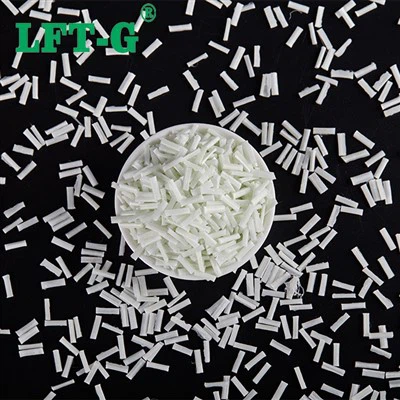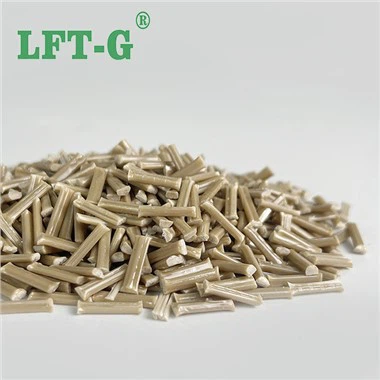


The Evolution from Elastomer to Structural Composite
For decades, engineers have utilized Thermoplastic Polyurethane (TPU) when they needed a material that offered both rubber-like elasticity and plastic-like processability. Its natural resistance to oil, grease, and abrasion made it a staple for seals, footwear, and flexible tubing. However, as modern engineering demands push components to their absolute mechanical limits, traditional unreinforced TPU exposes critical weaknesses: it lacks structural rigidity (low flexural modulus) and is highly susceptible to dimensional creep under continuous load.
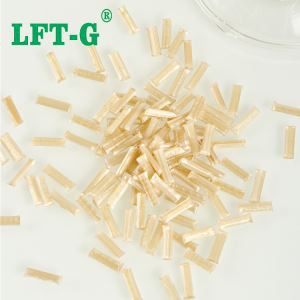
The Core Engineering Takeaway: By integrating continuous, long glass fibers (typically 10mm to 12mm in length) into a rigid TPU matrix through a specialized pultrusion process, manufacturers create LGF-TPU (Long Glass Fiber TPU). This composite undergoes a paradigm shift. It retains the inherent chemical and wear resistance of TPU but gains the massive structural rigidity and dimensional stability of a metal substitute. LGF-TPU boasts a Flexural Modulus up to 20 times higher than unreinforced TPU, while simultaneously increasing its abrasion resistance by preventing the polymer matrix from peeling under high friction.
If your application requires a component that can bear heavy dynamic loads without bending, while surviving in highly abrasive environments (like mining screens or heavy-duty caster wheels), traditional TPU is insufficient. LGF-TPU is the mandatory upgrade.
Microstructural Synergies: Why Long Fibers Change Everything
To truly grasp the superiority of LGF-TPU, we must analyze the interaction between the polyurethane matrix and the glass fibers at a microscopic level during the injection molding process.
The Problem with Short Glass Fiber (SGF-TPU)
Engineers often attempt to stiffen TPU by compounding it with short glass fibers (chopped to less than 1mm). While this does increase the modulus, it introduces severe abrasive liabilities. During extreme friction, the weak elastomer matrix easily wears away, exposing the sharp, microscopic ends of the short glass fibers. These exposed short fibers are easily pulled out of the matrix (fiber pull-out) and begin acting as an abrasive grit themselves, essentially destroying the mating surface and accelerating the wear of the part.
The LGF-TPU 3D Skeletal Network
LFRT (Long Fiber Reinforced Thermoplastic) technology fundamentally alters this dynamic. Because the glass fibers in LGF-TPU pellets are continuous (12mm long), they intertwine during the molding phase to form a continuous, inseparable 3D skeletal network throughout the part.
When aggressive friction is applied to an LGF-TPU component, this deep skeletal network anchors the TPU matrix firmly in place. The long fibers refuse to be pulled out. Instead of the polymer peeling away and exposing grit, the wear energy is dissipated efficiently across the entire 3D structure. This synergy results in a material that is not only rock-solid but incredibly resistant to chunking, tearing, and abrasive degradation.

Figure 1: The Exponential Leap in Rigidity and Wear Resistance provided by LGF-TPU.
Performance Data Showdown: Unreinforced vs. LGF-TPU
Let us examine the empirical data comparing standard unreinforced high-hardness TPU against a 40% Long Glass Fiber reinforced TPU composite.
| Engineering Metric | Traditional Unfilled TPU (Shore D75) |
LGF-TPU 40% (Long Glass Fiber) |
Engineering Impact |
|---|---|---|---|
| Flexural Modulus (Rigidity) | ~ 0.5 GPa | ~ 9.8 GPa | Eliminates bending and sagging under heavy structural loads. |
| Tensile Strength | ~ 45 MPa | ~ 180 MPa | Allows for thinner wall designs, reducing overall part weight. |
| Dimensional Stability (Creep) | High Deformation over time | Near-Zero Deformation | Maintains tight tolerances; gears and housings will not warp. |
| High-Load Abrasion Resistance | Moderate (Peels under heavy friction) | Exceptional | The 3D fiber network prevents the matrix from tearing, drastically extending lifespan. |
Primary Industrial Applications for LGF-TPU
Because LGF-TPU perfectly marries the chemical/oil resistance of polyurethane with the structural rigidity of a long-fiber composite, it is the material of choice for the most punishing industrial environments.
1. Heavy-Duty Caster Wheels and Rollers
Industrial forklifts and warehouse automated guided vehicles (AGVs) rely on caster wheels that must bear tons of weight without flattening (creep) while resisting intense floor friction. Unreinforced TPU flattens under the static load; metal wheels destroy the concrete floors. LGF-TPU hubs combined with specialized TPU treads offer the ultimate solution: high load-bearing capacity without floor damage.
2. Power Tool Housings and Gears
Handheld power tools (drills, grinders) are constantly dropped on concrete and subjected to high-torque vibrations. Housings molded from LGF-TPU possess extreme notched impact strength-meaning they will not shatter upon impact-and they dampen motor vibrations far better than rigid nylons or metals, reducing operator fatigue.
3. Mining and Agricultural Equipment
In mining shaker screens and agricultural harvester components, parts are subjected to a continuous barrage of abrasive rocks, sand, and high-impact forces. LGF-TPU acts as a highly durable shield. Its long-fiber skeleton prevents the severe chunking and tearing that quickly destroys standard elastomers in these fields.