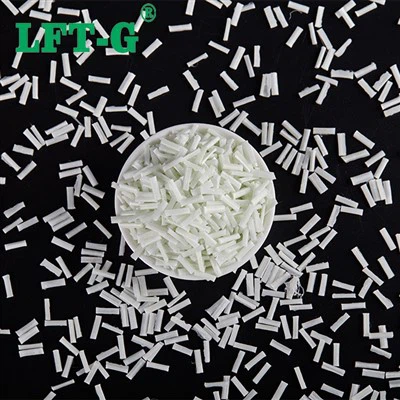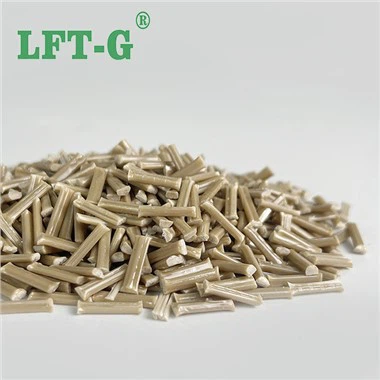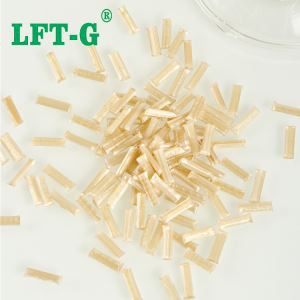

LGF PPS has Established Itself Firmly in the Industry
In the modern engineering plastic system, high-performance composite materials are gradually replacing traditional metal materials and ordinary plastic materials, becoming an important basic material in many high-end manufacturing fields. Among them, polyphenylene sulfide (Polyphenylene Sulfide, PPS) holds a significant position in the electronic and electrical, automotive industries, as well as industrial equipment due to its excellent heat resistance, chemical resistance and dimensional stability. In the PPS material system, by introducing long glass fibers (LGF) for reinforcement modification, the formed LGF PPS composite material further significantly enhances its mechanical properties and structural load-bearing capacity.
LGF PPS is not a single-performance material; rather, it is a typical "structural reinforcing engineering composite material". It not only inherits the high-temperature resistance and corrosion resistance characteristics of the PPS matrix, but also achieves a significant improvement in strength, rigidity, and anti-rheological properties through a long glass fiber reinforcement structure. Therefore, in the industry, LGF PPS is usually regarded as one of the important candidates for metal substitution materials, especially excelling in applications that prioritize lightweight and high reliability.
Why did LGF PPS come into existence?
In a nutshell, what the industry needs is a lightweight material that remains stable under high temperatures, corrosive conditions and long-term loads.
In many application scenarios, the materials do not face a single challenge, but rather multiple environmental factors combined together:
Engine compartment:
High temperature + Oil contamination + Vibration
Electronic module:
Thermal cycling + Electrical insulation + Dimension stability
Industrial fluid system:
Corrosion + Pressure + Long-term operation
In these environments, common materials tend to be "unevenly developed":
PA (nylon): Good in terms of strength, but highly absorbent
PP: Cheap, but lacks temperature resistance and rigidity
PBT: Dimensionally stable, but has limited chemical resistance
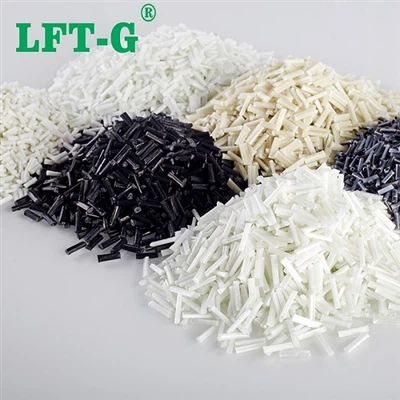
The emergence of PPS essentially solved a key problem: the ability to remain "basically unchanged" in extreme environments.
However, the problem is also obvious: PPS is too "fragile", more resembling an "environment-resistant material" rather than a "structural material".
So, the industry did a natural thing - it "added a framework" to it, and thus LGF PPS was born.
From "Materials" to "Structures": What Has Long Glass Fiber Changed?
Short glass fiber reinforcement is actually more like "adding fillers";
while long glass fiber reinforcement is closer to "constructing the structure".
The difference between these two lies not in the length itself, but in the change of the force application method.
In the LGF PPS, the long glass fibers are no longer merely dispersed reinforcing points within the resin; instead, they gradually form a structural network resembling a "microscopic framework". The changes brought about by this structure are systematic:
Stress is no longer solely borne by the resin, but shifts to the fibers.
The crack propagation path is interrupted, and the material no longer "cracks brittlely".
Under long-term loads, deformation no longer accumulates continuously.
The performance of LGF PPA in industrial environments
Lorem ipsum dolor sit amet consectetur adipisicing elit.
In actual engineering projects, what truly matters is not the "high indicators", but rather whether they are stable, predictable and suitable for long-term use in complex environments.
In this regard, the performance of LGF PPS compound resin is often more valuable than its parameters.
In high-temperature environments: Not heat-resistant, but "stable" instead.
In a chemical environment: Not anti-corrosive, but "non-reactive"
In the context of long-term loading: Resistance to creep is the true core.
Many materials remain "usable" at high temperatures, but their performance will gradually decline.
The characteristic of LGF PPS plastic pellet is:
The modulus decreases slowly
The strength decays controllably
The size change is extremely small
Most materials undergo the following changes in a chemical environment:
Softening
Swelling
Stress cracking
However, the performance of LGF PPS was more similar to "no response":
The molecular structure is stable.
The adsorption is extremely low.
The performance hardly changes.
The main problem with many plastics is not that they "can't withstand force", but rather that over time, they gradually deform.
LGF PPS, through its long glass fiber structure, significantly reduces this "time-based failure".
Its characteristics are:
Initial deformation is small
Subsequent deformation increases slowly
Long-term dimensions are controllable
This means that it is suitable for long-term heat load conditions rather than short-term heat resistance scenarios.
This makes it not just "resistant to wear", but almost completely unaffected by environmental changes in the fluid system.
This makes it particularly suitable for:
Fastening structural components
Supporting components
Sealing related parts
Where will LGF PPS go in the future?
From the perspective of industry trends, the development of LGF PPS will not be a "replacement for all materials", but will deepen in several directions:
1. More precise application positioning
It will not replace all engineering plastics, but will focus on:
High-temperature structural components
High-reliability parts
Metal substitution scenarios
2. Deeply integrated with the process
The future competition is not just about the material itself, but rather the integrated capability of material + process + design.
3. Expansion in the field of new energy
With the development of electrification, new requirements have been imposed on materials:
Thermal management
Electrical insulation Lightweighting
In these scenarios, LGF PPS is gradually becoming "one of the default options".
LGF PPS, as a high-performance engineering composite material, its core value lies in providing stable and predictable structural performance in complex environments. Compared to materials with a single performance orientation, LGF PPS places greater emphasis on the balance of multi-dimensional performance and long-term reliability.
In the modern industrial system, this material is gradually becoming one of the key materials that connect "high-performance requirements" with "lightweighting trends".