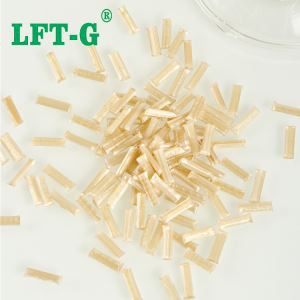

The Development of LGF TPU And the Industry Landscape
Thermoplastic polyurethane (TPU) has long held a unique position in the polymer material system due to its combination of rubber's elasticity and the processing properties of thermoplastic plastics. However, as industrial demands continue to evolve towards higher strength, lighter weight, and greater durability, traditional TPU materials have gradually shown performance limitations.
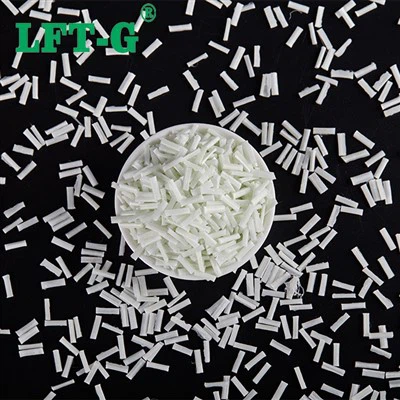
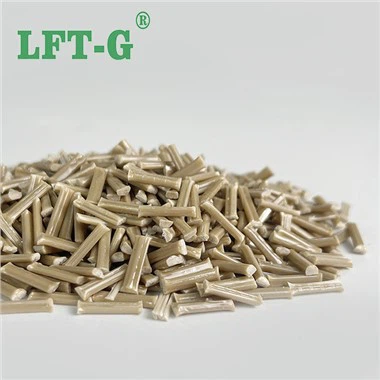
The emergence of long glass fiber reinforced thermoplastic polyurethane (LGF TPU) represents a significant breakthrough in the field of advanced materials. By incorporating long glass fibers into the TPU matrix, this type of composite material has overcome the performance limitations of traditional elastomers and achieved a new balance of flexibility, strength, and dimensional stability.
LGF TPU is not merely a simple combination of performance; rather, it represents a shift in the concept of material engineering - moving from a single-performance material to a multi-functional composite material system, in order to meet the increasingly complex demands of industrial applications.
Material Structure: The Scientific Foundation of LGF TPU
Molecules and Structural Composition
The micro-phase separation structure inherent in TPU endows it with excellent elasticity and toughness.
When long glass fibers (typically 5–25 mm in length) are introduced, an enhanced composite structure system is formed:
The TPU matrix provides flexibility, impact resistance, and chemical resistance.
The glass fibers provide rigidity, load-bearing capacity, and anti-rheological properties.
The interaction between the two achieves a comprehensive performance far exceeding that of traditional materials.
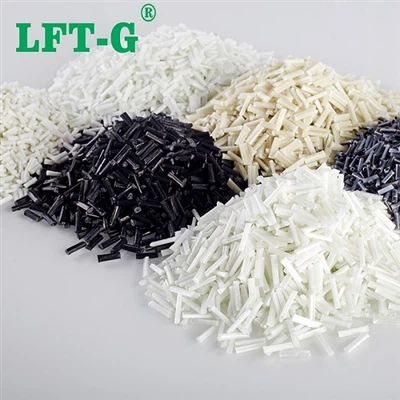
The Importance of Fiber Length
Unlike short-fiber reinforcing materials, the LGF system maintains the fiber length as much as possible during the processing. Its advantages include:
More efficient stress transfer
More controllable anisotropic structure
Better fatigue performance
The retention of fiber length directly affects the mechanical network structure within the material (percolation network), and is a key factor for achieving high performance.
Evolution of Mechanical Properties
High strength and high rigidity
The addition of long glass fibers significantly improves: Tensile strength
Bending modulus
Load-bearing capacity
Compared to pure TPU, LGF TPU achieves a multiple-fold improvement in rigidity.
Impact Resistance
One of the significant advantages of LGF TPU is that:
While enhancing rigidity, it still maintains excellent impact resistance performance.
This is achieved through the energy dissipation mechanism of the matrix absorbing energy and the fiber crack deflection.
Fatigue and Creep Properties
Under long-term loading conditions, LGF TPU exhibits:
Lower creep deformation
Longer fatigue life
More stable dimensional performance
Processing techniques and industrialization challenges
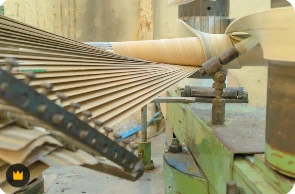
Continuous glass fiber impregnation of molten TPU
Traction-based molding to ensure uniform fiber distribution
Precise granulation to maintain fiber integrity
This process differs significantly from the traditional short-fiber twin-screw extrusion.
Fiber breakage control: Preventing loss of fiber length during processing
Flow orientation effect: Affecting the distribution of final mechanical properties
Mold optimization design: Adapting to high viscosity and fiber orientation
This requires precise control of temperature, shear rate, and injection speed to achieve a balance between performance and processing.
Higher cost compared to traditional TPU
Narrow processing window
Glass fiber wear on equipment
Nevertheless, with the advancement of equipment and processes, these issues are gradually being addressed and improved.
Other Performance Characteristics of LGF TPU
Thermal stability
The addition of glass fibers gives the material the following properties:
Higher heat distortion temperature (HDT)
Better thermal conductivity
Stronger resistance to thermal deformation
This enables an expansion of the usable temperature range.
Chemical resistance
The TPU material inherently possesses certain oil resistance and chemical resistance properties. LGF TPU further enhances these capabilities: Blocking performance
Resistance to environmental stress cracking
However, the interface bonding needs to be optimized to prevent water from penetrating.
Weather resistance and aging resistance
By adding the additive system, LGF TPU can achieve: Ultraviolet protection
Antioxidant
Antisaponification agent
The presence of glass fibers also reduces the movement of molecular chains and enhances durability.
Industry Applications and Market Penetration
With the advancement of processing technology and cost optimization, its application scope will continue to expand. LGF TPU is not only a material, but also a material platform that supports innovation. It holds significant strategic importance in the modern manufacturing system.

01
Automotive industry
The automotive sector is an important application direction for LGF TPU:
Lightweight structural components
Energy absorption components
Components around the engine compartment
Especially, the demand in the field of new energy vehicles is continuously increasing.
02
Consumer electronics
Applications include:
Structural shell
Support frame
Shock absorption component
Balancing rigidity and impact resistance.
03
Industrial equipment
Typical applications:
Transportation system components
Wear-resistant structural parts
Flexible load-bearing components
Extend the service life of equipment.
04
Sports and Leisure
In high-performance sports products:
Footwear structural components
Protective equipment
Enhanced parts of sports equipment
Achieving a balance between performance and safety.
LGF TPU, as a new type of composite material, has successfully broken through the boundary between elastomers and structural materials, establishing a bridge between flexibility and high strength. In the future, LGF TPU will continue to evolve in the directions of high performance, functionalization and sustainability, and will become an important pillar in the field of advanced materials.