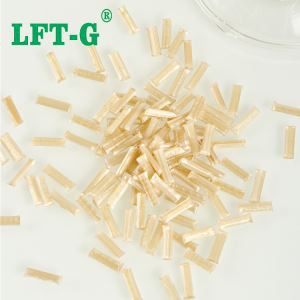

LGF PA66 Industry Insights
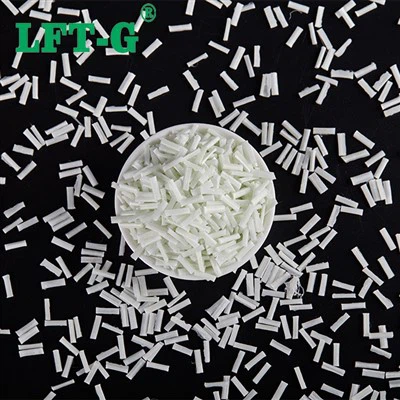
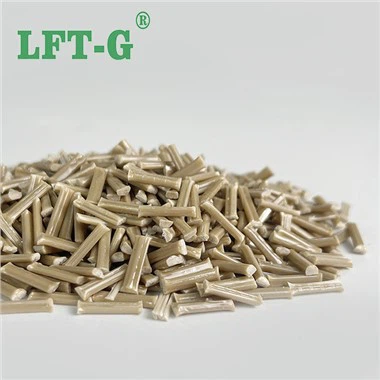
LGF PA66 is a high-performance engineering plastic composite material formed by adding long glass fibers to the nylon 66 (Polyamide 66, PA66) matrix.
Key features:
The glass fibers maintain a continuous length within the particles. After injection molding, they still retain a high proportion of effective fiber length.
This forms a "skeletal" reinforcing structure, enhancing the load-bearing capacity and impact toughness of the components. The comprehensive performance lies between that of traditional short-fiber PA66 and metallic materials.
From the perspective of industry attributes, LGF PA66 compound resin is not merely used for decorative or functional parts, but is specifically targeted at:
Load-bearing structural components
High-strength supporting parts
Long-term load-bearing parts
Engineering structures that need to replace metals
In the material system, LGF PA66 compound resin lies between short fiber reinforced engineering plastics and light metal materials, and it is an important representative of the upgrade from engineering plastics to "structural materials".
Material Mechanism
The structural reinforcing nature of long glass fibers
The role of long glass fibers in LGF PA66 is not only to enhance the material's strength, but more importantly, to change the way the material is stressed. Under load conditions, the long fibers can span a larger stress area, allowing the load to be effectively transferred along the fiber direction, thereby forming an enhanced structure similar to an "embedded framework".
Compared to short fiber materials, LGF PA66 exhibits in engineering applications:
Higher effective load-bearing length
Better stress dispersion capability
More gentle failure mode (non-sudden brittle fracture)
This enhancement mechanism makes LGF PA66 particularly suitable for applications involving repeated stress, impact loads, or long-term static loads.
The superior position of PA66 matrix in engineering plastics
PA66 is one of the most mature engineering plastics, with a solid foundation of comprehensive performance:
High crystallinity leads to a higher heat distortion temperature
It can still maintain good mechanical properties at high temperatures
It has good tolerance to oils, fuels and various chemical media
The electrical insulation performance is stable, suitable for integrated design of structure and function When PA66 is combined with long glass fibers as the matrix, its original heat resistance and chemical stability are further enhanced, enabling the material to possess greater reliability under high temperatures, heavy loads and complex working conditions.
Analysis of LGF PA66 performance

High Strength-to-Weight Ratio and Lightweighting
In the field of structural design, "strength-to-weight ratio" is often more significant for engineering purposes than "absolute strength". LGF PA66 maintains high bending strength and rigidity while significantly reducing the weight of components, making it one of the key materials for lightweight design.
In various industry practices, LGF PA66 is commonly used for:
Replacing stamped or cast metal parts
Integrating multiple metal structures into a single plastic component
Reducing system weight and enhancing design flexibility, This concept of light weighting is particularly prominent in the automotive, new energy and public transportation sectors.
Impact toughness and safety redundancy design
Due to the fact that long fibers undergo pulling and bridging during the fracture process, LGF PA66 can absorb more energy under impact or overload conditions. This characteristic makes the material more predictable in engineering failure, which is beneficial for safety redundancy design.
Therefore, LGF PA66 is often used for:
Human contact or support components
Load-bearing structures requiring impact resistance Long-term vibration or dynamic load environment


Dimensional stability
Under long-term service conditions, creep and dimensional changes typically determine whether a material is suitable for structural applications. Due to the presence of long fibers in LGF PA66, the molecular chains are effectively restricted from moving, significantly improving:
anti-creeper performance
thermal dimensional stability
long-term mechanical retention rate This gives it a long-term reliability advantage in industrial equipment and transportation vehicles.
Industrial Applications of LGF PA66

Automotive Parts
In the automotive industry, LGF PA66 is widely used for:
Seat frames and support structures
Front-end modules and functional brackets
Structural components of battery systems
Its advantages in light weighting, heat resistance and structural integration are particularly in line with the development direction of new energy vehicles.
Public Transportation
In buses and rail systems, LGF PA66 is often used for load-bearing and supporting components, meeting the requirements of high strength, fatigue resistance, and long-term reliability, while reducing the overall vehicle weight.
Industrial Equipment
In the industrial field, LGF PA66 helps to reduce metal processing and assembly procedures, enables integrated structural design, and enhances production efficiency and system stability.
The Process Characteristics of Injection Molding
LGF PA66 composite is usually processed using a dedicated long-fiber injection molding process, which imposes higher requirements on the manufacturing process:
Low shear plasticization to protect the fiber length
A reasonable screw structure and injection speed control
Optimized flow channels and gate design to reduce fiber damage
The fiber length retention rate and the orientation distribution are the key factors determining the performance of the final product.
From the perspective of industry development, the value of LGF PA66 is shifting from "high-performance material" to "structural solution". With the advancements in design concepts, simulation capabilities and manufacturing processes, its application boundaries are still expanding continuously. Continuously improving the quality of fiber impregnation, the length retention rate and batch stability can enable LGF PA66 materials to move towards higher quality and enhance competitiveness.