
LGF Compares with SGF Composite
In the field of modification of high-performance engineering plastics, glass fiber reinforcement is undoubtedly the most mature and widely applied technical approach. However, for many engineers and purchasers, a seemingly simple parameter - fiber length - is often underestimated.
When we talk about glass fiber reinforced thermoplastics, short glass fibers (SGF) and long glass fibers (LGF), despite having similar compositions, exhibit vastly different characteristics from the microstructure to the macroscopic performance. This article will take you deep into the material's interior to compare the underlying logic and application boundaries of these two materials.
Origin: Genetic Differences
The differences between the two have been predetermined on the production line.
Short glass fiber (SGF) is the "traditional standard" in the industry. Its production is usually carried out in a twin-screw extruder, where short-cut fibers are mixed with the resin and melted. During this process, intense mechanical shear force breaks the glass fibers, resulting in the fibers in the final particles being typically very short (about 0.2 mm - 0.4 mm). This process is highly efficient and cost-effective, so SGF has become the preferred choice for the majority of modified plastics.
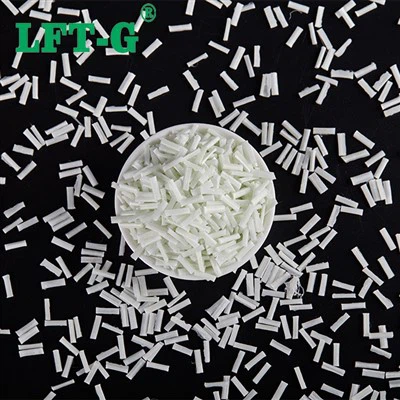
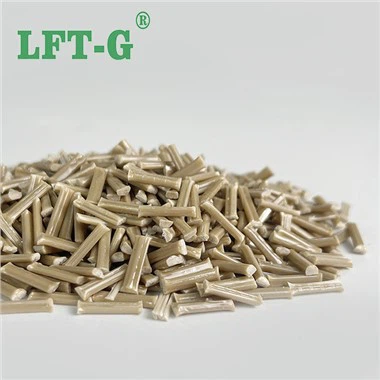
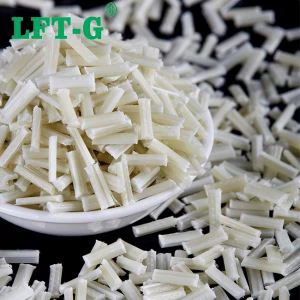
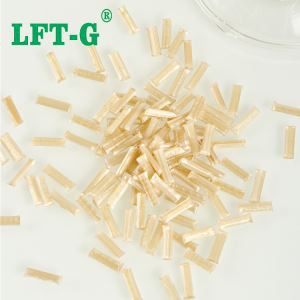
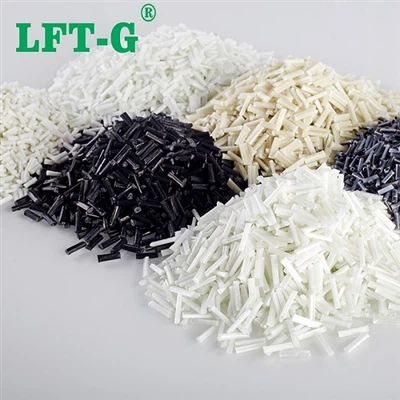
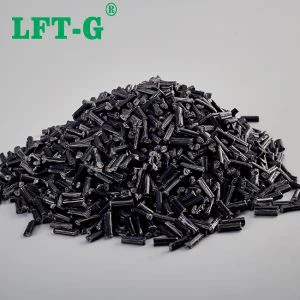
In contrast, long glass fiber (LGF) has a more "exalted" origin. It is produced using the cable-coated pultrusion process. The glass fiber bundles are fully immersed in the molten resin in a specific mold and then pulled out like a cable, followed by cooling and granulation. Under this process, the particle length is the same as the fiber length (typically 10 mm - 12 mm or even longer). This special process is designed to maximize the integrity of the fibers, laying the groundwork for subsequent performance leaps.
GF Material: Internal Structure
If we zoom in under a microscope, we will see two completely different scenes, which are the fundamental reason for the performance differences between the two.
In short glass fiber components, the fine fibers are dispersed like toothpicks within the resin matrix. Although they can enhance the stiffness of the material, the fibers operate independently of each other and lack mutual connections. Under stress, they mainly play the role of "filling and reinforcing".
However, inside the long glass fiber components, the situation is completely different. After injection molding, although the fiber length will be somewhat reduced, the retained length can still reach more than 1 mm - 3 mm (more than 10 times that of short glass fibers). What's more important is that these long fibers are bent and intertwined within the component, forming a three-dimensional "skeletal network". This network structure is like the steel bars in concrete, tightly locking the entire material together.
Performance Game
It is precisely because of this "framework network" that the long glass fibers have exerted an almost all-round suppression on the short glass fibers in terms of mechanical properties, especially when dealing with extreme conditions:
1. The qualitative change in impact resistance. This is the most core advantage of LGF material. When short glass fiber material is subjected to external force impact, cracks can easily bypass the short fibers and rapidly expand, and the fibers are prone to being pulled out, resulting in a brittle material performance. However, the winding network inside the long glass fibers can effectively absorb and disperse the impact energy. For the crack to expand, it must overcome the obstruction of the long fibers, and even require breaking the fibers. Therefore, the notch impact strength of LGF material is usually 2–3 times that of SGF, and it remains tough even in low-temperature environments.
2. In battle against High Temperature and Durability Under long-term load, plastics are prone to "creep" (i.e., permanent deformation occurs over time). Short fibers are too short to effectively prevent the sliding of polymer chains. However, the network structure of long glass fibers can firmly "hold" the resin matrix, significantly inhibiting creep. Moreover, in high-temperature environments, the high-temperature fatigue strength of LGF materials far exceeds that of SGF. This makes LGF the ideal choice for automotive engine components, structural parts, etc., which need to withstand alternating stress environments.
3. The competition of dimensional stability Injection molded parts often encounter the problem of warping deformation, which is often caused by the anisotropy resulting from the alignment (orientation) of fibers along the flow direction. The orientation of short glass fibers is extremely strong, making the molded parts prone to bending. However, long glass fibers, although also oriented due to their inter winding, provide restraining force in the vertical direction as well. This results in a more uniform shrinkage rate and smaller warping for LGF molded parts, making them highly suitable for manufacturing large components with strict requirements for dimensional accuracy.
Why do LGF and SGF coexist?
Since the performance of long glass fibers is so superior, why haven't they completely replaced short glass fibers? The reason is that in the field of materials, there is no perfect material; there are only the most suitable materials. Short glass fibers still have advantages in the following aspects:
First, there is the aspect of processing convenience and appearance. The processing of long glass fibers requires extremely careful process control to prevent fiber breakage, and it is prone to "floating fibers", resulting in a rough surface. On the other hand, short glass fibers have good fluidity and their surfaces can be easily made smooth and shiny. For products with high appearance requirements, complex structures, and moderate strength demands, such as consumer electronic shells, SGF remains the leader.
The next aspect is cost-effectiveness. The raw material costs and processing costs of LGF are generally higher than those of SGF. In those general fields that do not require extreme impact resistance or creep resistance, using LGF is undoubtedly a case of over-performance and cost waste.
Therefore, the competition between long glass fibers and short glass fibers is not a simple matter of superiority or inferiority; rather, it lies in the division of application scenarios. If your goal is to "replace steel with plastic", and you need the material to withstand significant impacts, endure long-term heavy loads, or replace aluminum alloy die-cast parts to achieve light weighting, then long glass fibers (LGF) are an indispensable high-performance solution.
If your product focuses more on exquisite appearance, intricate structure, and mainly aims for basic rigid support, with a low requirement for extreme toughness, then short glass fibers (SGF) is the best choice that balances performance and cost.