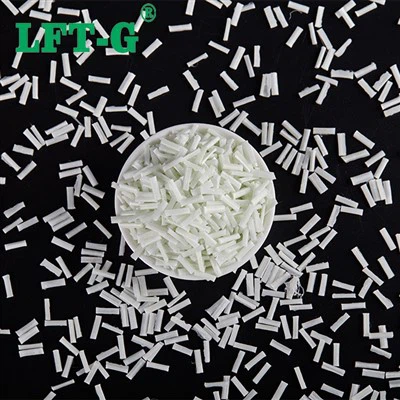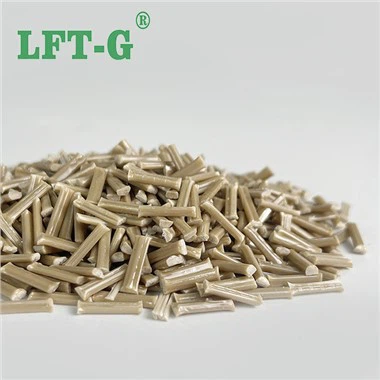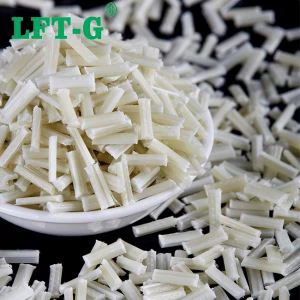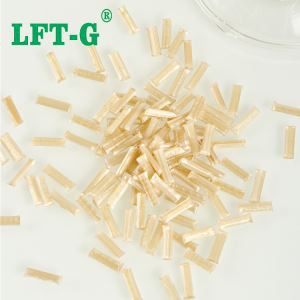

Long Fiber And Short Fiber PP Composite
Why does fiber reinforcement occur?
In the thermoplastic material system, polypropylene (PP) has always held the position of a "basic material". Its advantages include low cost, wide processing window, light density, and strong recyclability. However, due to its status as a "basic material", it also implies that its original performance has obvious shortcomings - especially in terms of rigidity, heat resistance, and long-term structural stability.
In the context of continuous upgrading of industrial applications, a single PP is no longer able to meet the requirements of fields such as automobiles, home appliances, and industrial structural components. Therefore, "enhanced modification" has gradually become the mainstream approach. Among all the enhancement methods, fiber reinforcement is the most efficient and has the highest degree of industrial maturity.
From the perspective of industry evolution, the PP enhancement has gone through three stages:
Mineral filling stage (talc powder, calcium carbonate): Enhances rigidity, but sacrifices impact performance
Short Fiber Reinforcement Phase (SGF PP): Achieving a balanced enhancement of rigidity and strength
Long Fiber Reinforcement Phase (LGF PP): Moving Forward into the Field of Structural Materials
Therefore, short-fiber PP and long-fiber PP are not merely two types of materials; they also represent two crucial transitional stages in the transformation of modified PP from a "filling material" to an "engineering structural material".
SGF PP: Performance Balance in a Mature System

The core feature of short-fiber PP lies in the sub-millimeter range of its fiber length. This characteristic is not merely a geometric parameter but a fundamental factor that determines the material's mechanical behavior.
From a microscopic perspective, these fibers are randomly distributed within the PP matrix, forming an approximately homogeneous composite system. The direct consequence of this structure is that the material exhibits good isotropy on a macroscopic scale, meaning that the performance differences in different directions are relatively small. This is beneficial for the stable formation of complex structural components.
Furthermore, during the actual injection molding process, the fibers will undergo secondary shearing, which means that the fiber lengths in the final product are often shorter than those in the original particles. This structural degradation during the processing makes it necessary to leave a safety margin when designing short-fiber PP; otherwise, the actual performance may fall short of expectations.
Overall, the performance characteristics of short-fiber PP can be understood as a "statistical enhancement model": Through the average effect of a large number of short fibers, the overall rigidity and strength are enhanced. However, due to the lack of a continuous structure, there is a clear upper limit to the performance improvement.
Long-fiber PP: Continuous reinforcement system
The core of the material
The core of long-fiber PP lies not in the fibers being "longer", but in the fact that the fiber length exceeds the critical length, thereby bearing the actual load. When the fiber length reaches the millimeter level or higher, the material's interior is no longer a simple dispersed system, but forms a directional reinforcing network. This network enables stress to be continuously transmitted along the fibers, thereby significantly enhancing the material's load-bearing capacity.
Long-fiber PP is more akin to a low-cost composite material, with a structure similar to "reinforcing framework + matrix filling". During the force application process, the fibers bear the main tensile load, while the matrix is responsible for maintaining structural integrity and transmitting shear stress. This division of labor causes a qualitative change in the material's mechanical behavior, shifting from "matrix dominance" to "fiber dominance".

Structural load-bearing capacity
Under impact loading, long-fiber PP exhibits a completely different failure mechanism from short-fiber PP. In the long-fiber system, cracks are constantly hindered and deflected by the fibers during propagation. The fibers not only bridge the cracks but also consume a large amount of energy through the pulling-out process, significantly enhancing the material's toughness.
Furthermore, under long-term loading conditions, long-fiber PP also demonstrates excellent creep resistance. Due to the formation of a similar framework-like structure by the fibers, which restricts the movement of polymer molecular chains, the material can maintain its size stability even under long-term stress.

The essential differences in engineering applications
In actual engineering, the choice between short-fiber PP and long-fiber PP is not merely a matter of performance comparison; it reflects differences in design logic. Short-fiber PP is typically used in a "material-driven" design approach, where engineers first determine the cost and processing method, then select a material with sufficient performance, and compensate through structural design. This approach emphasizes cost control and manufacturing stability, hence short-fiber PP becomes the most common choice.
In contrast, long-fiber PP is more commonly used in a "design-driven" approach. In this model, engineers first determine the structural requirements, such as strength, stiffness, and impact resistance, and then select the materials that can meet these requirements. Due to its high structural load-bearing capacity, long-fiber PP can replace metals or engineering plastics in certain scenarios, thereby achieving lightweighting and cost optimization.

When subjected to excessive force, short-fiber PP often exhibits sudden fracture, with a rapid and unanticipated failure process. In contrast, long-fiber PP typically undergoes progressive failure, where fibers gradually detach, are pulled out, and break as the load increases. This process can absorb more energy and is more conducive to structural safety design.
Therefore, from an engineering perspective, short-fiber PP and long-fiber PP are not the same level of materials but rather two solutions serving different design strategies. The former emphasizes "economy and manufacturability", while the latter emphasizes "structural performance and system optimization".
Industrial Application and Cost Logic
In actual industrial applications, the selection of materials is not determined by a single performance indicator alone, but is driven by "system cost". The reason why short-fiber PP has long dominated the market is that it has significant advantages in raw material cost, processing cost, and yield rate. For most non-structural components, their performance is already sufficient, so there is no need to adopt a higher-cost long-fiber system.
However, in some critical applications, long-fiber PP can bring system-level benefits through structural optimization. For instance, in the front-end module of automobiles, the traditional solution is usually composed of multiple welded metal parts. By using long-fiber PP, multiple components can be integrated into a single unit through one-piece molding. This not only reduces the assembly process but also lowers the weight and improves production efficiency. Although the material cost is relatively high, the overall cost actually decreases.
The two are not a simple substitution relationship; instead, they complement each other in different application scenarios, jointly forming a complete ecosystem for the modified PP material system.

Looking ahead, the development of modified PP will not simply follow a one-way progression from short fibers to long fibers. Instead, it is more likely to exhibit a trend of multi-system integration. On one hand, short-fiber PP will continue to dominate in cost-sensitive markets and further enhance its performance through formulation optimization. On the other hand, long-fiber PP will continue to expand in the high-end structural field, especially playing a greater role in automotive lightweighting and new energy applications.
E-mail:
sale03@lfrtplastic.com