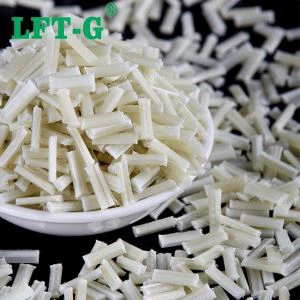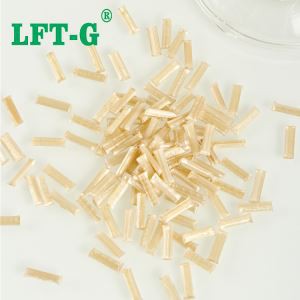

Pellets or In-Line? The Short Answer
LFT-G and LFT-D look like two grades, but they are not. LFT-G is a supply form: long fiber pellets that a molder stores, ships, and molds with standard injection or compression equipment. LFT-D is a process: resin, fiber, and additives are compounded and molded in one line, with no pellet stock in between. The choice is therefore not which material is stronger in general. It is which route fits the equipment, part, and volume the buyer already has or plans to build.
The short answer is a boundary, not a ranking. Buy LFT-G pellets when the shop molds with standard injection or compression equipment, needs a storable grade that can be trialed quickly, and wants to change grade by changing pellets. Consider LFT-D only when the shop already runs, or plans to build, an in-line compounding line for large parts at high volume, and can accept the line, tooling, and process control that route requires. This article explains LFT-D so buyers can tell the two routes apart. LFT-G is the only route supplied here, and the trial at the end of this article is for LFT-G pellets.
Why Buyers Confuse a Pellet Grade With a Process
A buyer who searches LFT-G versus LFT-D usually already knows long fiber material, and the confusion starts with the letters. Both names contain LFT, both use long fibers, and both can make structural parts. A buyer may therefore ask for an LFT-D grade as if it were a pellet grade, or ask a pellet supplier for an in-line line as if it were a product. Either mistake wastes a trial, because the two routes need different inputs, different equipment, and different decisions.
The cost question is also different by route. For pellets, cost is grade, trial, molding, and scrap on standard equipment. For in-line molding, cost includes the compounding line, the press or injection unit, material handling, and process control, spread over the parts the line makes. A route that looks cheaper on pellets alone, or cheaper on paper for a large part, can still cost more if the line, volume, or part size does not fit. The buyer should therefore decide the route before deciding the grade, and should not compare a pellet price with an in-line system cost as if they were the same thing.
Where Compounding Happens Decides the Route

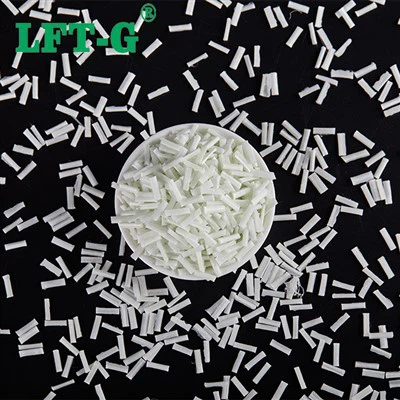
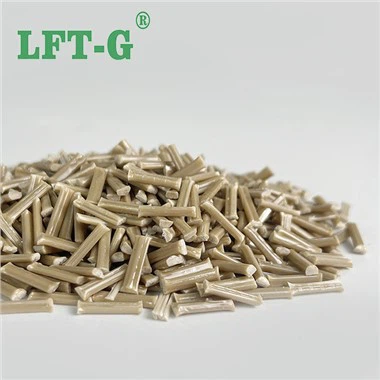
The difference starts with where compounding happens. In LFT-G, compounding happens before the molder receives anything. Fiber rovings are impregnated with resin, cooled, and cut into pellets. Each pellet contains long, aligned fibers, and the pellet length sets the starting fiber length. The molder then molds those pellets. If molding breaks fibers through high shear, a small gate, or poor process control, the finished part will not keep the pellet fiber length, even though the pellets started long.
In LFT-D, compounding happens at the molder, in the same line as molding. Resin, additives, and continuous fiber are fed into a compounding unit, combined, and moved directly to molding, either by compression or by injection. There is no pellet stock, no pellet shipping, and no second heating step for pellets. That is why LFT-D is described as direct, and why it has two forms: LFT-D-CM for direct compression molding, and LFT-D-IM for direct injection molding. The fiber source, the resin, and the molding step are the same idea in both forms; only the molding step changes.
This distinction explains most selection mistakes. LFT-G is something a buyer can order, store, and trial on existing equipment. LFT-D is something a buyer must run, with a line built for it. A pellet datasheet cannot describe an in-line line, and an in-line line description cannot be ordered as pellets.
LFT-G Pellets vs LFT-D In-Line, Route by Route
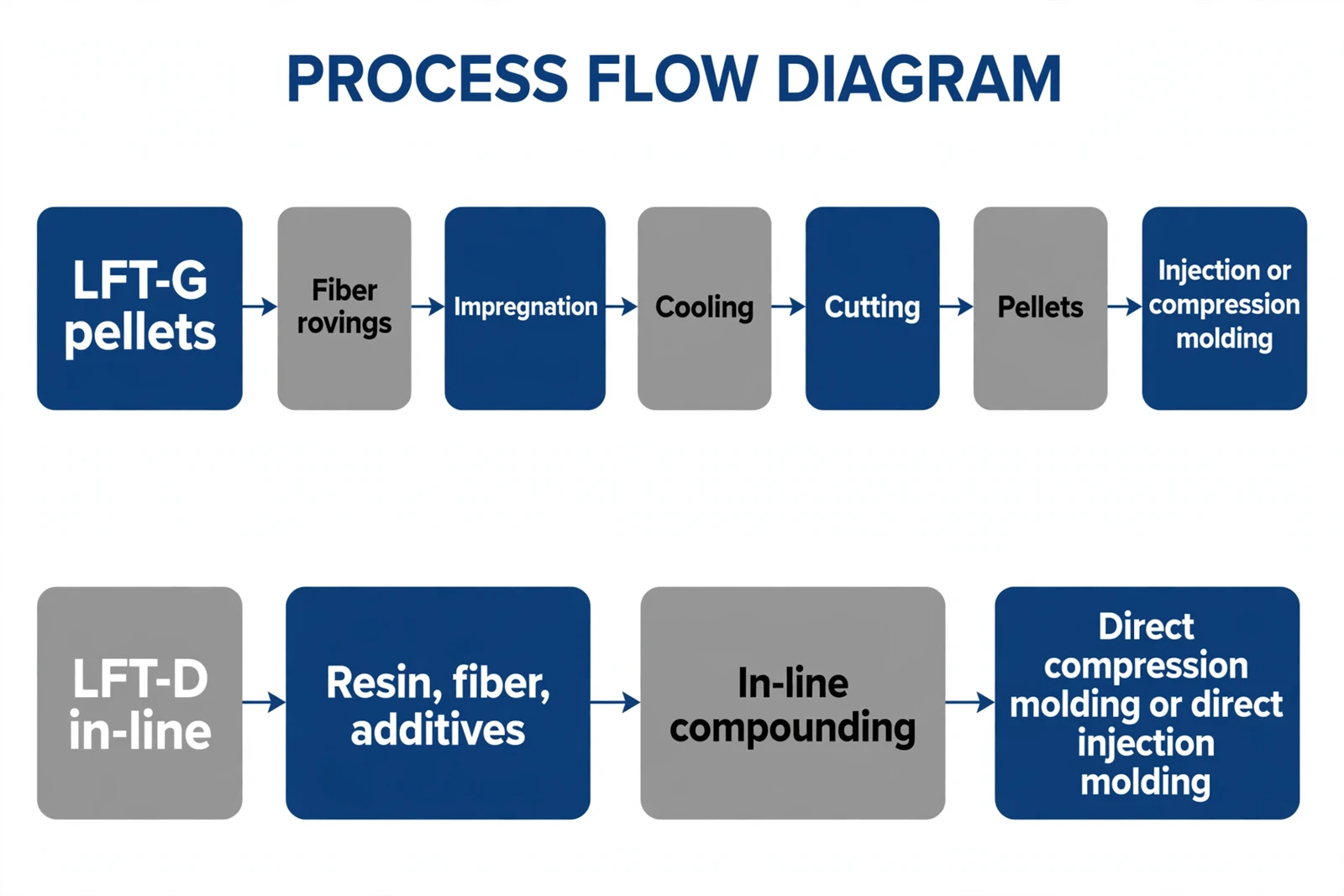
Schematic, not to scale. Two routes, one pellet form and one in-line process.
The table below compares routes, not grades. It states direction only, because a pellet grade and an in-line process do not share one datasheet.
| Item | LFT-G pellets | LFT-D in-line |
|---|---|---|
| What the buyer receives or runs | Storable pellets, molded later | A compounding and molding line, run at the molder |
| Compounding step | Done before delivery, by pellet production | Done in-line, at molding time |
| Molding equipment | Standard injection or compression equipment | In-line compounding unit plus press or injection unit |
| Changing formulation | Change pellet grade | Change resin, fiber, or additive dosing on the line |
| Logistics | Pellets shipped and stored | Resin and fiber shipped, no pellet stock |
| Part and volume fit | Broad, including standard molded parts and quick trials | Better suited to large parts at high volume, where a dedicated line pays back |
| Fiber length risk | Molding can still break fibers if process control is poor | No pellet step, but compounding and molding still need fiber length control |
| What is supplied here | Yes, LFT-G pellets | No, explained here only |
Two readings matter more than the full table. First, longer fiber improves stiffness, strength, and impact in direction, but it also makes processing harder, so fiber length alone never decides a route. Second, an in-line route removes the pellet step, but it does not remove process control: molding must still fall inside a pressure and temperature window, or the part will show surface defects, flash, short shots, or material degradation. A route chosen only for fiber length, without checking equipment and volume, will disappoint on either side.
When Pellets Fit, and When a Line Pays Back
Choose LFT-G pellets when the part fits the pellet route. That route fits a shop with standard injection or compression equipment, a part that can be molded from pellets, and a trial that needs to start quickly without building a line. Changing grade means changing pellets, and the same pellets can be stored and molded again. For a new part, the pellet route also keeps the trial simple: one grade, one tool, and one set of molding conditions to check.
Consider LFT-D only as a process decision, not as a pellet order. That route fits a shop that already runs an in-line line, or a program large enough to justify building one for large parts at high volume. Formulation can be adjusted on the line, and there is no pellet manufacturing or pellet logistics step. Those advantages only pay back when volume, part size, and process control all fit. If any of those three does not fit, the pellet route is the safer trial, even for a large part.
Neither route is a general upgrade over the other. Pellets are not a cheap version of in-line molding, and in-line molding is not a stronger version of pellets. Each is the right answer only inside its own equipment and volume boundary, and a part outside that boundary should stay with the route that fits, or be redesigned before the route changes.
Pellet Windows Come From the Datasheet, Line Windows From the Line
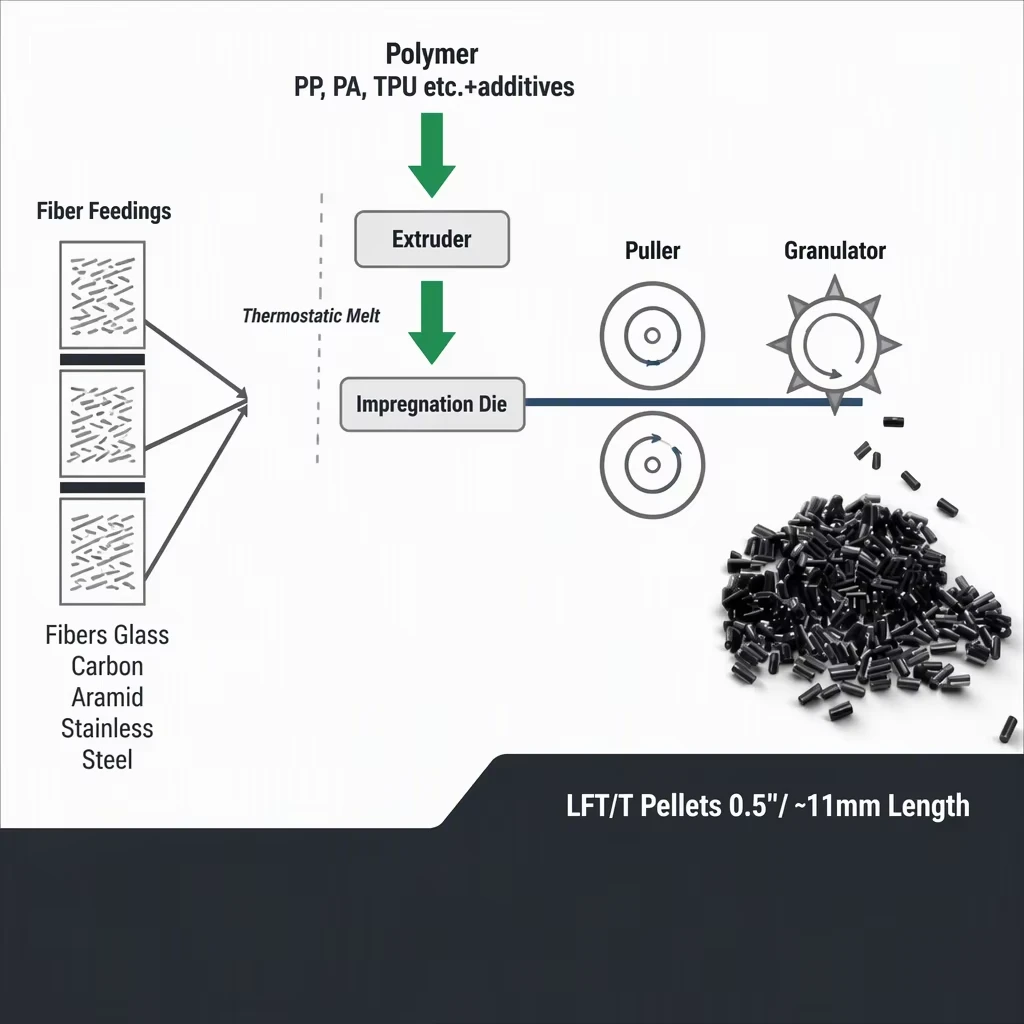
LFT-G pellet production process: polymer and fiber feedings are impregnated, pulled, and cut into pellets.
For LFT-G pellets, processing follows the pellet grade datasheet for that grade, not a general window. Gate size, drying, melt temperature, mold temperature, and injection pressure must come from the grade being trialed, because resin and fiber content change the window. As a general rule for long fiber pellets, a small gate and high shear should be avoided, because they break fibers and disturb the fiber network. A trial that changes gate, screw, or back pressure without checking fiber retention has not proven the grade.
For LFT-D, processing follows the line, not a pellet datasheet. Resin, fiber, and additive dosing, compounding, and molding must be controlled together, and the molding step must stay inside its pressure and temperature window. Outside that window, the part can show surface defects, flash, short shots, or degradation, even when the formulation is right. That is why an in-line trial needs the line, the tool, and the formulation together, and why a result from a pellet trial cannot be used as proof for an in-line part, or the other way round.
Design checks follow the same boundary. For pellets, check gate, wall thickness, ribs, and bosses on the real tool, and check fiber retention after molding. For in-line molding, check material handling, compounding, and molding together, and check the finished part, not only the formulation. In both routes, a result from a different thickness, tool, or process cannot be used as proof for a new part.
How to Trial LFT-G Pellets for Your Part
For a new part, the trial follows a fixed sequence, and it is a pellet trial:
- Send the part application and a product photo, so the load path, size, and surface requirement can be seen.
- Send the current material and its datasheet, so the comparison starts from a known baseline.
- State the target performance, including load, temperature, environment, and service life.
- Run a pellet trial for the chosen LFT-G grade and tool, and test it with the same standards as the baseline.
- Decide on production only if the trial meets stiffness, strength, dimensional stability, and repeatability for that part.
If the program later moves to an in-line route, that move needs a separate line and tool trial. It is not an extension of a pellet trial.
FAQ
Is LFT-D a grade I can order as pellets?
No. LFT-D is an in-line process, not a pellet grade. LFT-G is the pellet form. If you need pellets, order LFT-G.
Can I mold LFT-G pellets on standard injection equipment?
Yes, when the grade and tool fit. Gate, screw, and process control still matter, because poor molding can break fibers even when the pellets start long.
When does LFT-D make sense?
When the shop runs an in-line compounding line, or the program is large enough for large parts at high volume to justify one. Volume, part size, and process control must all fit.
Does longer fiber always mean a better part?
No. Longer fiber improves stiffness, strength, and impact in direction, but it also makes processing harder. Equipment, gate, and process control decide how much of the fiber length survives into the part.
What should I send for an LFT-G pellet trial?
Send the part application and a product photo, the current material and its datasheet, and the target performance, including load, temperature, environment, and service life.