
Introduction to Two-color Injection Molding Process
What is Two-color Injection Molding?
Two-color injection molding also falls under the category of multi-component injection molding, commonly known as laminated injection molding.
The process logic is as follows: First, the rigid and hard base material is injection-molded, then an elastic material is superimposed on the surface of the base material. Polyurethane elastomer is mostly chosen. Two different materials or different colors of plastics are permanently bonded and fused within the mold.
The final product not only presents a dual-color effect in appearance, but also has differentiated mechanical properties in the internal and external structures. The hard base material ensures the overall structural strength, while the outer layer soft rubber provides anti-slip, shock absorption, and resistance to bumps and scratches. The two materials are firmly combined into a whole, without the need for later glue bonding and assembly.
Two-shot injection molding ≠ Secondary overmolding
The secondary coating process involves the hardware being made separately, and then manually placed into another mold to apply the soft coating. It is fixed by physical wrapping and clamping, resulting in large gaps and easy delamination.
The two-color injection molding process uses the same mold rotation for the entire process. The two materials interface and fuse into a single entity, with extremely small gaps. The structural stability of this process is beyond that of the coating method.
Basic Working Principle of Two-Shot Injection Molding

Two-Shot Injection Molding Process Steps
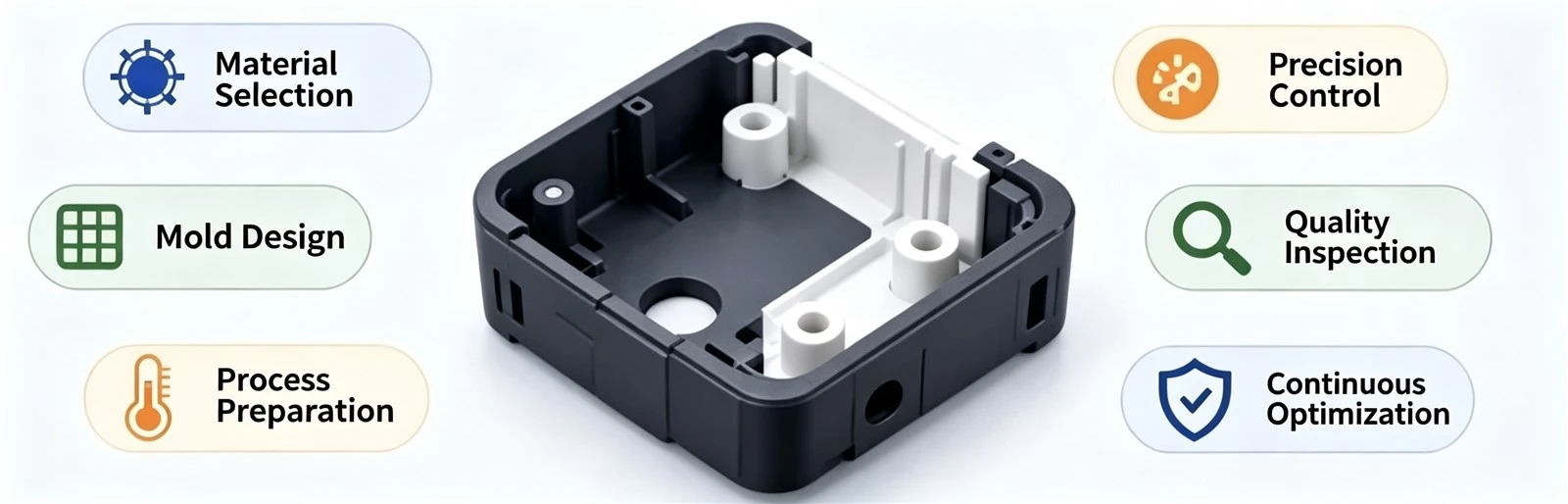
Full monitoring and recording of parameters during the injection process:
-
Material Preparation:Select two compatible materials and perform proper drying treatment before molding.
-
Mold Installation and Setup:Install the two-shot mold, complete mold alignment and calibration to ensure molding accuracy.
-
First Shot Injection:Inject the first material/color into the mold cavity and allow sufficient cooling to form the initial structure.
-
Mold Rotation / Core Transfer:Rotate the mold or transfer the core to move the first molded section into the second injection position.
-
Second Shot Injection:Inject the second material/color into the mold cavity and combine it with the first shot to form an integrated two-color structure.
-
Cooling and Solidification:Allow the molded part to cool completely, ensuring dimensional stability and proper bonding between the two materials.
-
Mold Opening and Part Removal:Open the mold, eject the finished part, then perform trimming, inspection, and quality verification.
Common Defects in Two-Shot Injection Molding
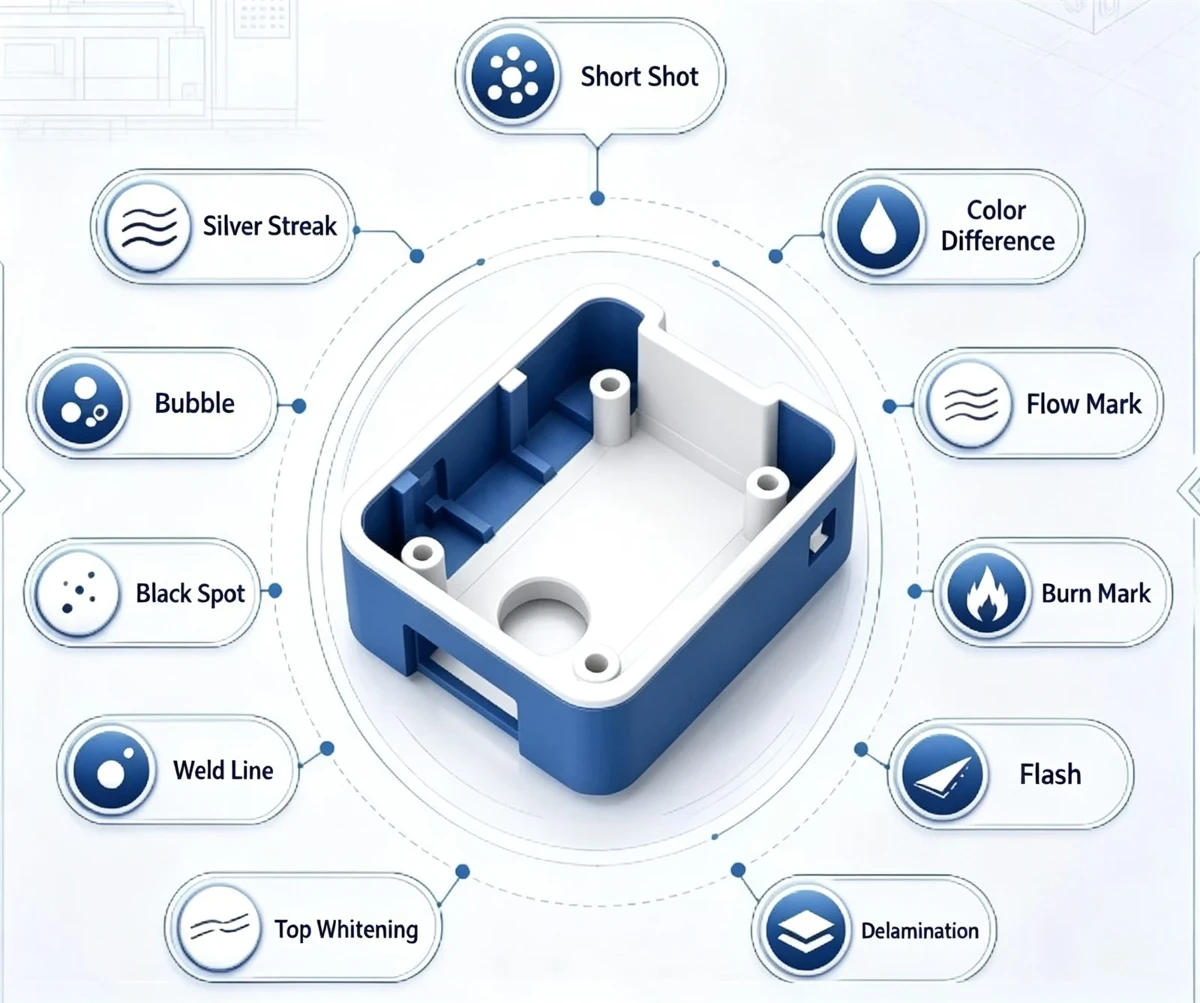
Common defects in two-shot injection molding are mainly caused by five factors: material compatibility, mold accuracy, processing parameters, equipment stability, and product design. Optimizing these factors is essential to achieve reliable bonding, precise color separation, and stable part performance.