
The Industry Pain Point: Why SGF-PA66 Fails Under the Hood
 When replacing cast aluminum water pumps with plastic composites, engineers typically default to 30% Short Glass Fiber PA66 (SGF-PA66). Initially, this material passes all static burst-pressure tests. The problems, however, begin thousands of miles later.
An internal combustion engine or EV thermal management system subjects the water pump to coolant temperatures exceeding 120°C (248°F) while simultaneously bombarding it with high-frequency motor vibrations. Under these continuous dynamic loads, SGF-PA66 exhibits two fatal flaws:
- High-Temperature Creep: Over months of exposure to 120°C heat and constant bolt-clamping force, the short fibers slowly drift within the softened nylon matrix. The plastic physically deforms (creeps), causing the sealing gaskets to lose compression. Result: Coolant leakage.
- Fatigue Cracking at Fasteners: The engine's vibration causes cyclical stress. Because short fibers (typically <1mm) cannot bridge micro-cracks, repeated vibrations cause these cracks to propagate rapidly around the metal inserts and bolt holes until the housing fractures completely.
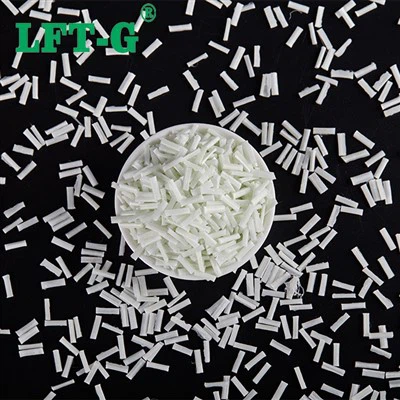
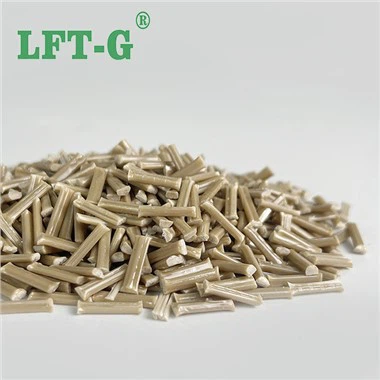
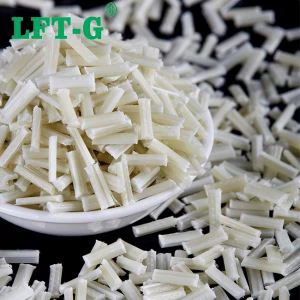
The Material Solution: Upgrading the housing to LGF-PA66 (Long Glass Fiber PA66) eliminates both failure modes. By utilizing 12mm continuous glass fibers, the LFRT composite forms a rigid internal skeleton that refuses to creep under heat and physically blocks the propagation of fatigue cracks.
Failure Analysis & The LGF Advantage

1. Stopping Fatigue Crack Propagation
In SGF-PA66 (left), stress concentrates around the bolt holes. The short fibers act merely as localized fillers. When vibration initiates a microscopic crack, there is no structural mechanism to stop it; the crack simply tears through the weak polymer matrix between the short fibers until the flange breaks off.
In contrast, the entangled 12mm fibers in LGF-PA66 span across potential crack paths. The energy required to break the part must now pull these long fibers out of the matrix, boosting fatigue endurance limits by over 500% compared to short-fiber alternatives.

Figure 1: LGF-PA66 exhibits vastly superior fatigue life and near-zero creep deformation at 120°C.
Engineering Data: Validating the Upgrade
The data clearly illustrates why Tier-1 automotive suppliers are phasing out short glass fibers for critical fluid-handling components.
| Performance Metric (at 120°C) | SGF-PA66 (30% Short Glass) |
LGF-PA66 (30% Long Glass) |
Real-World Outcome |
|---|---|---|---|
|
Dynamic Fatigue Life (Cycles to failure) |
~ 100,000 Cycles | > 2,500,000 Cycles | Eliminates warranty claims due to vibration-induced bracket snapping. |
|
Creep Deformation (1000h @ 20MPa) |
2.5 mm | 0.4 mm | Seals and gaskets remain perfectly compressed; zero coolant leakage. |
| Notched Impact Strength (-40°C) | 7 kJ/m² | 29 kJ/m² | Survives extreme cold-weather starting impacts without shattering. |