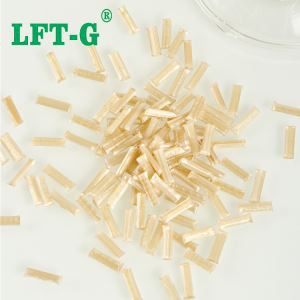

LGF PA12: A Combination of Strength and Stability
In the contemporary matrix of high-performance polymer selection, engineers often encounter a thorny challenge: how to maintain outstanding mechanical strength while ensuring long-term service stability in harsh environments such as moisture, chemical erosion, or wide temperature fluctuations. Long glass fiber reinforced polyamide 12 (LGF PA12) is precisely a strategic material solution developed to address this "performance paradox". It is not merely a simple material blend, but a sophisticated engineering composite material that achieves performance boundary expansion through structural synergy effects.
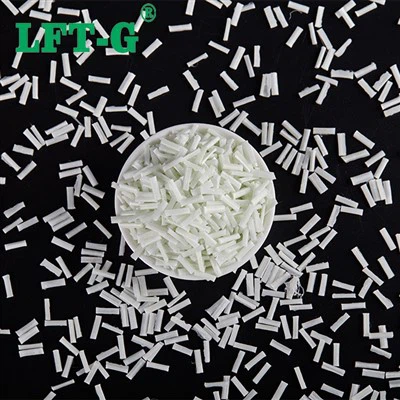
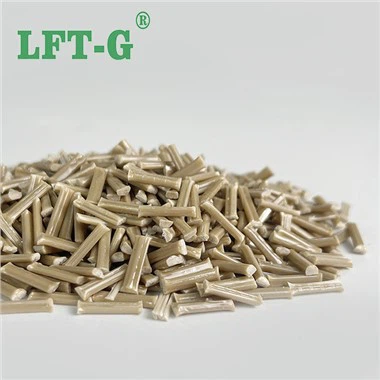
If PA12 matrix provides "chemical stability", then long glass fibers (LGF) construct "physical stability". Unlike short glass fibers (SGF) which are dispersed in the matrix, the LGF process (such as pultrusion impregnation method) ensures that the fiber length is consistent with the particle length before injection molding (usually > 5 mm). During the optimized injection molding process, these long fibers interweave and orient with each other within the mold cavity, eventually forming a continuous three-dimensional fiber microstructure within the component.
GF Nylon 12: Core Performance Advantage
Outstanding dimensional stability: Thanks to the extremely low water absorption rate of PA12, LGF PA12 components hardly undergo dimensional expansion or contraction in environments with significant humidity fluctuations, ensuring the high precision requirements for applications.

Outstanding chemical resistance and hydrolytic stability: PA12 has strong tolerance to various chemicals (such as fuel, oil, hydraulic oil, solvents) and salt water. It also exhibits excellent hydrolytic resistance when exposed to water or steam for a long time, making it highly suitable for fluid processing systems.
High toughness and high impact strength: The long glass fiber framework structure significantly enhances the material's energy absorption capacity, making it less prone to cracking when subjected to impact, and maintaining good toughness even at low temperatures (such as -40 °C).
High stiffness and strength: The addition of LGF significantly enhances the bending modulus and tensile strength of the material, enabling it to withstand high loads and being suitable for structural components.
Exceptional weather resistance: The PA12 matrix itself possesses splendid UV resistance, enabling it to be suitable for outdoor applications.
Exceptional processing performance: LGF PA12 has a low melt viscosity and a wide processing window, making it easy to be injection molded and suitable for manufacturing components with complex geometries.
What should we pay attention to when using LGF PA12 materials?
The integrity of the internal "long fiber skeleton" is the very essence of LGF PA12's performance. However, during the injection molding process, this structure is highly vulnerable; screw shear, back pressure settings, and gate system design effectively act as "cutters" on the fiber length.
While excessive screw speed and high back pressure may improve mixing and devolatilization, they risk causing catastrophic fiber attrition (excessive breakage). This leads to a sharp decline in the material's impact strength and creep resistance, degrading its performance to a level approaching that of standard SGF PA12 material.
Therefore, it is critical to address these potential issues during the molding process, implementing timely interventions and process optimization to prevent such degradation and preserve the material's intended mechanical properties.
Strategic Positioning in Industry Applications
In the material pyramid, LGF PA12 is not a low-cost alternative to LGF PA6 and LGF PA66. Instead, it is positioned to address the application scenarios that the latter two cannot handle:
Automobile fluid treatment system: It is the preferred choice for modern automobile fuel systems and cooling/heating pipelines. Its low permeability can meet strict environmental protection regulations, and it has long-term tolerance to some chemical solutions.
Pneumatic and hydraulic systems: Used for manufacturing high-pressure pneumatic pipelines, quick couplings and valve islands. Their low water absorption ensures airtightness and pressure stability, while high toughness guarantees operational safety.
Industrial Engineering: In water treatment, fluid control valves, and components exposed to salt spray environments, LGF PA12's resistance to hydrolysis and salt corrosion offers far greater reliability than traditional engineering plastics.
High-end consumer goods and sports equipment: Used in ski board fasteners, high-load structural components of bicycles, etc., taking advantage of their outstanding low-temperature impact toughness and fatigue resistance.
LGF PA12 compound resin is a sophisticated, special composite material. Its core competitiveness lies in its precise balance of the contradictory factors of "dimensional stability" and "structural robustness". Through the hydrophobic intrinsic property of the PA12 matrix and the mechanical framework of LGF, it provides engineers with a design foundation that can maintain high precision, high toughness, and long-term reliability even in complex working conditions such as humidity, chemicals, and wide temperature ranges. In the advanced manufacturing industry that pursues lightweight, high performance, and long lifespan, LGF PA12 plastic pellet undoubtedly holds an indispensable strategic position.