
The End of Over-Engineering?
How LFT-PPS Replaced Machined Aluminum in a High-Precision Sensor Housing
In the world of scientific instruments, robotics, and aerospace, precision is not just a goal; it's a prerequisite. The ability to maintain sub-micron alignment of sensitive optics and sensors under varying temperatures and mechanical stress is what separates a functional device from a failed one. For decades, engineers have defaulted to a seemingly safe choice for achieving this stability: a solid block of machined aluminum. But this legacy approach, while reliable, represents a form of over-engineering that carries immense penalties in cost, weight, and production agility. This article explores a paradigm shift in precision manufacturing, showcasing how an advanced thermoplastic composite is delivering metal-like stability without the metallic drawbacks.

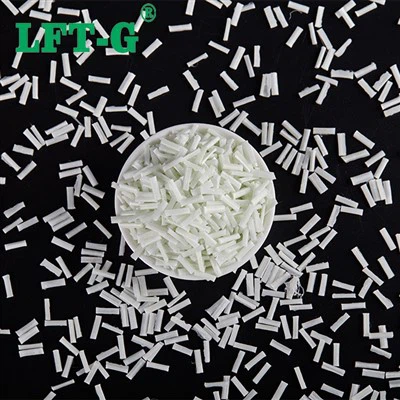
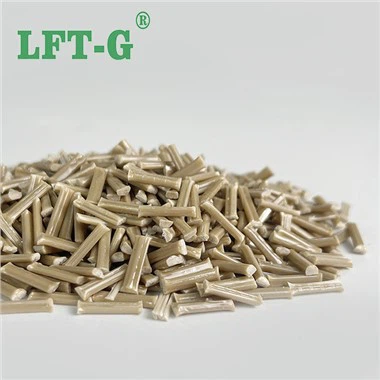
From a costly, heavy machined aluminum block (left) to a lightweight, net-shape molded LFT-PPS composite part (right).
The Aluminum Paradox: Precision at a Prohibitive Price
Machined aluminum has long been the cornerstone of precision engineering. Its thermal stability and stiffness are well-documented. However, this performance comes with a set of significant trade-offs that are becoming increasingly untenable in modern product development. We call this the "Aluminum Paradox": the very process that ensures its precision is also its greatest liability. The reliance on subtractive manufacturing (CNC machining) from a solid billet creates a cascade of inefficiencies, including high material waste, exorbitant machine time, and complex supply chains. This results in a final component that, while accurate, is often too heavy for portable or weight-sensitive applications and too expensive for scalable production.
 The Composite Solution: Engineering Stability at the Molecular Level
The solution to this paradox lies not in finding a cheaper way to machine metal, but in adopting a fundamentally smarter manufacturing approach. Advanced long-fiber thermoplastic (LFT) composites offer the ability to achieve metal-like performance through a single, efficient injection molding step. For the most demanding applications, one material stands in a class of its own: **LFT-G-PPS-LGF50 (Polyphenylene Sulfide with 50% Long Glass Fiber).** This is not an ordinary plastic; it is an engineered composite designed from the ground up to challenge metals in their own domain of dimensional stability and stiffness, offering a pathway to break free from the constraints of traditional manufacturing.
The Science of Extreme Stiffness & Low CLTE
What makes this material so uniquely suited for replacing machined aluminum in precision applications? The magic lies in the synergy between its high-performance polymer matrix and its massive reinforcing fiber core.
The PPS Matrix: An Impenetrable Foundation
The Polyphenylene Sulfide (PPS) matrix provides the composite's inherent environmental resistance. It is characterized by its near-universal chemical immunity to solvents, acids, and bases, and its exceptionally high continuous service temperature (>220°C). Crucially, PPS has near-zero moisture absorption, meaning its properties do not fluctuate with humidity-a critical weakness of other polymers like Nylon (PA).
The 50% LGF Core: A Skeleton of Steel-Like Stiffness
The game-changer is the reinforcement: a massive 50% loading of long glass fibers. During injection molding, these fibers intertwine to form an incredibly dense, three-dimensional internal skeleton. This fiber network is what bears the vast majority of any mechanical or thermal stress, providing the material with an ultra-high modulus (stiffness) of **17,000 MPa** or more, which is directly comparable to die-cast aluminum and zinc.
Perhaps the most critical property for optical applications is the **Coefficient of Linear Thermal Expansion (CLTE)**. This value dictates how much the housing will grow or shrink with temperature changes. The dense fiber skeleton in LFT-PPS-LGF50 physically constrains the polymer matrix, resulting in an extremely low CLTE (approx. 2.0 x 10⁻⁵ /°C). This is remarkably close to the CLTE of aluminum (approx. 2.3 x 10⁻⁵ /°C), ensuring that as the instrument heats up and cools down, the housing and any internal metal components expand and contract in near-perfect harmony. This thermal stability is the key to maintaining sub-micron laser alignment across a wide operating temperature range.

The dense LGF skeleton provides ultra-high stiffness and a low CLTE similar to aluminum.
Case Study: From Machined Aluminum to Molded Composite
To validate this material's potential, we partnered with a manufacturer of high-precision scientific instruments facing the exact challenges outlined above. This real-world case study demonstrates the transformative impact of switching from metal to an LFT composite.
The Challenge
A manufacturer of high-precision scientific instruments required a housing for a new laser measurement sensor. The housing had to maintain absolute dimensional stability across a wide operating temperature range (-40°C to 150°C) to ensure the laser's alignment was never compromised. The material also needed to be immune to various cleaning solvents. The initial design using a machined aluminum block was accurate but prohibitively expensive and heavy for a portable device.
 The Solution: LFT-G-PPS-LGF50-NG05
Our ultra-stiff PPS composite was the perfect fit. Its extremely high modulus (17,000 MPa) and very low Coefficient of Linear Thermal Expansion (CLTE) ensured the housing remained dimensionally stable, protecting the sensitive optics. The material's near-zero moisture absorption and broad chemical resistance meant performance was consistent regardless of humidity or exposure to solvents. We were able to injection mold the part with all its complex internal features in a single step, eliminating all machining.
Know More LFT-PPS LGF50 Material
The Results: A Paradigm Shift in Precision & Profitability
The switch from machined aluminum to injection-molded LFT-PPS-LGF50 delivered staggering improvements without compromising the single most important requirement: precision.
65%
Lighter Component Weight
70%
Reduction in Total Part Cost
Sub-Micron
Alignment Accuracy Maintained
The 70% cost reduction was a direct result of eliminating CNC machining time, labor, and material waste. The ability to mold the part to its final net shape in a cycle time of under two minutes, compared to hours of machining, fundamentally changed the project's economics. The 65% weight reduction transformed the device's portability and user experience. Most importantly, the LFT-PPS-LGF50 housing maintained sub-micron alignment accuracy across all thermal and environmental tests, proving that a composite solution could meet and exceed the performance of metal.

LFT-PPS enables lightweight, cost-effective, and ultra-stable components for demanding scientific and industrial applications.
→
Visit More LFT-PPS LGF Material
Is Your Precision Component a Candidate for Metal Replacement?
If you are struggling with the high cost, long lead times, and weight of machined metal components, there is a better way. Our family of ultra-stiff, dimensionally stable LFT composites can provide the performance you need at a fraction of the cost and weight. Let our engineers analyze your design and provide a free material feasibility report.
Submit Your Design for a Feasibility Analysis