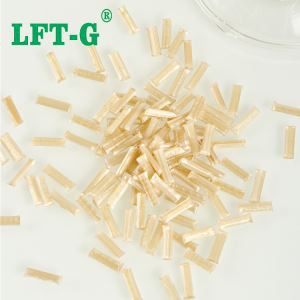

Designed for Circularity. Built for Performance.
Our LFT-G® materials are engineered with high-purity virgin polymers - not just for superior mechanical properties, but for true end-of-life recyclability. No contamination. No downcycling compromises. Just sustainable long fiber thermoplastics that stay in the loop.
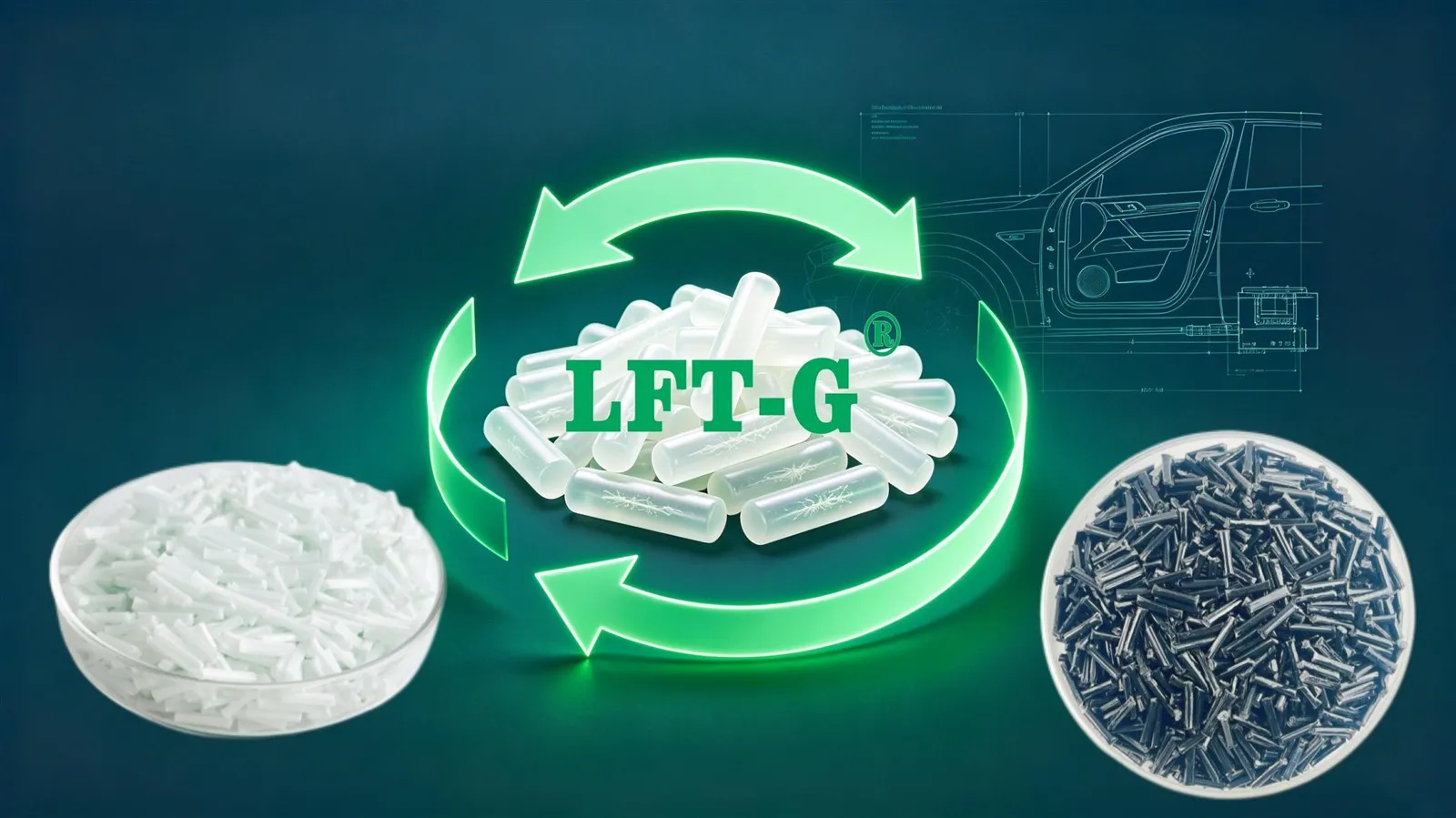
Why recyclability is no longer optional - it's mandatory
The regulatory landscape for automotive plastics is changing faster than many suppliers realize. In December 2025, EU co-legislators reached a provisional agreement on the new End-of-Life Vehicles (ELV) Regulation, setting binding recycled content targets for the first time. By 2030, at least 15% of plastics used in new vehicles must come from recycled sources; by 2036, that figure rises to 25%. Additionally, more than 30% of plastics in electric vehicles must be recoverable and recyclable. These aren't distant goals - they are compliance milestones that Tier‑1 suppliers and OEMs are already planning for.
However, the ELV Regulation isn't just about incorporating recycled material. It also mandates that vehicles be designed for easy dismantling, reuse, and recycling. This "design for recycling" requirement is where material selection becomes critical. Choosing an inherently recyclable composite - like long-fiber thermoplastics (LFT) - means that every component produced today can be efficiently recovered and reprocessed when the vehicle reaches the end of its life. Instead of treating recycling as an afterthought, it becomes a built‑in feature of the part itself.
For automotive engineers, this shifts the question from "Does this part contain recycled content?" to "Can this part be recycled when the vehicle is scrapped?" And on that second question, the molecular structure of the polymer makes all the difference.
Thermoplastic vs. thermoset: a recyclability gap rooted in chemistry
The contrast between thermoset and thermoplastic composites is not marginal - it is fundamental and irreversible. Thermoset resins form a three‑dimensional cross‑linked network during curing. Once that network is established, the material cannot be remelted or reshaped. At the end of life, thermoset components are typically incinerated or sent to landfill, as mechanical recycling only yields low‑value fillers and chemical recycling remains largely experimental. In contrast, thermoplastic composites like LFT‑G® consist of linear or branched polymer chains that can be repeatedly softened by heat. This simple molecular difference unlocks multiple recycling pathways, from mechanical shredding and reprocessing to advanced chemical depolymerization.
The table below captures the practical consequences of this chemical divide across the dimensions that matter most to manufacturers:
| Dimension | Thermoset Composites | Thermoplastic LFT (LFT‑G®) |
| Chemical Structure | Irreversible cross‑linked 3D network | Linear/branched chains - remeltable |
| Recycling Mechanism | Incineration or landfill primarily | Mechanical, chemical, and thermal recovery |
| Processing Cycle | >120 minutes per part | 2–3 minutes (injection molding) |
| Storage Requirements | ‑20°C cold storage needed | Ambient temperature |
| End-of-Life Outcome | Permanent environmental burden | Closed‑loop recyclable |
Because our LFT‑G® materials use high‑purity virgin polymers, the recyclate obtained from them retains significantly higher mechanical properties than recyclate from materials with unknown additives or contaminants.
When a component is made from clean, well‑characterized LFT, its end‑of‑life value is preserved - it can be mechanically recycled into high‑quality feedstock rather than being downcycled into low‑performance applications. In essence, we are not just manufacturing LFT today; we are designing the premium recyclate of tomorrow.
How the industry is moving - and where our path fits
The commercial viability of LFT recycling is no longer theoretical. In 2026, global LFT leader Polyplastics introduced grades containing over 30% post‑consumer recycled (PCR) content, achieving mechanical performance comparable to virgin materials while reducing carbon footprint by more than 20%. Meanwhile, the Institute of Plastics Processing (IKV) at RWTH Aachen University is running the "Loop‑LFT" project, aiming to produce structurally equivalent components from 100% recycled LFT materials. European plastics industry associations have publicly called the binding recycled content targets "a meaningful step for circularity in Europe" and stressed that such mandates "create a concrete business case for recycling supply chains."
These developments confirm that the entire value chain is investing in LFT circularity - and they highlight an important truth: the quality of the input material determines the quality of the recyclate. Our high‑purity LFT‑G® compounds, free from fillers and unknown additives, provide the cleanest possible feedstock for future recycling streams. We are not competing with the PCR‑LFT path; we are complementing it. For safety‑critical and high‑performance applications where virgin material consistency is essential, designing for recyclability is the most pragmatic, compliant, and sustainable strategy available. It allows manufacturers to meet the "design for recycling" pillar of the ELV Regulation today, while ensuring that their components become valuable resources when the vehicle fleet reaches its next life stage.
Our commitment to circularity - from production to end‑of‑life
We back our sustainability narrative with concrete actions across four areas.
- Manufacturing efficiency: our automated production facility continuously reduces energy consumption and material waste, lowering the environmental footprint at the source.
- Material transparency: we provide full material composition declarations for every LFT‑G® grade, so downstream recyclers can process end‑of‑life components efficiently and confidently.
- Recycling partnerships: we are actively exploring collaborations with composite recycling specialists in Europe and Asia to create a closed‑loop pathway from used parts back to high‑quality feedstock.
- R&D roadmap: in the near term, we are optimizing formulations for better property retention across multiple recycling loops; mid‑term, we aim to develop down‑gauging applications using recovered LFT feedstock; and long‑term, we are evaluating ISCC PLUS certification to enhance supply chain transparency.
We want to be clear: we currently focus on high‑purity virgin LFT compounds - not because we oppose recycled content, but because we believe that designing for recyclability is an equally vital pillar of the circular economy. Every component made from our materials is a future resource, not future waste. And as regulations tighten and recycling infrastructure matures, that design decision will prove its worth.
|
Let's discuss how high-purity virgin LFT can become your best long-term recycling asset. Ask Us About Your Specific Application
|