
Filling Process: A Critical Factor in Long Fiber Injection Molding
What is the filling stage?
The filling stage is the process in which molten plastic is pushed forward by the screw and flows through the nozzle, runner system, and gate to rapidly fill the mold cavity.
It is the foundation stage of the entire injection molding cycle. Whether the cavity is filled completely and uniformly directly determines the part's geometry, residual stress distribution, molecular orientation, and final mechanical performance.

Four Key Process Parameters
Injection Speed: The Key Factor Controlling Melt Flow
Advantages of higher injection speed include:
- Shortening the filling time
- Preventing premature solidification of the melt
- Improving weld line quality
- Using shear heat generation to compensate for temperature loss

However, excessively high injection speed can also lead to defects such as jetting, trapped gas and burn marks, shear-induced degradation, and flash due to excessive melt pressure.
How can injection speed be controlled? Through multi-stage injection speed control: starting slowly to ensure stable melt flow, increasing speed during the main filling stage for efficient cavity filling, and reducing speed near the end of filling to prevent defects and ensure a smooth transition.
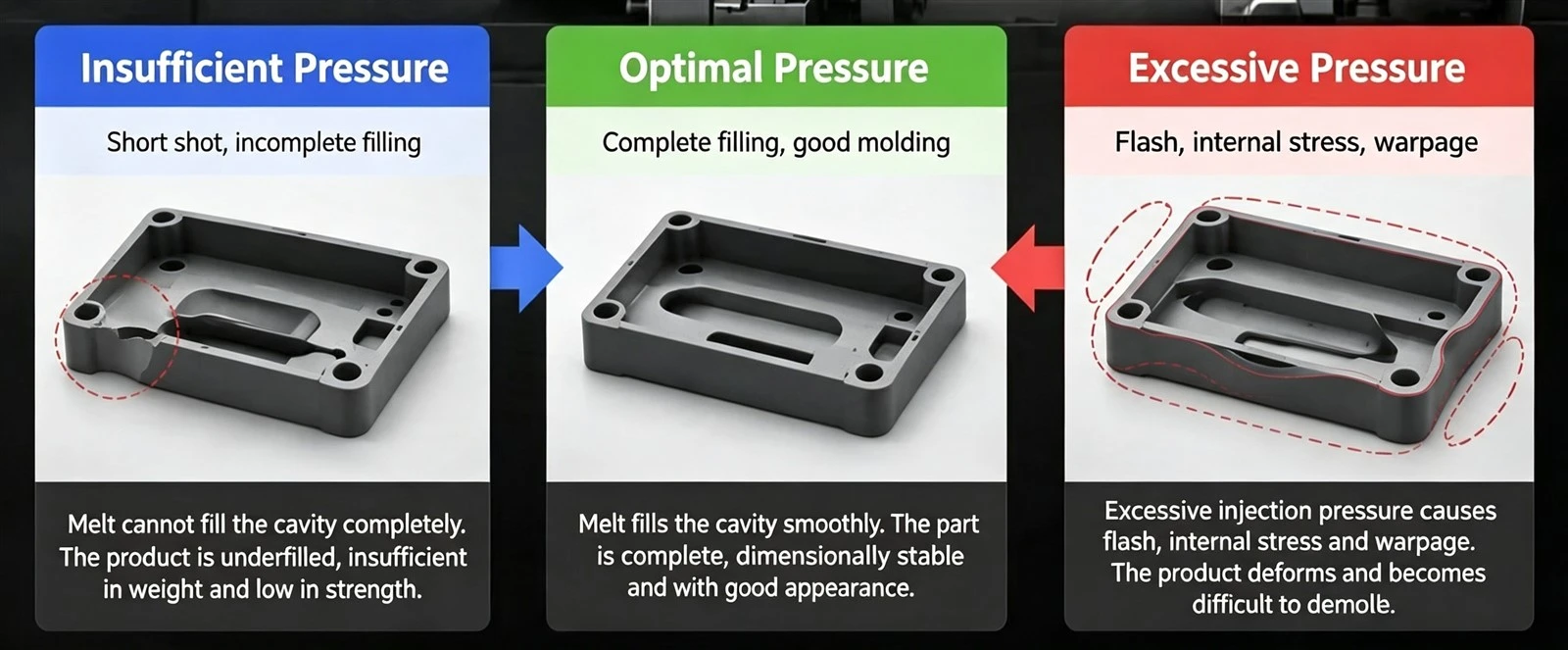
Injection Pressure: The Driving Force That Controls Filling Performance
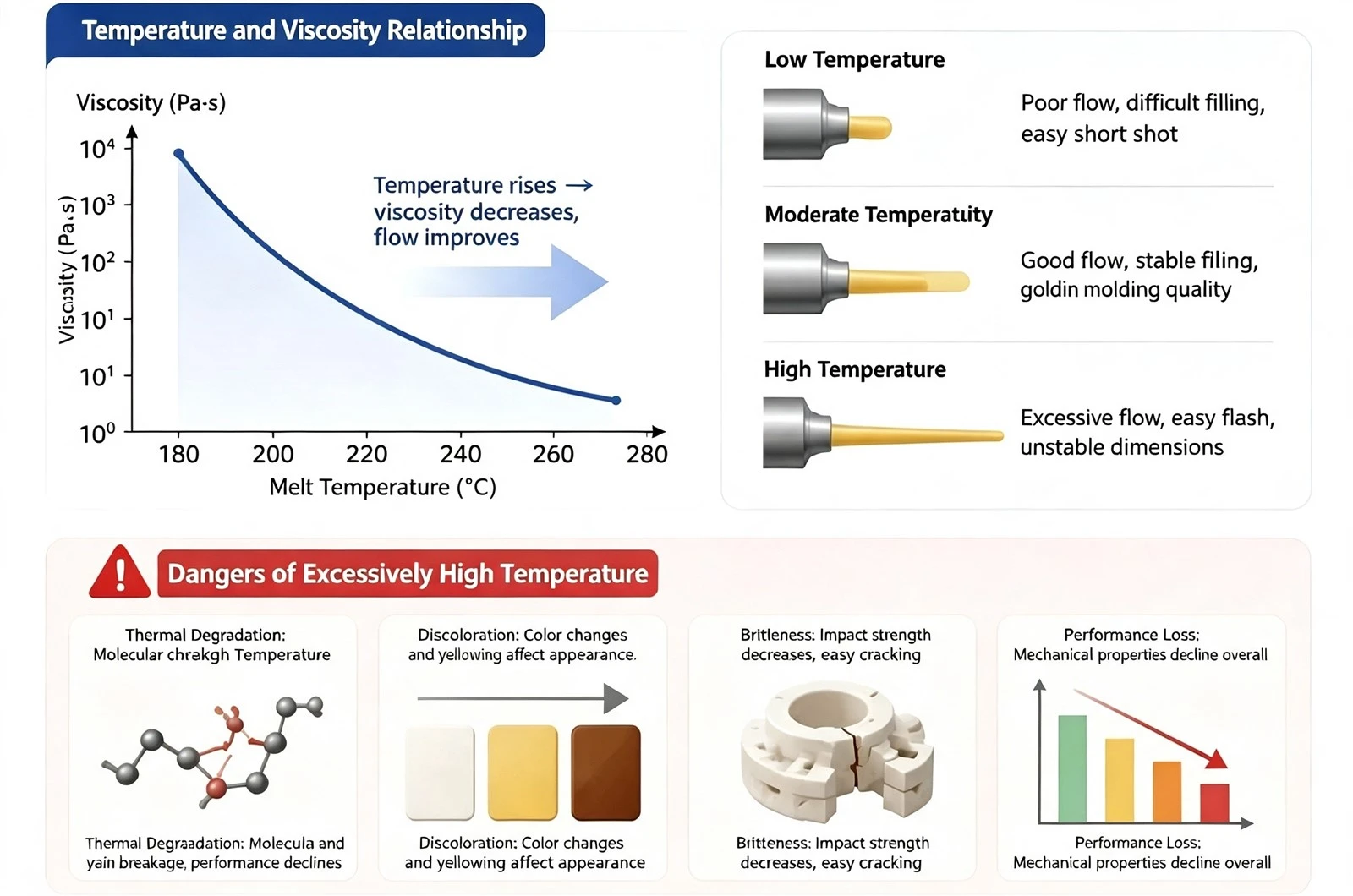
Melt Temperature: The Key Factor Controlling Melt Flowability
Mold Temperature: The Final Factor in Achieving Optimal Part Quality
A higher mold temperature delays premature solidification, maintains melt flow during filling, and improves surface replication. It also promotes more uniform stress distribution, reducing residual stress and warpage in long fiber reinforced parts.

The filling stage serves as the foundation of injection molding. Effective process optimization requires a systematic adjustment sequence: first establish the proper temperature range, then adjust injection pressure, and finally fine-tune injection speed to achieve stable and efficient filling.