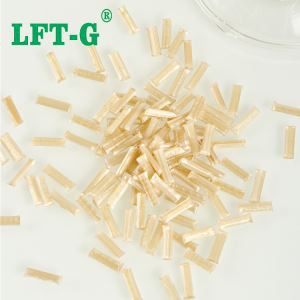

Carbon fiber is generally combined with epoxy resin to form a composite material. This composite material inherits a series of advantages such as specific strength, specific modulus, fatigue strength and energy absorption and shock resistance of carbon fiber itself. At the same time, it inherits epoxy. Resin formula design is flexible and diverse, and the application is targeted. Compared with aluminum alloy structural parts, the weight reduction effect of carbon fiber composites can reach 20% to 40%. Compared with steel metal parts, the weight reduction effect of carbon fiber composite materials can reach 60% to 80%. Using carbon fiber composite materials Not only has it reduced the quality of the whole vehicle, but it has also affected and changed the automobile manufacturing process to some extent.
1 Process type
Carbon Fiber Reinforced Polymers (CFRP) refers to a material obtained by combining carbon fibers as a reinforcing phase with a thermoplastic or thermosetting resin material. The manufacturing technology of CFRP composites mainly includes prepreg and liquid forming processes. The comparative analysis of the process types of carbon fiber reinforced polymer matrix composites is shown in Table 1.
2 Automotive parts connection assembly technology
The combined assembly between composite automotive parts and the connection between composite parts and metal components is an inevitable problem. The composite material is anisotropic, the interlayer strength is relatively low, and the ductility is small, which makes the design and analysis of the composite joints much more complicated than the metal. The connection between the traditional metal parts of the automotive industry is not applicable to the composite materials. Connections, therefore, it is critical to understand and improve the way in which automotive composites are joined and secured.
Local stress concentration is caused by the continuity of the broken fibers. Composite joints are usually the weakest link in the overall structure, so ensuring joint strength is the key to composite structural design. Composite materials are mainly divided into three categories, namely, glued joints, mechanical joints, and hybrid joints of the two. For thermoplastic composites, there are also welding techniques. Composite joint technology design needs to be determined based on the specific use of the component and design requirements.
2.1 glue connection
Compared with the mechanical connection, the main advantage of the bonding technology is that there is no stress concentration caused by the opening, the structure quality is reduced, the fatigue resistance, the vibration damping and the insulation performance are good, the appearance is smooth and smooth, the bonding process is simple, and there is no electrochemical corrosion problem. However, the bonding technology also has some shortcomings, such as difficulty in quality control of the bonding, large dispersion of bonding strength, lack of reliable inspection methods, strict requirements for surface treatment and bonding process of the bonding surface. For carbon fiber composite body, glue is the main connection.
2.2 Mechanical connection
Mechanical connections typically use rivets and bolts and are the most common type of connection. The main advantage of the mechanical connection is the high reliability of the connection, the repeated disassembly and assembly during maintenance or replacement, the need to deal with the surface, and the impact on the environment is relatively small. The main disadvantage of mechanical joining is that it increases the quality, causes stress concentration, and causes electrochemical corrosion in contact with the composite. The comparison of the rivet connection and the bolt connection is shown in Figure 1.
2.3 Mixed connection
In order to improve the safety and integrity of the connection, in some important connection parts, the hybrid connection method of glue connection and mechanical connection is usually used at the same time, and the advantages of the two connection methods are fully utilized to ensure sufficient strength and high connection point. reliability.
2.4 Welding
Welding technology is mainly applied to thermoplastic composite parts. The basic principle is to heat the resin on the surface of the molten thermoplastic composite, and then pressurize and join them. There are three main methods of welding: ultrasonic welding, electric induction welding and resistance welding. The advantages of welding are good connection effect and short cycle, no surface treatment, high joint strength, low stress, etc.; the disadvantage is that it is not easy to disassemble, and it is necessary to add conductive materials or wires. In addition, in the molding process of the composite structural member, the metal connector can be embedded in the fiber preform, and the composite material and the metal embedded component are integrated after the molding, and the composite component can be connected by the metal embedded component to avoid Machined damage composites.
3 Application advantages for automobiles
A number of factors need to be considered when selecting automotive materials, such as mechanical properties, lightweight, material stability, material designability, and processability. Each factor will have a significant impact on the design, production, sales and use of the car. In recent years, Carbon Fiber Reinforced Polymers (CFRP) has become a new automotive material with its unique performance characteristics. Carbon fiber reinforced polymer matrix composites have the following advantages over other automotive materials.
3.1 Excellent mechanical properties
The carbon fiber reinforced resin matrix composite (CFRP) has a density of 1.5 to 2 g/cm3, which is only 1/4 to 1/5 of ordinary carbon steel, and is about 1/3 lighter than aluminum alloy, but carbon fiber composite material The comprehensive mechanical properties are significantly better than that of metallic materials, and the tensile strength is 3 to 4 times that of steel. The fatigue strength of steel and aluminum is 30% to 50% of tensile strength, while CFRP can reach 70% to 80%. At the same time, CFRP also has better vibration damping characteristics than light metal. For example, light alloy needs 9s to stop vibration. The carbon fiber composite material can be stopped for 2 seconds, and the specific strength and specific modulus are high.
3.2 Designable
The carbon fiber composite material has strong designability, and can select the base material reasonably according to the performance requirement, design the arrangement of the fibers and the structural form of the composite material, and flexibly design the product. For example, by arranging the carbon fibers in the direction of the force, the anisotropy of the strength of the composite material can be fully utilized, thereby achieving the purpose of saving materials and reducing quality. For products requiring corrosion resistance, a base material with good corrosion resistance can be selected for design.
3.3 Integrated manufacturing is possible
Modularity and integration are also a development trend of automobile structure. Composite materials are easy to form curved surfaces of various shapes during molding, enabling the integrated manufacture of automotive parts. Integrated molding can not only reduce the number of parts and the number of molds, reduce the number of parts and other processes, but also greatly shorten the production cycle. For example, if the front end module of the automobile is made of carbon fiber composite material, it can realize integral integrated molding, avoiding local stress concentration caused by subsequent tailor welding and subsequent processing of metal parts, and reducing automobile parts while ensuring product precision and improving performance. Quality, reducing manufacturing costs.
3.4 Energy absorption and impact resistance
The carbon fiber reinforced resin matrix composite (CFRP) has a certain viscoelasticity, and there is a slight local relative motion between the carbon fiber and the matrix, which can generate interfacial friction. Under the synergy of viscoelasticity and interfacial friction, CFRP parts have better energy absorption and impact resistance. On the other hand, the specially woven carbon fiber composite collision energy absorbing structure breaks into smaller fragments in high-speed collision, absorbs a large amount of impact energy, and its energy absorption capacity is 4 to 5 times higher than that of metal materials, which can effectively improve the vehicle. Security to protect member safety.
3.5 Good corrosion resistance
The carbon fiber reinforced polymer matrix composite material is mainly composed of carbon fiber tow and resin material, and has excellent acid and alkali resistance. The automobile parts manufactured by the same do not need surface anticorrosion treatment, and have good weather resistance and aging resistance, and the service life is generally It is 2 to 3 times that of steel.
3.6 Good temperature performance
The carbon fiber has a very stable performance below 400 °C and does not change much at 1 000 °C.
3.7 Good fatigue resistance
The carbon fiber reinforced material has a hindrance to the fatigue crack growth of the fiber, and its fatigue resistance can reach 70% to 80%. The structure of the carbon fiber is stable, and the strength of the composite material after the cycle test of stress fatigue is millions of times. There are still 60%, while steel and aluminum are 40% and 30% respectively, and FRP is only 20% to 25%. Therefore, the fatigue resistance of carbon fiber composites is suitable for a wide range of applications in the automotive industry.
4 Economic analysis of new energy passenger vehicles
Due to the reference of carbon fiber, the weight of the body can be reduced by more than 50%. Taking the weight loss of 100kg of the typical A-class model as an example, the weight of the whole vehicle is very obvious. It can be explained from the following aspects: 1 for 1 For a passenger car with a driving distance of 300km and a power consumption of 45kW·h, the same driving range can be reduced by 3.6kW·h by the industry expert “100kg per weight reduction and an increase of 8% driving range”. The battery saving cost is about 0.6 million yuan; 2, with a life cycle of 400,000 kilometers and an average electricity cost of 0.9 yuan/kW·h, the electricity cost can be saved in the life cycle of the vehicle by 400,000/100×1.2×0.9=0.32 million yuan. 100km saving 1.2kW·h electricity calculation); 3 Because of the application of carbon fiber materials, taking the production scale of 50,000 vehicles as an example, the saved investment in technology and equipment is converted into the economic equivalent of electric vehicles, in each vehicle. The amortization will save about 2,000 yuan; 4 because the process is streamlined, the personnel cost can be saved at least 1,000 yuan / Taiwan.
In total, the average cost per vehicle is 0.6+0.432+0.2+0.1=1.33 million, but these costs are not enough to offset the increase in the cost of the material itself due to the introduction of carbon fiber. It can be seen that the application of carbon fiber body still has a big problem. If you want to promote lightweight body, you can only start from reducing the investment in technology and equipment. In total, the average cost per vehicle is 0.6+0.432+0.2+0.1=1.33 million, but these costs are not enough to offset the increase in the cost of the material itself due to the introduction of carbon fiber. It can be seen that the application of carbon fiber body still has a big problem.
If you want to promote lightweight body, you can only start from reducing the investment in technology and equipment.
If the automobile realizes mass production of carbon fiber body, the cost of the carbon fiber material itself will also drop drastically, and the whole industry effect will be quite large, and the economic benefits will become more and more obvious. These are only analyzed from the perspective of carbon fiber. If we consider the factor of reducing the weight of the aluminum alloy body by 50kg, the economic effect is self-evident.
5 for the development of the body
In view of the characteristics of carbon fiber reinforced composite materials, such materials are gradually favored by automobile manufacturers. It is estimated that in the automotive sector, carbon fiber usage is growing at an average annual rate of 34% and will reach 23,000 tons by 2020. Figure 2 is a roadmap for the development of carbon fiber reinforced composites for the body.
Currently, carbon fiber reinforced composite materials are mainly used for body coverings, decorative parts and structural members on the body. For example, BMW has used carbon fiber composites to make body structural parts in a variety of models it has developed, which has become an important moment for carbon fiber composites in automotive manufacturing. At the same time, BMW has further cooperated with SGL (SGL) to invest 100 million euros to develop low-cost carbon fiber and increase carbon fiber production from 3,000 tons per year to 9000 tons to meet the growing BMW i-series electric vehicles and others. The demand for models.
6 Conclusion
In summary, carbon fiber reinforced resin matrix composites (CFRP) have become an important development direction for new automotive materials in the future due to their unique performance advantages. However, if this material is to be promoted and applied in the automotive field, it is necessary to start the collaborative research and development of the industry, academia and research from the following aspects: 1 to further seek a lower cost carbon fiber precursor; 2 to develop new processes for carbon fiber manufacturing, such as the stability of precursor materials. 3; optimize carbon fiber manufacturing process parameters or use nano carbon fiber to further improve the performance of CFRP composites; 4 develop fast and effective CFRP parts molding manufacturing technology, such as rapid curing technology, composite material flow control technology; 5 Use computer simulation analysis technology (CAE) to select different carbon fiber composite materials and optimize the molding process parameters.
------------------------------------------------------------------------------------------------------------------
XIAMEN LFT COMPOSITE PLASTIC CO.,LTD.
Focus on (LFT-G, LFRT) R&D and production: PA, PP, TPU, PPS, PBT, PPA long glass fiber & carbon fiber continuous infiltration thermoplastic composite reinforcement series engineering plastics
If you need more information, please feel free to contact me.
Mike Lee
Email: sale02@lfrtplastic.com
Mobile phone : +86-180-5026-9764 (wechat / whatsapp/ skype)
Website :www.lfrt-plastic.com
Add:No.27 Hongxi Road, Tiangong Chuangxin Technology Park, Maxiang Town, Xiang'an Dist., Xiamen, Fujian, China.