
Flame-Retardant LFT: Can Fire Safety and Mechanical Strength Coexist?
Flame retardants and reinforcing fibers must work together within the same polymer matrix. While flame retardants help suppress combustion, long fibers provide the reinforcement needed for structural performance. Balancing these functions requires careful formulation, as excessive flame-retardant loading or poor interfacial compatibility can compromise the mechanical properties of the finished part.
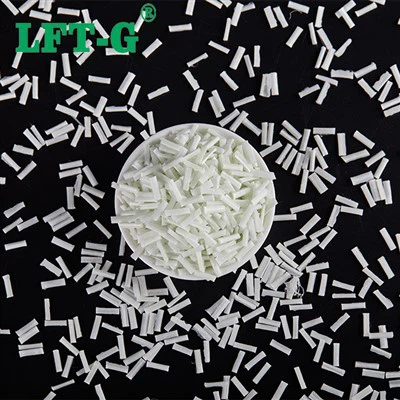
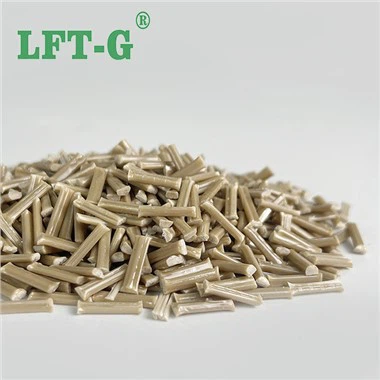
This is the challenge LFT-G® addresses with PA6-LGF30FR, a 30% long glass fiber-reinforced polyamide copolymer developed with a UL 94 V-0 flame-retardant system. The goal is to combine reliable flame performance with the stiffness and structural stability expected from long fiber reinforced thermoplastics.

The Real Challenge: Two Systems, One Matrix
A flame-retardant LFT compound contains two functional systems that must coexist in the same material. The flame-retardant system works in the polymer phase - it needs to be well dispersed, thermally stable at melt temperature, and able to interrupt flame propagation without degrading the polymer itself. The long fiber network works as a structural skeleton - it needs long retained fiber length, good fiber-matrix adhesion, and sufficient flow during molding to orient and distribute properly.
Flame retardants can influence melt viscosity, fiber orientation, and the overall compatibility of the formulation. Depending on the flame-retardant chemistry and loading level, they may also affect fiber-matrix adhesion and the effective reinforcement content. These factors need to be considered together during material development.
Achieving this balance requires coordinated formulation rather than treating flame retardants and reinforcing fibers as independent components. Both systems must be optimized to maintain flame performance while preserving the mechanical properties of the finished compound.

The design principle: The flame retardant protects the polymer phase. The long fiber network carries the structural load. When the two are properly matched, each function operates in its own domain - and the part meets both requirements.
How the Two Systems Work Together
The coordination begins during compounding. The flame-retardant system must be selected to achieve the required flame performance while maintaining processing stability and compatibility with the glass fiber reinforcement. At the same time, the compounding process must preserve fiber length and ensure effective resin impregnation.
In the finished compound, each component contributes to overall performance. The flame-retardant system helps suppress combustion, while the long glass fibers reinforce the polymer matrix and improve load-bearing capability. Their interaction is carefully managed to balance fire safety, stiffness, and dimensional stability.
For PA6-LGF30FR, this coordinated formulation is designed to deliver UL 94 V-0 flame performance alongside the reinforcement benefits of long glass fiber technology.
✓ Flame-Retardant System
|
✓ Long Fiber Network
|
What this means in practice: PA6-LGF30FR combines flame-retardant capability and long glass fiber reinforcement in a single material. Depending on the part design and applicable requirements, this may reduce the need for additional flame-retardant treatments.
PA6-LGF30FR: Where It Fits
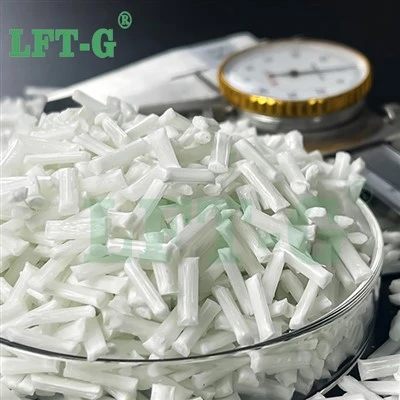
PA6-LGF30FR is a 30% long glass fiber-reinforced polyamide copolymer designed for applications requiring both flame retardancy and structural performance. Its glass fiber reinforcement improves stiffness, impact resistance, and dimensional stability, while the polypropylene copolymer matrix offers low moisture absorption, chemical resistance, and electrical insulation properties.
With a UL 94 V-0 flame-retardant system, this grade suits electrical and electronic components where flame performance must be balanced with mechanical strength and dimensional requirements. Evaluate its suitability against the specific design, processing conditions, and application standards.
Where Flame-Retardant LFT Makes the Difference
The applications that benefit most from flame-retardant LFT share a common profile: a defined fire safety standard, a structural or dimensional requirement, and a need for design integration. These are not applications where flame retardancy is the only criterion - they are applications where the part must be both safe and structural.
Electrical and electronic housings
Circuit breakers, connectors, controller enclosures, and switchgear housings must meet flame standards while maintaining dimensional precision for mating parts and electrical clearances. The long fiber network provides the dimensional stability that neat flame-retardant plastics often lack - and the polypropylene matrix delivers the electrical insulation properties these applications require.
Battery pack components
Battery module supports, structural brackets, and selected enclosure components may require a combination of flame-retardant performance, stiffness, and long-term dimensional stability. Long glass fiber reinforcement can help improve load-bearing capability and resistance to deformation, while the flame-retardant formulation addresses the relevant fire performance requirements. Final material selection should be based on the specific component design and applicable safety standards.
Rail and mass transit interiors
Interior panels, equipment housings, and structural brackets may need to meet demanding fire safety requirements while maintaining mechanical strength and dimensional stability. Long fiber-reinforced thermoplastics offer reinforcement benefits for these applications. Material selection should consider applicable railway fire, smoke, and toxicity standards, rather than relying on UL 94 classification alone.
What to Specify for Flame-Retardant LFT Parts
Selecting a flame-retardant LFT material requires more than checking a UL 94 rating. The flame classification, mechanical requirements, processing conditions, and final part geometry must all be considered together.
- Specify the flame standard: UL94 V-0, glow-wire, or application-specific requirements should be stated explicitly - not just flame retardant.
- Specify the structural requirement alongside it: Stiffness, creep resistance, and dimensional tolerance are part of the material selection, not separate from it.
- Choose a coordinated grade: PA6-LGF30FR is formulated so the flame-retardant system and the long fiber network operate in parallel.
- Validate in the actual part geometry: Flame performance and structural performance both depend on wall thickness, flow, and fiber orientation.
LFT-G offers a material solution designed to balance flame retardancy and long fiber reinforcement for demanding structural applications.
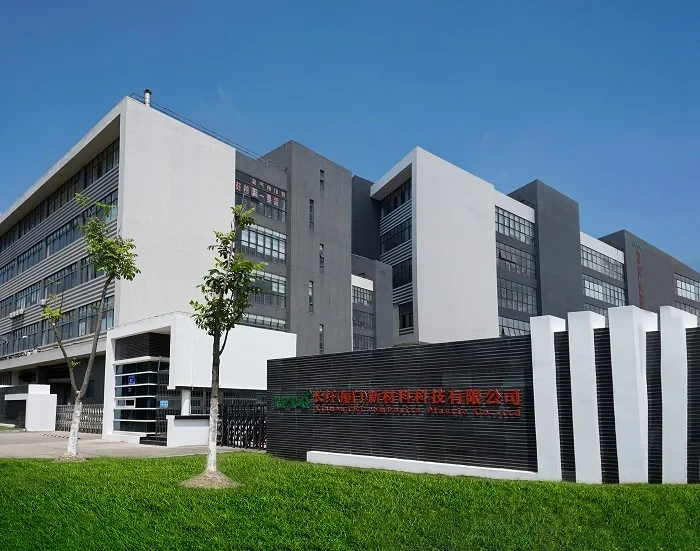
Xiamen LFT Composite Plastic Co., Ltd. is a global supplier of long-fiber-reinforced thermoplastics with 20+ years of innovation. We specialize in LFT–PP, LFT–PA, LFT–PPS, and LFT–Elastomers – offering high-strength, lightweight alternatives to metal for automotive, aerospace, industrial, and electrical applications. Our engineering team provides material selection, flame-retardant grade evaluation, and on-site technical support for customers worldwide.