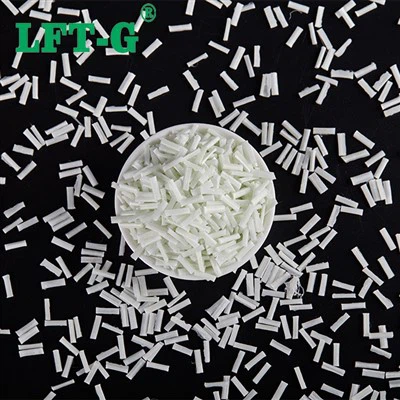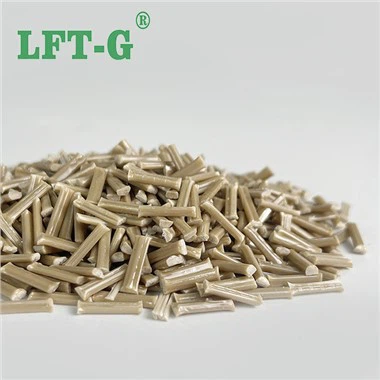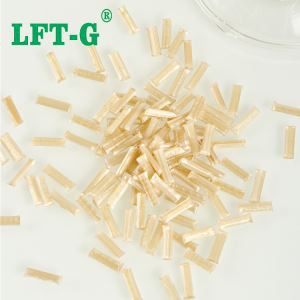

The tensile strength and flexural strength of polyphenylene sulfide PPS are moderate in engineering plastics, but the elongation and impact strength are relatively low, so it maintains its outstanding heat resistance, flame retardancy and chemical stability. The PPS used in the structural members usually relies on the addition of glass fiber, carbon fiber and inorganic filler to improve the mechanical properties. The thermal performance is the performance of polyphenylene sulfide, and the thermal stability of PPS is very good. Analysis shows that there is no significant weight loss in air or nitrogen at temperatures below 500 °C and only complete degradation in air at 700 °C.
In an inert gas, even at a high temperature of 1000 ° C, it can maintain 40% of its original weight. In addition, its mechanical properties decrease little with increasing temperature, and the flexural strength and tensile strength can be maintained above 50% after heat aging at 232 °C.
PPS has a small dielectric constant and a relatively low dielectric loss. Surface resistivity and volume resistivity are insensitive to changes in frequency, temperature, and humidity. It is an excellent electrical insulating material and has a long arc resistance. In addition to strong oxidizing acids (such as concentrated sulfuric acid, concentrated nitric acid and aqua regia), PPS is not attacked by most acids, bases and salts, and has chemical stability close to that of polytetrafluoroethylene. It is insoluble in any organic solvent known below below 175 ° C, and is only soluble in chloronaphthalene at temperatures above 175 ° C. When PPS is in contact with common organic solvents such as benzene, glacial acetic acid, oils, and lipids, product cracking does not occur. In addition, it is also very stable to ultraviolet rays and rays, and there is no phenomenon that the surface is sticky or decomposed. Polyphenylene sulfide has a flame retardant effect due to the alternating arrangement of the benzene ring and the sulfur atom. The UL-94-VO grade can be achieved without adding a flame retardant.