
Beyond the Hype: The Real Forms of Carbon Fiber Nylon and How to Use Them
Which Forms Carbon Fiber Nylon have?
You've heard the buzz around carbon fiber nylon. It's hailed as a "super material" capable of replacing metal, and for good reason. It's incredibly strong, stiff, and lightweight. But here's a crucial fact that often gets lost in the excitement: "carbon fiber nylon" isn't a single entity. It exists in several distinct forms, each with unique properties and ideal applications.
Choosing the right form is the difference between a successful, optimized product and a costly failure. If you're an engineer, designer, or product developer, understanding these mainstream product forms is key to truly harnessing the power of this advanced composite. Let's break down what they are, what makes them different, and how you can select the perfect one for your next project.
The Core Forms:From Compounded Pellets to Continuous Tapes
Think of carbon fiber nylon composites on a spectrum of performance and complexity. At one end, you have easily processable materials for mass production; at the other, you have ultra-high-performance options for the most demanding applications. They primarily fall into three categories.

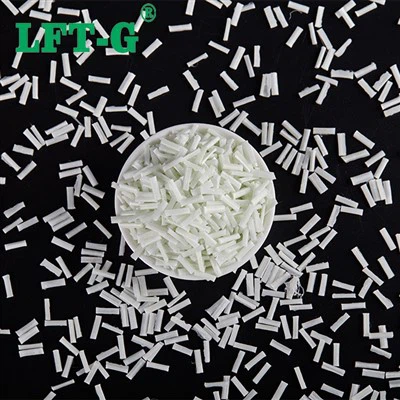
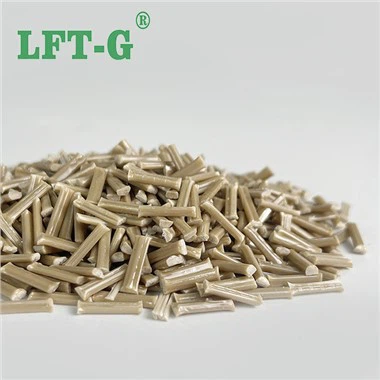
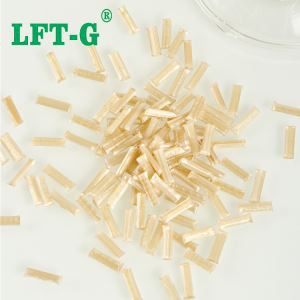
LFT long Carbon fiber nylon Granules

Carbon Fiber Nylon 3D Print Filaments

Continuous carbon fiber tape
Form 1: Compounded Granules/Pellets (The Workhorse)
This is the most common and widely used form of carbon fiber nylon, designed for high-volume manufacturing via traditional injection molding. These are small plastic pellets that come pre-mixed with carbon fibers. But even within this category, there's a critical difference.
-
 Short Carbon Fiber (SCF) Nylon
 - In these granules, the carbon fibers are very short (typically <1mm). They provide a significant boost in stiffness and strength over standard, unfilled nylon. This makes them great for general-purpose applications where you need better-than-basic performance without breaking the bank.
-
Long Carbon Fiber (LCF) Nylon - The High-Performance Advantage
- This is where things get serious. In Long Fiber Thermoplastics (LFT), the carbon fibers are substantially longer (often 10mm or more). When you injection mold these pellets, the fibers interlock to form a robust internal "skeleton" within the part. This is the specialized technology that we at LFT-G® focus on.
Our long carbon fiber nylon products deliver dramatically superior performance, especially in:
- Impact Strength: The fiber skeleton absorbs and distributes impact energy far more effectively than short fibers, preventing catastrophic failure.
- Creep Resistance: Under constant load, LFT parts resist deformation and maintain their shape over time.
- Dimensional Stability: The interlocking network provides exceptional stiffness and reduces warpage, even in large, complex parts.
This makes LFT-G®'s long carbon fiber nylon the ideal choice for serious metal replacement and high-stress structural components.
 Form 2: 3D Printing Filaments (The Innovator)
The rise of additive manufacturing has brought us carbon fiber nylon filaments. These are essentially a continuous strand of nylon embedded with chopped carbon fibers, wound onto a spool for use in Fused Deposition Modeling (FDM) printers.
- Key Use Case: Rapid prototyping, creating custom jigs and fixtures, and manufacturing highly complex, low-volume parts that would be impossible to mold.
- Characteristics: It allows for incredible design freedom. While typically not as strong as a properly molded LFT part, it's perfect for functional testing and creating strong, stiff, custom-fit tools and end-use parts on demand.
 Form 3: Continuous Fiber Tapes & Prepregs (The Ultimate Performer)
At the absolute peak of the performance pyramid are continuous fiber tapes. In this form, unidirectional strands of carbon fiber are pre-impregnated with a nylon thermoplastic matrix. The fibers run in a single, unbroken direction along the length of the tape.
- Key Use Case: Aerospace components, high-end automotive monocoques, and other applications where maximum strength-to-weight ratio is non-negotiable.
- Characteristics: This form offers the highest possible stiffness and strength, but it requires more complex and costly manufacturing processes like automated tape laying (ATL) and high-pressure compression molding to create a final part.
At a Glance: Comparing Carbon Fiber Nylon Forms
Here's a simple table to help you visualize the trade-offs:
| Form Factor | Key Characteristic | Primary Process | Best For |
|---|---|---|---|
|
Compounded Granules (LFT) |
Excellent Impact & Stiffness |
Injection Molding |
High-volume structural parts, metal replacement. |
| 3D Printing Filament | Design Freedom & Customization | FDM/FFF 3D Printing | Prototyping, jigs, fixtures, complex geometries. |
| Continuous Fiber Tape | Ultimate Strength & Stiffness |
Automated Tape Laying, Compression Molding |
Aerospace, high-end automotive, critical structures. |
*Note: Performance characteristics are for comparison purposes and can vary based on specific grade and molding conditions.
Hot Topic: Lightweighting the EV Revolution
With Long Carbon Fiber Nylon
 One of the biggest trends driving materials innovation today is the electric vehicle (EV) revolution. For EVs, range is everything, and the key to maximizing range is aggressive lightweighting. Every kilogram of mass removed from the vehicle allows it to travel further on a single charge. This is where high-performance composites, particularly long carbon fiber nylon, are making a massive impact.
Automakers are moving beyond using simple plastics and are adopting LFT materials for critical components. Why? Because materials like our LFT-G® long carbon fiber reinforced nylon provide the steel-like strength needed for safety components but at a fraction of the weight of aluminum.
You can now find this material in:
- EV Battery Enclosures: Protecting the vehicle's most vital component from impact while saving crucial weight.
- Structural Body Reinforcements: Replacing stamped steel or cast aluminum in pillars and cross-car beams.
- Chassis Components: Creating lightweight yet durable suspension and subframe parts.
By choosing the right form of carbon fiber nylon, EV manufacturers can achieve their weight targets without compromising on safety or performance-a perfect example of advanced materials solving a real-world, high-tech problem.
Conclusion: Choosing the Right Form is Choosing the Right Partner
As you can see, the term "carbon fiber nylon" covers a wide family of materials. The path to a successful product lies in understanding that granules, filaments, and tapes are not interchangeable. Each is a specific tool designed for a specific job. For scalable, high-strength, and impact-resistant parts ready to challenge metal, long fiber thermoplastic (LFT) granules are the clear engineering choice.
If your project demands the highest level of performance, and you're ready to explore the possibilities of metal replacement, you need a partner who specializes in the most robust form of moldable composites. At LFT-G®, long fiber technology isn't just one thing we do; it's everything we do.
Contact Our Engineering Team Discuss How Long Carbon fiber Nylon Materials Elevate Your Next Project