
Recently, thermoplastic composites have an important milestone that few have noticed. Gulfstream Aerospace (Savannah, GA, USA) delivered the 300th Gulfstream 650. Launched in 2012, this twin-engine business jet is the first commercial aircraft to use a critical control surface made of thermoplastic composites.
For decades, Airbus (Toulouse, France) has successfully used thermoplastic composites at the forefront of its A300 family of aircraft, but these are not critical control surfaces. If the leading edge falls off the plane, then the plane is still no problem and everyone is safe. If the critical control surface fails, the likelihood of a catastrophic landing will increase dramatically.
Thermoplastic composites have not been considered for use in critical or major structural components in aircraft for many years. There are several reasons for this. First of all, thermoset plastics are in the comfort zone of many people - they are structurally stable and have a flight permit database for over 40 years. The application of continuous fiber composites is almost entirely around thermoset resin construction. Major composite manufacturers use autoclaves (now OOA ovens) and other thermoset driven capital equipment. In addition to databases and capital equipment focused on thermosets, most composite engineers live in thermoset comfort zones throughout their careers. They designed or customized a process around a small number of ready-made flight certified prepregs. Workshop technicians are vacuum bagging specialists based on bonding or other processes for thermoset use. Customers only want to use thermoset plastics because they know nothing about “exotic” materials called thermoplastics.
In an inevitable community, this comfort zone is the main reason for the slow progress of the aerospace industry in utilizing the advantages of thermoplastics. Even when the porosity of the thermoplastic prepreg is less than 0.5%, some of which are the same, and the AFP parts made from the prepreg have similar porosity, some people still want to place the final part in the autoclave to ensure Consolidation. Oops, even some engineers who are proficient in thermoplastic composites like to ensure the safety of integration through autoclaves. If a thermoplastic composite is found in the database, it may be an autoclave-consolidated PEEK. When you do this, you lose the price advantage of thermoplastics.
Go back to the G650. The elevator and vertical rudder are made of carbon fiber/PPS composite and then assembled by induction welding using FAA-certified processes. This sentence describes three milestones related to these parts. First, elevators and rudders are critical to maintaining control of the aircraft, and FAA will not certify them if there is no substantial performance proof. Second, the use of PPS (not polyketones) in critical parts is almost unthinkable when designing these structures. Of course, PPS has been used for the leading edge, but the glass transition temperature (Tg) of the resin is only 90 °C. On a hot summer day in the Mojave Desert, on airplanes near the engine exhaust, one can determine that the material surface temperature will be dangerously close to 90 °C.
Fortunately, PPS (and polyketones) are semi-crystalline polymers. The chain structure within the polymer enables them to maintain a large portion of their strength and stiffness above their Tg. Conversely, when a thermosetting material such as an epoxy resin is exposed to a temperature above its Tg, it decomposes. In fact, PPS has been used for many years in automotive applications where the vehicle density exceeds 140 °C. An older composite engineer (like me) would have a hard time choosing a matrix material that could be higher than its Tg. But some young and upstart engineers who don't know better make it work, which is an important milestone.
Now is the third milestone. A major advantage of thermoplastics is that they can be welded, eliminating the need for bonding and riveting and the cost and weight issues associated with these. For FAA-certified welds, critical thermoplastic composites must be proven to meet specifications each time. KVE Composites Group (The Hague, The Netherlands) used TenCate Advanced Composites to develop the welding process (Nijverdal, Netherlands) CETEX laminate prepreg for component manufacturer Fokker Technologies (The Hague, The Netherlands). (Guess where? Yes, those at the forefront of the A300 series.) It is enough to be FAA certified. (As a side note, every thermoplastic composite engineer should thank God for the Dutch, but this is another day's theme.)
Therefore, although Gulfstream's main technical milestones have been in production more than five years ago, why is the aerospace composites industry still operating in the thermoset comfort zone? One reason is the education gap: A few years ago I joined a SAMPE panel discussion with a professor at a major US university, and the university's composites curriculum was heavy. One of his slides stated that the key flight surfaces made of thermoplastic composites were not used in production. When it was my turn, I showed the Gulfstream on the slide and realized that I lost a potential academic friend. He didn't know at all. If he is from a European university, he may know.
The anti-thermoplastic bias in the United States is not only because of lack of knowledge, but also because they are not within the comfort zone. In the 1980s, thermoplastic composites were advertised in military applications, and when they failed, as most entry-level technologies did when they first tried, they got really bad rap. The development of high performance thermoplastic composites in the United States has been reduced. In contrast, Airbus and the Dutch company invested heavily in the development of thermoplastic composites and began using a large amount of material as early as the Airbus A320. By the way, Fokker's current rudder is similar to the rudder that has been put into production for multiple Gulfstream aircraft.
Where is the thermoplastic next? Because thermoplastic prepreg tapes enable full automation of complex shapes, improved performance and full recyclability (although not everyone I believe has believed this) and reduced costs, they are a viable approach. I recently heard that industry experts claim that fuse bodies made of thermoplastic composites with automatic fiber laying must still be autoclaved to ensure complete consolidation. This view ignores two key points. First, some aerospace grade thermoplastic tapes have very low porosity (<0.5%, made in the US) and will only get better and better. Second, in view of the recent significant advances in automation of artificial intelligence support, the real-time quality management of AFP processes is very real and very close. Why does Toray do this (Boeing's main thermoset prepreg supplier) invests more than $1 billion in thermoplastics specialist TenCate Advanced Composites (Morgan Hill, Calif.)? My prediction? Tomorrow's fuselage and/or new midsize aircraft will be made of thermoplastic composites and will be completed in 2025.
------------------------------------------------------------------------------------------------------------------
XIAMEN LFT COMPOSITE PLASTIC CO.,LTD.
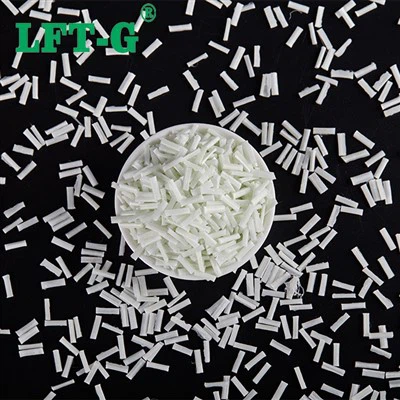
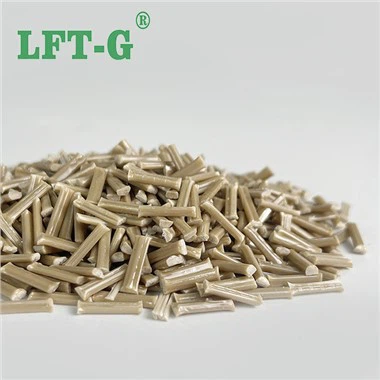
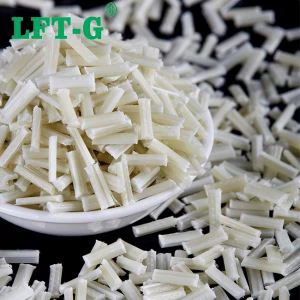
Focus on (LFT-G, LFRT) R&D and production: PA, PP, TPU, PPS, PBT, PPA,PEI,PEEK long glass fiber & carbon fiber continuous infiltration thermoplastic composite reinforcement series engineering plastics.It can be used in aerospace, automotive, medical equipment, sports equipment, home appliances and other lightweight and cost-effective semi-structural parts that require high performance markets.
If you need more information, please feel free to contact me.
Mike Lee
Email: sale02@lfrtplastic.com
Mobile phone : +86-180-5026-9764 (wechat / whatsapp/ skype)
Website :www.lfrt-plastic.com
Add:No.27 Hongxi Road, Tiangong Chuangxin Technology Park, Maxiang Town, Xiang'an Dist., Xiamen, Fujian, China.