
With China's steady economic growth and rapid development of aviation technology, the low altitude economy is gradually becoming a new engine for the country's economic development. in 2023, the scale of China's low altitude economy has exceeded RMB 500 billion. According to the Civil Aviation Administration of China (CAAC), the market size of China's low-altitude economy is expected to reach 1.5 trillion yuan by 2025 and 3.5 trillion yuan by 2035.
1. What is Low-altitude economy
Low-altitude economy, in short, refers to an economic model that relies on low-altitude airspace and is dominated by the general aviation industry, covering a wide range of aircraft applications such as drones, helicopters, and eVTOLs (electrically powered vertical take-off and landing vehicles).
According to the division of flight altitude, drones below 120 meters are mainly consumer-grade drones, such as the consumer-grade drones independently developed by DJI, which are mainly used in the aerial photography field; drones between 120 and 300 meters are mainly used for industrial applications, such as the vertical take-off and landing cargo drones independently developed by SF. 120-300 meters are mainly industry application drones, such as the vertical take-off and landing cargo drones independently developed by Shunfeng, which are widely used in the fields of logistics and transportation, emergency rescue, and governmental applications, etc. 300-1000 meters are mainly helicopters and eVTOLs.

It not only includes low altitude flight activities itself, but also radiates and drives the integration and development of aviation tourism, logistics, research and education and other related industries. The low-altitude economy has a long industry chain and strong driving force, and has a wide range of application prospects in medical, meteorological, agricultural and other fields.
2. The connect of Plastic Industry with Low atitude Economy
As an important part of the upstream of the low-altitude economic industry chain, the plastics industry plays an indispensable role in the development of low-altitude economy. It mainly provides raw materials and key components for low-altitude flight activities, including resin substrates, engineering plastics, composite materials, batteries and so on. Raw materials and key components such as resin base materials, engineering plastics, composite materials and batteries.
With the rise of the low-altitude economy, the demand for materials for drones, aerial vehicles and other aircraft is growing, especially for lightweight, high-strength, wear-resistant and other performance requirements. This provides new development opportunities and challenges for the plastics industry.
Carbon fiber composite material is a new type of fiber material containing more than 90% carbon, known as the "king of new materials", is the key material for manufacturing low altitude vehicles, because of the advantages of carbon fiber density, light weight, high strength, corrosion resistance, design flexibility, etc., is the ideal structural material for manufacturing low altitude vehicles, such as eVTOL, and is used by more than 90% of mainstream eVTOL design solutions. More than 90% of the mainstream eVTOL design solutions adopted, can allow engineers to carry out structural design according to the actual situation of structural forces for local structural design, not only to reduce the use of materials, but also to reduce the weight of the structure.

With the development of carbon fiber production technology, the cost is significantly reduced, and the process technology is more mature and stable, carbon fiber composites began to be gradually applied to the main bearing structure, such as wings, fuselage and other structural components.The manufacture of drones and UAVs is at a turning point, and the introduction of plastic injection molding technology will not only increase productivity and reduce costs, but also enhance the performance of UAVs. As technology continues to advance and the market continues to expand, it is expected that the future of UAV manufacturing will see greater adoption of plastics and composites, presenting injection molding machine manufacturers with significant market potential.

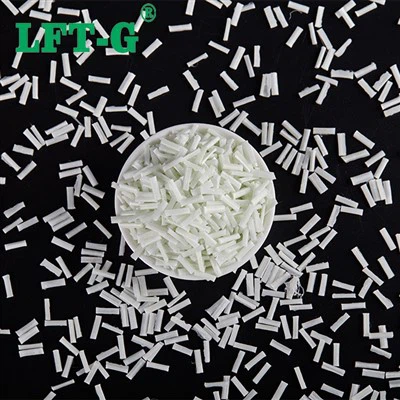
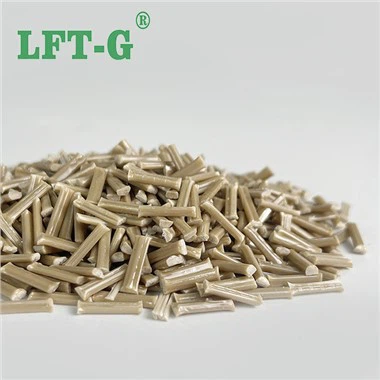
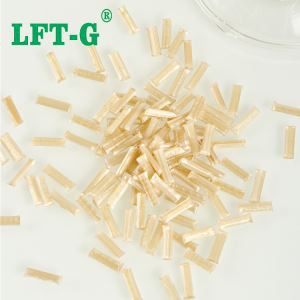
Long Car Fiber Reinforced Thermoplastic can provide more material solve solutions for low Altitude Economy Industry.
Light weighting technology: Using long carbon fiber reinforced thermoplastic composites, the drone blades have not only lost a significant amount of weight, but also maintained the required strength and rigidity.Performance enhancement: By applying this new material and process, the speed and range of the UAV is significantly increased.