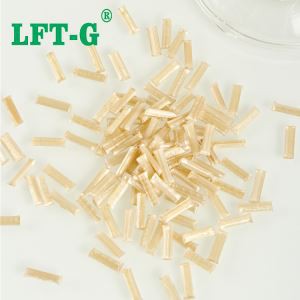

LFT-G Characteristics of carbon fiber composite parts
First, the quality is light and strong
The density of carbon fiber reinforced resin-based composite materials commonly used in automobiles is 1.5-2.0 g/cm3, which is only 1/4 to 1/5 of ordinary carbon steel, which is about 1/3 lighter than aluminum alloy, and the mechanical properties of carbon fiber composite materials. It is superior to metal materials, its tensile strength is 3 to 4 times higher than steel, the stiffness is 2 to 3 times higher than that of steel, the fatigue resistance is 2 times higher than steel, the weight is 3 to 4 times lighter than steel, and the thermal expansion coefficient is 4 to 5 Times.
If calculated according to the specific strength, the carbon fiber composite material greatly exceeds the carbon steel and can exceed certain special alloy steels, so it has a higher specific strength. The use of carbon fiber materials, while reducing the body quality, can also make the power demand smaller, and then use a smaller drive engine and suspension device to reduce the impact risk by reducing the kinetic energy. This spiral result will further reduce the body quality. . Therefore, replacing the original steel parts with carbon fiber materials has a light weight effect.

Second, the design is good
Carbon fiber composites are highly configurable and can be flexibly designed for different applications. According to the structural stress of the product, anisotropic and different thickness products can be made by adjusting the structure and arrangement of the fibers, and the sandwich structure can be applied to improve the overall rigidity of the component to achieve an optimal lightweight design.
The carbon fiber is arranged according to the direction of the force, and the anisotropy of the strength of the composite material can be fully utilized to save the material and reduce the weight. Because of the isotropy of metal materials, there will be a problem of excess strength in the other direction after meeting the technical requirements of the maximum force direction.
For products with corrosion resistance requirements, base resin and reinforcement materials with good corrosion resistance can be selected for design, and other performance requirements, such as dielectric properties and heat resistance, can be satisfied by selecting suitable raw materials. . In addition, in order to achieve an acceptable product cost, low-cost material replacement, such as different fiber mixed layups, can be used to meet material performance specifications while saving material costs.