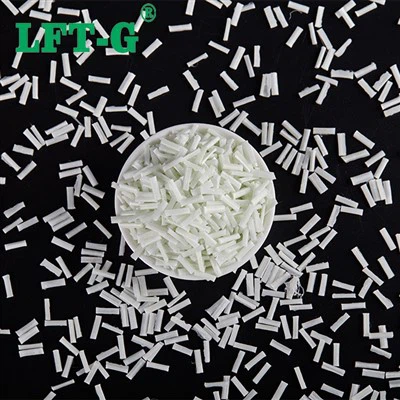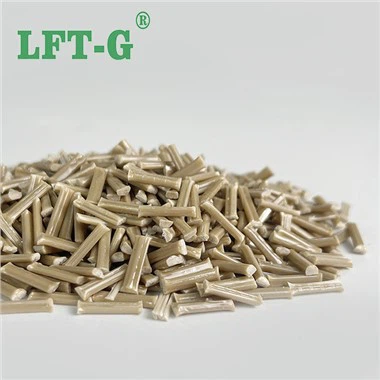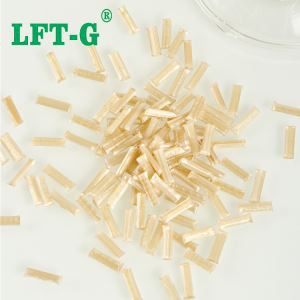

Glass fiber is an inorganic non-metallic material with excellent performance. It is made of glass ball or waste glass by high-temperature melting, drawing, winding, weaving, etc. The diameter of the monofilament is several micrometers to twenty. A few microns, equivalent to 1/20-1/5 of a hair strand, each bundle of fiber strands consists of hundreds or even thousands of monofilaments. Glass fiber has the advantages of high mechanical strength, high impact energy absorption, high heat resistance and good corrosion resistance, and is generally used as a reinforcing material in composite materials. Long glass fiber reinforced plastic:
High-quality choice for lightweight vehicles and buildings
Glass-Fiber Reinforced Plastics refers to a composite material based on glass fiber reinforced, unsaturated polyester resin (or epoxy resin; phenolic resin), referred to as GRP. The composite material added with glass fiber reinforced has a great improvement in heat resistance, rigidity, impact resistance and heat resistance compared with simple plastics. Because glass fiber reinforced plastic is equivalent to steel, it also contains glass fiber and has the color, shape and corrosion resistance, electrical insulation and heat insulation of glass. Therefore, it is commonly known as "glass reinforced plastic" in China.
Due to the light weight and high strength of glass fiber reinforced plastics, it is widely used in the fields of automobiles, construction, electronic appliances, etc. In the automotive industry, glass fiber reinforced plastics have begun to gradually replace metal materials to achieve lightweight vehicles.
Glass fiber reinforced plastics are mainly divided into thermoplastic and thermosetting, and have long glass fiber and short glass fiber.
Glass fiber reinforced plastics can be divided into thermoplastic and thermosetting reinforced plastics according to their processing properties. Usually plastics are solid or elastomer at room temperature. In order to be able to process and shape them, it is usually necessary to heat the plastic to make the plastic It has a fluid viscous flow state, which is then processed. The heating of the thermoplastic (LFT, etc.) becomes soft, and the process of cooling and hardening is physical change, reversible, and can be repeated. The thermosetting plastic (SMC, etc.) undergoes a chemical change in the heat curing process, and the inside of the molecular chain is hinged to stabilize the shape, and the heating and the internal structure are destroyed by heating, so that it cannot be processed again by heating. Thermoplastics have many advantages over thermoset plastics:
Thermoplastics are recyclable and more environmentally friendly: thermoplastics can be repeatedly heated, replasticized, and reprocessed, so plastic products can be recycled and reused, while thermoset plastics cannot be recycled.
Thermoplastics have lower density, thinner products and better weight reduction: thermoset plastics have an average density of about 1.7 g/cm3, thermoplastics are only about 1.1 g/cm3, and thermoplastics can have very thin wall sections. In the case of 0.4 mm, this is not possible for thermosetting insulating materials, and their wall thickness is generally limited to 1.5 mm or more.
Thermoplastic parts are more productive: the injection process of thermoplastic parts is a fast process that is ideal for high volume production. And thermoplastic parts almost reach the size of the finished part after the mold is released, and thermoset plastics usually need to add deburring or machining processes to get the parts that can be used.
High raw material utilization rate: thermoplastic parts have a high material utilization rate, generally up to 95%, and thermoset plastics generally have a material utilization rate of 85% during injection molding. Injection molding of thermoplastic materials with little or no burrs also reduces material waste.
In terms of production costs, although the cost of thermoplastics is higher than the corresponding thermoset materials, high productivity, high material utilization, and recyclability make production costs similar to thermoset plastics.
According to the length of the plastic particles and the length of the glass fiber, there are short glass fiber reinforced plastics and long glass fiber reinforced plastics. The short glass fiber reinforced plastics have a particle length of 2-4 mm and a glass fiber length of 0.2-0.4 mm. Glass fiber reinforced plastic particles and glass fiber can reach 6-25mm in length. Since the glass fiber in the long glass fiber reinforced plastic has a longer length and a more regular arrangement, it has stronger rigidity, specific strength, creep resistance, fatigue resistance and stability.
Long glass fiber thermoplastics are the development direction of automotive applications: Because the automotive industry has high requirements for the strength of materials, most of them use long glass fiber reinforced plastics, especially automotive structural parts, in which thermoplastic and thermosetting plastics are used. There are a lot of uses. Considering the recyclability, lighter and thinner characteristics of thermoplastic glass fiber reinforced plastics, it will become the development direction of glass fiber reinforced plastics in the automotive industry in the future.