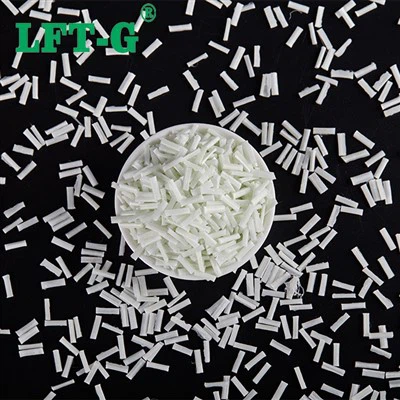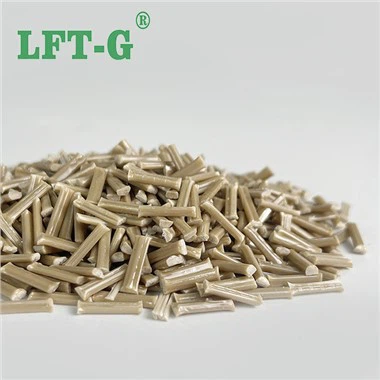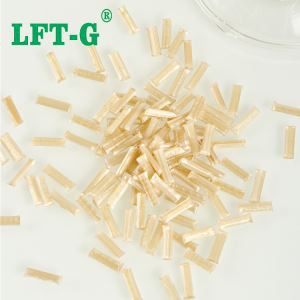

The long glass fiber reinforced plastics industry chain is mainly divided into: upstream raw material production and equipment supply, including long glass fiber, resin, auxiliary production, granulation, molding equipment, etc.; midstream long glass fiber reinforced plastic manufacturing, according to raw materials, The process can be divided into the production of glass fiber reinforced plastics such as SMC and GMT; the downstream is the specific application field of long glass fiber reinforced plastic, which is mainly used in the fields of automobile, construction and electrical and electronic, in which the applications in the automotive and construction fields respectively account for About 1/3 of the total application, about 15% of applications in the electrical and electronic field.
Long glass reinforced plastic industry chain
Long glass fiber reinforced plastics used in the automotive industry mainly include SMC, GMT, and LFT. They are widely used in the manufacture of front-end modules, chassis, soundproof covers, instrument panels, etc., especially in European and American auto manufacturers. Their technologies and applications are Already very mature. With the gradual improvement of technology, domestic automakers have also begun to promote the application of long glass fiber reinforced plastics in domestic automobile production. However, the domestic market is still in its infancy as a whole, and has a huge development space compared with mature foreign markets.
The automotive industry uses long glass fiber reinforced plastics with significant advantages such as lightweight, modular, and low cost:
Lightweight and without sacrificing strength: Long glass fiber reinforced materials are lightweight and high-strength, which can effectively replace metal materials to reduce the weight of the car body. At the same time, the strength can be higher than that of metal materials. Collisions are not easy to produce dents, and can be designed to achieve strength in a specific direction. Strengthening.
Modularity: The long formability of long glass fiber reinforced plastics leads to a high degree of design freedom, enabling long glass fiber reinforced plastic parts to be expanded to large-scale, modular components with complex structures and functional integration, greatly reducing the need. The number of assembled components and the number of processes increase assembly efficiency and make maintenance and maintenance easier.
Low cost: modular design greatly reduces the number of molds and related costs. Take the rear door of ordinary automobile as an example. It takes 10 sets of molds to be processed by metal materials, and it costs 4 million yuan. Only three sets of molds are needed for processing with SMC materials. It costs 1.2 million yuan and greatly reduces assembly costs. According to estimates by the French company INPOAST, when the annual output is less than 150,000 sets, the cost of the SMC FRP forming process is always lower than the cost of the metal stamping process, while more than half of the SMC parts manufacturing companies in North America produce less than 100,000 sets/year.
Superior design flexibility: Reinforced plastics can flow into deep cavities in molds, curves and other complex shapes that are difficult to achieve with metal stamping, and products that are upgraded by product platforms due to lower mold-related costs Shape changes can also be made easy.
Corrosion resistance: Metal is susceptible to corrosion caused by moisture and salt in the air, and glass fiber reinforced plastic has strong corrosion resistance.