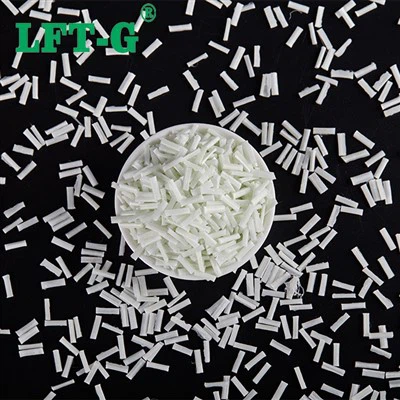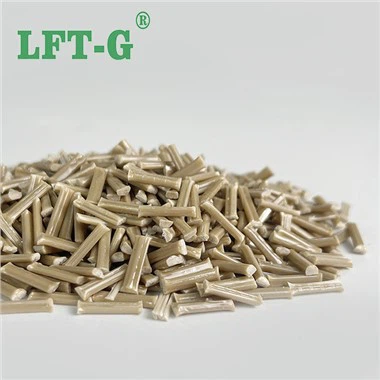

The lightweight of the car is to reduce the car's curb quality as much as possible while ensuring the strength and safety performance of the car, thereby improving the car's power, reducing fuel consumption and reducing exhaust pollution. It can be said that it is not easy for the automotive industry to implement strict emission regulations. Clearly, a lighter solution is needed. As the process progresses, the realization of lightweighting is being realized step by step, and this has become a good opportunity for the development of the plastics industry. The fiber reinforced composite material (FRP) is a composite material formed by reinforcing fiber materials, such as glass fiber, carbon fiber, aramid fiber, etc., and a matrix material is subjected to a forming process such as winding, molding or pultrusion, and has a light weight and high strength. Heavy-duty and other features play a huge role in achieving lightweight vehicles.
Studies have shown that the new energy vehicle with a total weight of 1,550 kg has a cruising range of 186 km. If the total weight can be reduced to 1011 kg, the cruising range can be increased to 275.5 km. Can new materials bring new dawn to the lightweight of automobiles?
At the press conference of the "Strategy for the Innovation and Development of High-Performance Fibers and Automotive Lightweight Technologies" held by the Chinese Academy of Engineering, the experts at the conference said that fiber-reinforced composite materials are the best comprehensive performance and can be applied to engineering lightweighting. material. High-performance fibers including carbon fiber can not only be used in vehicles such as automobiles to reduce emissions, but also improve mechanical motion accuracy and help marine chemical equipment to prevent corrosion.