
Carbon fiber reinforced composites meet the lightweight requirements of automotive bumpers
With the shortage of energy shortages and environmental pollution, higher requirements have been placed on the development of the automotive industry. Lightweight body is particularly important. The three ways of lightweighting are lightweight materials application, structural optimization design and advanced Manufacturing process, in which material replacement is considered to be the most effective method, carbon fiber reinforced composites are widely used in high-tech industries such as aviation, aerospace, racing, etc. due to their high specific stiffness, specific strength and excellent energy absorption characteristics. In recent years, it has also been used as a lightweight material in the lightweight design of new energy vehicles.

Carbon fiber reinforced composites have properties such as anisotropy, tension and compression asymmetry and strain rate effects. The research on its theory and application is widely reported. The quasi-static and dynamic compression tests of carbon fiber reinforced composite square tubes are usually carried out. The effects of square tube geometry, fiber volume fraction and strain rate on the crushing properties and energy absorption characteristics are analyzed. Numerical simulation and experimental methods are used. The study of different carbon fiber reinforced composite structures confirmed that the selection of failure criteria has an important impact on the performance prediction results of composite structures. However, there are few researches on the optimization design of carbon fiber reinforced composites applied to the crashworthiness of vehicle body structures. The multi-scale method is used to obtain the constitutive model of the carbon fiber reinforced composite material and the carbon fiber reinforced composite electric vehicle body skeleton that meets the crashworthiness requirement is designed, thereby greatly reducing the body quality.
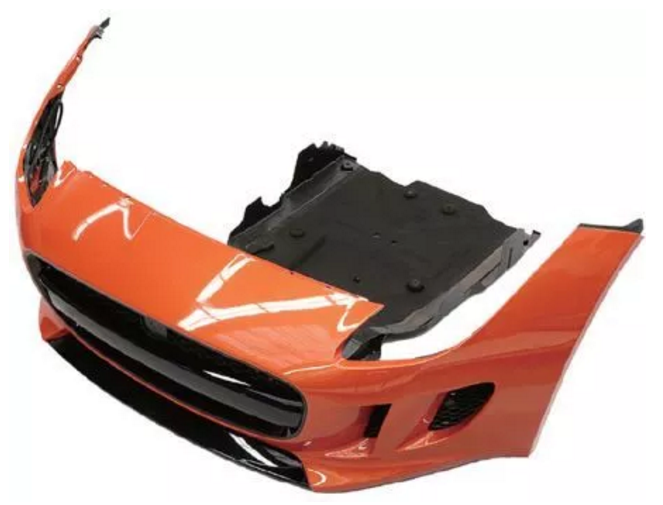
The bumper system is the main load-bearing and energy absorbing member in the low-speed collision of the car. It plays a vital role in protecting other parts of the car and the safety of the occupants. The high-strength sheet molding compound (SMC) is used to replace the original bumper parts. The steel material is based on simulation analysis to optimize the thickness and structure of the SMC bumper structure. On the basis of ensuring the crashworthiness, the bumper quality is reduced by 29% compared with the original high-strength steel bumper; comprehensive consideration of crashworthiness and molding process An aluminum alloy bumper is designed. The wall thickness of the bumper beam is optimized by the central composite test design and adaptive response surface method. When designing a bumper structure using a carbon fiber reinforced composite material, it is necessary to consider the characteristics of the composite material and the manufacturability and safety specifications of the bumper structure.
In order to study the requirements of lightweight design of a certain electric vehicle bumper and the manufacturability of the structure, an integral carbon fiber reinforced resin matrix composite bumper was designed, and the minimum quality of the bumper system was optimized. Methods, through the Latin hypercube sampling method approximate modeling technology and genetic algorithm to lightweight design of the bumper structure, in order to provide reference for the lightweight design of carbon fiber reinforced resin based (CFRP) composite bumper. Studies have been carried out to test the quasi-static and dynamic mechanical properties of carbon fiber reinforced resin matrix composites. A lightweight carbon fiber reinforced resin matrix composite car bumper is designed for the lightweight design requirements and manufacturability of a pure electric vehicle bumper. Based on the finite element method simulation, the crashworthiness is used as a constraint. Lightweight and optimized design of the structure.