
With the stricter emission standards and low-carbon life accepted by people, energy-saving and emission reduction has become an important research topic in the automotive industry. In the case of limited energy innovation, lightweighting is one of the keys to solving problems.
In 2015, the global total vehicle sales volume was 89.1 million units, an increase of 2.2% compared with the 87.17 million units in 2014. It is estimated that the production capacity will reach 100 million units in 2020. In 2015, the global carbon fiber automobile market demand reached more than 10,000 tons, and it is expected to exceed 20,000 tons by 2020. The average annual growth rate will reach 21% in the next five years, which will become one of the fastest growing and most demanding fields.
1) Super running - the first to introduce carbon fiber
The reason for the introduction of carbon fiber composites in the automotive industry is mainly that the carbon fibers are stiffer than conventional steels and aluminum, but are lighter in weight. However, due to high cost, long production cycle, and unstable supply chain, the automotive industry is the first to be used in low-volume, expensive super sports cars.
In 1981, McLaren first used an integrated carbon fiber frame on its Formula 1 MP4/1. After 2000, supercar manufacturers such as Ferrari and Lamborghini began to use carbon fiber composite materials to build cars. Most other car manufacturers use carbon fiber materials, which are mostly used in some body parts and interiors. The purpose is to reduce weight and highlight the performance of high-end sports cars.
2) Weight loss – the driving force for carbon fiber demand growth
The government's strict vehicle fuel economy standards and carbon dioxide emissions regulations are important drivers of automotive carbon fiber composites. The overall weight reduction of the body is a very effective means of controlling exhaust emissions. For every 100 kilograms of vehicle weight reduction, the emission can be reduced by 20g/km, and the average vehicle needs to lose 245kg to meet the required emission standards. Electric vehicles need to lose more than 50%. Among all lightweight materials, carbon fiber composites are the only advanced materials that can reduce steel components by 50-60% and maintain the same strength.
Countries have issued carbon dioxide emission standards in recent years. In April 2010 and August 2012, the United States issued regulations for light vehicle fuel economy and greenhouse gas emissions for 2012-2016 (Phase 1) and 2017-2025 (Phase 2), respectively, requiring 2025 US light vehicles. The average fuel economy is 54.5 mpg. The "Light Vehicle Pollutant Emission Limits and Measurement Methods (China Stage 6)" ("National Six Standards") was officially released on December 23, 2016 and will be officially implemented from 2020. According to the standard requirements, China's CO2 emissions in 2015 will be 155g/km, and it will need to be reduced to 112g/km in 2020; in 2015, the average fuel consumption will be 6.9L/(100km), and in 2020 it will need to be reduced to 5.0L/(100km).
3) Scale and industrial integration - BMW introduces carbon fiber structural parts
At present, the world's major auto manufacturers, including BMW, Mercedes-Benz, Audi, GM, Ford, etc., have all laid out the carbon fiber industry, and gradually introduced models that introduce carbon fiber technology. Among them, the BMW company is the most prominent. Germany's BMW company actively purchases shares in the upstream carbon fiber plant, and establishes a carbon fiber joint venture with SGL to jointly develop carbon fiber reinforced composite materials. The carbon fiber technology is widely used in BMW production models, which not only ensures the stability of suppliers. Shorten the production cycle and reduce the cost by 30%.
As of 2015, the annual production capacity of BMW Group's automotive carbon fiber reached 9,000 tons. BMW has used carbon fiber composites in more than 30 parts of the midstream, with acoustic panels, front brackets and seat structures accounting for the highest proportion.
In 2014, the BMW i3 full carbon fiber body electric vehicle was mass-produced, becoming the first vehicle manufacturer to use carbon fiber as a body material in large quantities. The BMW i3 weighs only 1195 kilograms, which is 250-350 kilograms less than conventional electric vehicles. It also has the highest performance collision safety protection. The battery capacity is only 20kwh and the cruising range is 160 kilometers, which is 52% higher than the traditional electric vehicle cruising range. . In addition, the BMW i8 applies carbon fiber to the body and interior, keeping the total weight of the car at 1,540 kg. On July 1, 2015, the new 6th generation BMW 7 Series car was officially put into operation at the Dingolfing plant. This is the first BMW core product to achieve the perfect combination of industrially manufactured carbon fiber materials, high-strength steel and aluminum. .
4) Summary - carbon fiber application in the automotive field
1) Lightweight. When carbon fiber is used in automobiles, the most obvious benefit to automobile manufacturing is that it is lightweight, and the most direct impact is energy saving, acceleration, and braking performance. In general, the vehicle weight is reduced by 10%, the fuel consumption is reduced by 6% to 8%, the emission is reduced by 5 to 6%, the acceleration of 0-100 km/h is increased by 8-10%, and the braking distance is shortened by 2 to 7 m.
2) Security. The lightweight body can lower the center of gravity of the vehicle, improve the steering stability of the car, and the operation of the vehicle will be safer and more stable. Carbon fiber composites have excellent energy absorption, and the energy absorption capacity of collision is six to seven times that of steel and three to four times that of aluminum, which further ensures the safety of automobiles.
3) Reliability. Carbon fiber composites have higher fatigue strength. The fatigue strength of steel and aluminum is 30-50% of tensile strength, while carbon fiber composites can reach 70-80%. Therefore, carbon fiber composites used in automobiles have reliability for material fatigue. Great improvement.
4) Reduce the development cycle. Because carbon fiber composites are more engineerable than metals, they are easier to platform, modular, and integrate body development. In this way, the hybrid body structure of the carbon fiber body and the metal platform can be modularized and integrated for the traditional automobile body structure, the parts types are greatly reduced, the tooling investment is reduced, and the development cycle is shortened.
------------------------------------------------------------------------------------------------------------------
XIAMEN LFT COMPOSITE PLASTIC CO.,LTD.
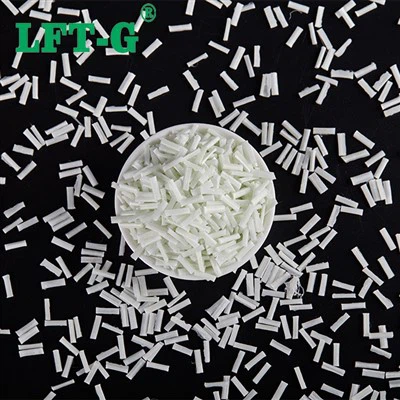
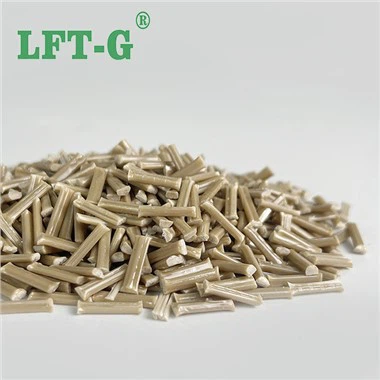
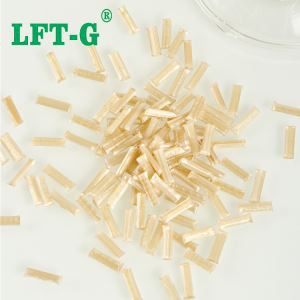
Focus on (LFT-G, LFRT) R&D and production: PA, PP, TPU, PPS, PBT, PPA,PEI,PEEK long glass fiber & carbon fiber continuous infiltration thermoplastic composite reinforcement series engineering plastics.It can be used in aerospace, automotive, medical equipment, sports equipment, home appliances and other lightweight and cost-effective semi-structural parts that require high performance markets.
If you need more information, please feel free to contact me.
Mike Lee
Email: sale02@lfrtplastic.com
Mobile phone : +86-180-5026-9764 (wechat / whatsapp/ skype)
Website :www.lfrt-plastic.com
Add:No.27 Hongxi Road, Tiangong Chuangxin Technology Park, Maxiang Town, Xiang'an Dist., Xiamen, Fujian, China.