
Clariant's New China R&D Labs Boost Additive Innovation for Modified Plastics
August 24, 2026 | Industry News
On August 18, 2026, Clariant announced that it has officially opened two new research laboratories in China, located respectively at the Dalianwan Production Base in Guangdong Province and the Clariant Park in Shanghai (OCC).
The new facilities strengthen Clariant's local capabilities in additive synthesis, analytical testing, formulation development, and pilot-scale production, covering flame retardants, antioxidants, light stabilizers, and waxes.
More importantly, the move brings advanced additive development closer to China's rapidly growing modified plastics market.
From Additives to Material Performance
As electric vehicles, electronics, AI hardware, energy storage, and industrial equipment demand lighter, stronger, safer, and more durable materials, modified plastics are facing increasingly complex performance requirements.
A polymer matrix or reinforcement material alone cannot always deliver the required balance.
Modern formulations increasingly depend on the interaction between:
Polymer Matrix + Long-Fiber Reinforcement + Functional Additives + Processing Technology
In this system, additives play a critical role in improving flame retardancy, thermal stability, oxidation resistance, weatherability, processing performance, and long-term durability.
Clariant's expanded local R&D capabilities could therefore support faster development of application-specific additive systems for advanced modified plastics.
Why This Matters for Long-Fiber Reinforced Materials
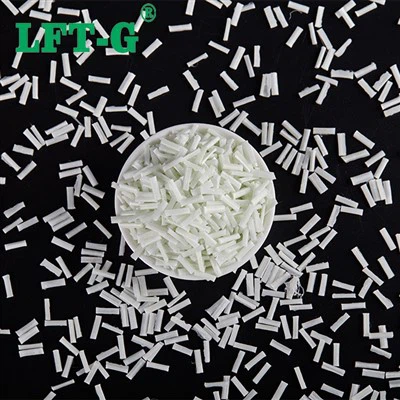
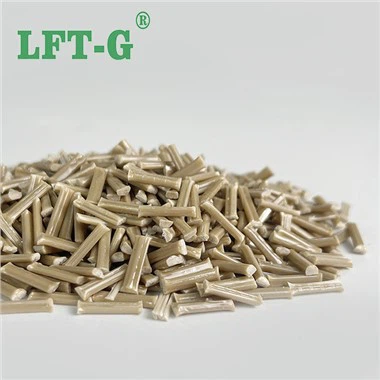
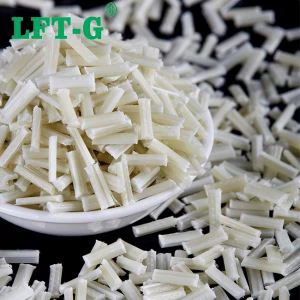
Long glass fiber and long carbon fiber reinforced materials are increasingly used in automotive structural components, battery systems, electrical housings, industrial equipment, and other demanding applications.
These materials already provide high strength, stiffness, fatigue resistance, and dimensional stability. However, new applications increasingly require additional functions such as:
- Flame retardancy
- Thermal stability
- UV resistance
- Aging resistance
- Processing stability
This creates greater demand for optimized combinations of long-fiber reinforcement, polymer matrices, and functional additives.
For example:
Long Glass Fiber → Strength & Stiffness
Polymer Matrix → Processability & Base Properties
Flame Retardants → Fire Safety
Antioxidants → Thermal & Processing Stability
Light Stabilizers → UV & Weather Resistance
The result is a more integrated approach to material development rather than simply increasing fiber loading or selecting a higher-performance polymer.
Local R&D Could Shorten Development Cycles
One of the most significant advantages of Clariant's investment is the ability to move more development activities closer to Chinese customers.
The combination of synthesis, testing, formulation, and pilot-scale capabilities can help shorten the path from: Application Requirement → Formulation Development → Material Testing → Customer Validation → Production
This is particularly valuable for rapidly evolving industries such as EVs, AI hardware, electronics, and energy storage, where material requirements can change quickly.
A Shift Toward System-Level Material Development
Clariant's expansion reflects a broader trend in the modified plastics industry.
Competition is gradually moving beyond individual resin grades or additive products toward complete material systems designed around specific application requirements.

For compounders and material manufacturers, this means greater attention to the compatibility and synergy between: Resins + Reinforcements + Additives + Processing Conditions
Such collaboration can help manufacturers achieve a better balance between mechanical performance, flame retardancy, thermal stability, durability, processability, and cost.
A Positive Signal for Advanced Modified Materials
Clariant's dual-laboratory strategy demonstrates that additive development is becoming increasingly important to the evolution of high-performance modified plastics.
For long-fiber reinforced materials in particular, advances in flame retardants, antioxidants, and light stabilizers could open new opportunities for higher performance, broader application ranges, and more customized material solutions.
The industry is moving from simply selecting materials to engineering complete material systems around end-use requirements.
With the continuous advancement of additive technology, LFT-G® is expected to provide more impetus for the development of next-generation high-performance modified plastics.