

Maximum-Stiffness LFT Solution for Heavy-Duty Structural Applications
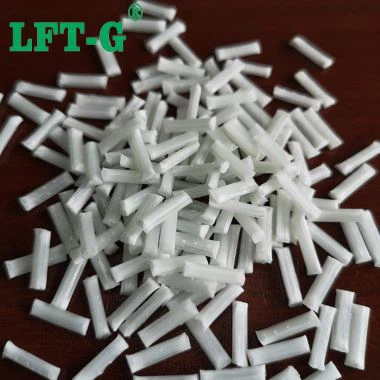
LFT-G® PP LGF50 is a 50% long glass fiber reinforced homopolymer polypropylene compound designed for extreme injection-molded structural components. As the highest reinforced grade in our PP series, its dense fiber network is intended to provide maximum stiffness, load-bearing capability, and long-term creep resistance. It is the premier candidate for aggressive metal-replacement projects in automotive front-end modules, heavy industrial brackets, and applications where standard lower-reinforced plastics fail.
Typical values shown above are for quick engineering reference. See the technical data section below for test methods, value ranges and the current TDS.
PP LGF50 Material Identification & Specifications
This section defines the commercial grade, polymer system and key material characteristics of LFT-G® PP LGF50 so engineers and procurement teams can quickly confirm that the grade matches their material-selection requirements.
| Property | Specification |
|---|---|
| Product Grade | PP LGF50 |
| Material Type | 50% Long Glass Fiber Reinforced Polypropylene |
| Polymer Matrix | Homopolymer Polypropylene (HPP) |
| Glass Fiber Content | 50% |
| Available Color | Black / Natural |
| Form | Pellets (Length 10-12mm) |
| Processing Method | Injection Molding |
| Typical Positioning | Heavy-Duty Metal Replacement |
Typical Material Properties of PP LGF50
| Property | Standard | Value |
|---|---|---|
| Density | ISO 1183 | 1.32 g/cm³ |
| Molding Shrinkage | ISO 294-4 | 0.10–0.20% |
| Tensile Strength | ISO 527 | 147 MPa |
| Tensile Modulus | ISO 527 | 11,000 MPa |
| Tensile Elongation | ISO 527 | 1.5–2.2% |
| Property | Standard | Value |
|---|---|---|
| Flexural Strength | ISO 178 | 189 MPa |
| Flexural Modulus | ISO 178 | 9,800 MPa |
| Notched Charpy Impact | ISO 179 | 43 kJ/m² |
| Unnotched Charpy Impact | ISO 179 | 70 kJ/m² |
| HDT (1.8 MPa) | ISO 75-2 | 159 °C |
Typical values are based on limited laboratory test specimens and are provided for reference only. They are not intended as specification limits. Actual molded-part performance can vary with test conditions, specimen preparation, processing conditions, part design and production batch.
Processing Guidelines for PP LGF50
Pre-drying
80–100°C / 2–4h
Target moisture below 0.1%
Injection
Melt Temperature: 230–260°C
Use large gate sizes for 50% fiber
Tooling Settings
Mold Temperature: 40–80°C
Hardened tooling steel recommended
Fiber Preservation
Avoid sharp corners & high shear
Maintain minimum wall thickness
The current TDS recommends a metering screw with low compression ratio, low-shear flow paths, and purging with PE or PP before shutdown. Due to the abrasive nature of 50% glass fiber, highly wear-resistant molds and screws are mandatory for high-volume production.
Engineered for Heavy-Duty Metal Replacement
PP LGF50 is intended for structural parts that require maximum reinforcement and load-bearing capacities matching or exceeding certain die-cast metals. The examples below illustrate typical engineering directions; final application suitability should be validated against part geometry, impact, temperature and processing requirements.

Automotive Front-End Modules (FEM)
Engineering challenge: Front-end modules bear the weight of cooling systems and headlights, requiring massive structural rigidity and energy absorption during front-impact crash tests.
Why PP LGF50: Delivering an 11,000 MPa flexural modulus, this 50% fiber grade completely eliminates the need for steel reinforcements, consolidating multi-piece metal assemblies into a single lightweight molded part.
Engineering value: A premier candidate for heavy carriers, front-end modules, and instrument panel (IP) sub-structures demanding maximum stiffness-to-weight balance.

Heavy Industrial Equipment Brackets
Engineering challenge: Mounting brackets for industrial motors and heavy machinery endure severe low-frequency vibrations and high static loads that rapidly cause creep in standard plastics.
Why PP LGF50: The dense 3D long-fiber skeleton vastly reduces creep deformation over time, effectively mirroring the dimensional stability of zinc or cast aluminum while resisting industrial corrosion.
Engineering value: Suitable as a candidate material for replacing die-cast metal brackets and supports, subject to specific load validation.

Washing Machine Inner Drums & Tri-Arm Bases
Engineering challenge: The tri-arm spider bracket in washing machines spins at 1200+ RPM under extreme wet heat, requiring a material that completely resists fatigue cracking and water corrosion.
Why PP LGF50: Replacing the traditional die-cast aluminum alloy, this material eliminates galvanic corrosion entirely. The 135 MPa tensile strength easily withstands the immense centrifugal forces generated during the spin cycle.
Engineering value: Highly evaluated for white goods applications demanding a totally corrosion-free, high-strength structural solution.
Illustrative weight-reduction estimate: Based on density alone, substituting a die-cast zinc component (6.60 g/cm³) with PP LGF50 (1.32 g/cm³) implies a theoretical material mass reduction of approximately 80%. This is an engineering estimate; actual results mandate robust component redesign and wall-thickness adjustments.
Related PP LGF Grades for Material Selection
LFT-G offers multiple PP long glass fiber reinforcement levels so engineers can select a grade according to stiffness, impact performance, weight, processing and structural requirements.
PP LGF30
30% reinforcement for a more balanced stiffness, superior flowability, and ultra-lightweight profile.
View Grade →PP LGF40
40% reinforcement delivering the ideal sweet-spot between extreme rigidity and complex injection moldability.
View Grade →PP LGF50
Maximum 50% fiber loading designed for heavy-duty load bearing and aggressive metal-replacement projects.
Current Grade
Request PP LGF50 Technical Trial Sample & Quotation 
Tackling an aggressive metal-replacement project? Contact the LFT-G engineering team to request a 25KG PP LGF50 trial sample, review your part drawings, or discuss customized heavy-duty LFT solutions.
Email Inquiry: Candyhu@lfrtplastic.com
WhatsApp Directly: +86 13950095707
Hot Tags: LFT-G® PP-LGF50: The Ultimate Heavy-Duty Metal Replacer, China, manufacturers, suppliers, factory, buy, customized