
With global emissions regulations tightening and the rapid shift toward Electric Vehicles (EVs), automotive lightweighting has transitioned from an engineering preference to a regulatory necessity. To extend driving range and offset battery weights, car manufacturers are actively replacing structural metals with advanced composites. LFT-G® LGF40 PP (40% Long Glass Fiber Polypropylene) has become one of the most reliable thermoplastic materials for automotive structural design, delivering high impact strength, low warpage, and metal-like rigidity at a fraction of the weight.
1. Automotive Lightweighting: Why Replace Metals with PP-LGF40?
The primary driver behind metal replacement in automotive assemblies is density reduction. Steel has a specific gravity of approximately 7.8 g/cm³, and aluminum is roughly 2.7 g/cm³. In contrast, LFT-G® LGF40 PP features a specific gravity of only 1.20 to 1.21 g/cm³.
By replacing structural steel or cast aluminum components with PP-LGF40, manufacturers achieve weight savings of up to 60% and 30% respectively. The resulting decrease in vehicle mass directly improves fuel economy in combustion engine vehicles and significantly increases the single-charge range of electric vehicles.

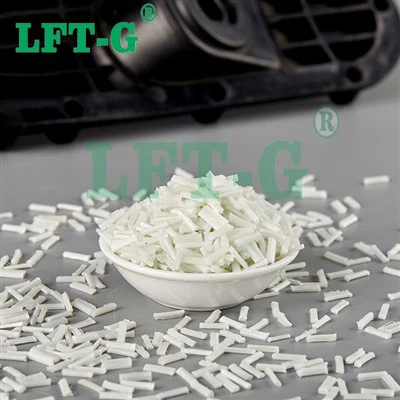
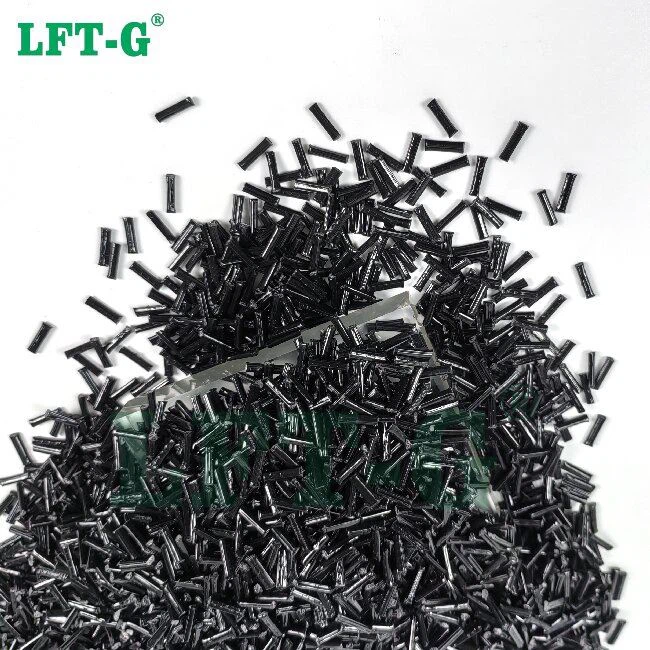
Figure 1: LFT-G® PP-LGF40 Injection Molding Grade Pellets
2. Core Automotive Engineering Properties
- ✓ Impact Energy Absorption: The 3D entangled glass fiber skeleton inside LGF40 PP acts as an energy-absorbing zone, yielding excellent crash safety performance in underbody guards and front-end carriers.
- ✓ High-Vibration Fatigue Resistance: Auto parts are constantly subjected to road vibrations. PP-LGF40 prevents fatigue cracks and structural failure over long lifecycles.
- ✓ Low Warpage & High Dimensional Stability: Long fibers provide isotropic shrinkage, preventing large structural components like instrument panel carriers from warping after molding.
- ✓ Under-Hood Chemical Resistance: Resistant to engine oils, gasoline, coolants, and salt spray, making it highly reliable for chassis and engine compartments.
3. Structural Comparison: PP-LGF40 vs. Automotive Metals & Polyamides
For automotive designers, choosing the correct material depends on an objective analysis of weight, strength, and environmental stability. The table below outlines how LGF40 PP stacks up against metal alloys and traditional conditioned Polyamide (PA6-GF30):
| Engineering Parameter | LFT-G® PP-LGF40 | Cast Aluminum Alloy | PA6-GF30 (Conditioned/Wet) |
|---|---|---|---|
| Density (g/cm³) | 1.20 – 1.21 | 2.70 – 2.85 | 1.35 – 1.38 |
| Tensile Strength (MPa) | 130 – 140 | 180 – 240 | 90 – 105 (Conditioned Decay) |
| Flexural Modulus (MPa) | 8,500 – 9,800 | 70,000 | 5,000 – 6,000 (Conditioned Decay) |
| Impact at Low Temp (-30°C) | Excellent (High Toughness) | Brittle (Low Plasticity) | Moderate |
| Moisture Sensitivity | None (Hydrophobic) | None | Severe (Properties Drop 40%) |
| Relative Cost Index | Low (Very Economical) | High | Medium-High |
Download Complete LFT PP LGF40 Data Sheet PDF →
4. Specific Automotive Parts Molded with LGF40 PP
The excellent mechanical profile of LFT-G® PP-LGF40 makes it suitable for complex, injection-molded automotive modules, including:
- • Front-End Modules (FEM): Serving as the main mounting frame integrating radiator fan, condenser, headlights, and locks, replacing heavy sheet metal.
- • Instrument Panel (IP) Carriers: Providing the structural backing of the dashboard, where it prevents passenger compartment intrusion during head-on crashes.
- • EV Battery Brackets: Offering high rigidity, impact safety, and insulation shielding under and around new energy vehicle battery trays.

Figure 2: Automotive Modules Molded with LFT Long Glass Fiber PP
5. Case Study: Replacing Steel Brackets in Commercial Utility Vehicles
In 2023, a leading automotive supplier sought to replace heavy stamped steel reinforcement plates on a commercial vehicle bumper assembly with a lightweight alternative. The metal brackets added unnecessary weight and were prone to corrosion.
LFT-G® engineers proposed a structural redesign utilizing PP-LGF40 (NG04 Grade). Through finite element analysis (FEA), we optimized the part's rib patterns and wall thicknesses.
The new molded PP-LGF40 bracket achieved a 55% weight saving per bumper assembly. Furthermore, physical testing proved that the new component exceeded the vehicle's low-speed bumper collision requirements, completely eliminating corrosion concerns and reducing overall assembly costs by 22%.

Figure 3: High-Performance Automotive Components Reinforcements
6. Partner with LFT-G®: Auto-Grade Polymer Experts
 Xiamen LFT Composite Plastic Co.,Ltd is a leading ISO 9001 certified developer of Long Fiber Reinforced Thermoplastic (LFT) materials. Our polymer formulations-covering LGF and LCF options on PP, PA, PBT, TPU, PPS, and PPA bases-are designed to meet international automotive OEM standards.
Whether you require support with material selection, custom color matching, mold flow design, or mechanical simulations (FEA), our dedicated engineering team is here to assist you from prototype to volume production.
WhatsApp Quick Quote: +86 13950095707
Hot Tags: lft-g® lgf40-pp lft composite for auto part, China, manufacturers, suppliers, factory, buy, customized