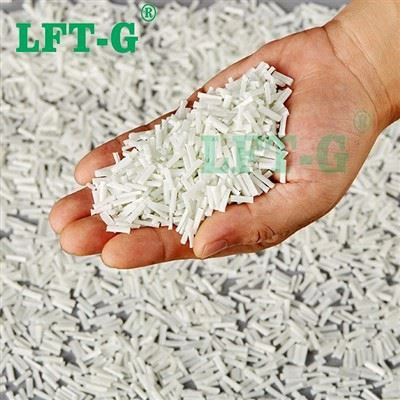
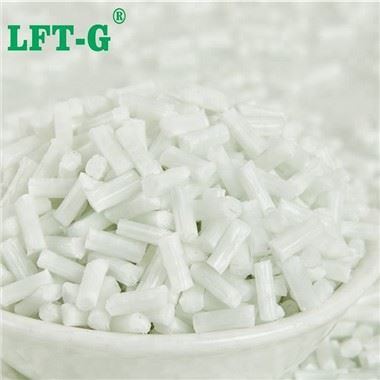
High-Performance 20% Long Glass Fiber Reinforced Homo Polypropylene, is the performance upgrade of PP GF20 short fiber composite
√ Excellent Impact Resistance
√ Superior Low-Temp Toughness
√ Excellent Stiffness & Toughness Balance
LFT-G® PP LGF20-H | The Lightweight Structural Upgrade for PP GF20
LFT-G® 20% Long glass fiber PP (Homo)
LFT-G® PP LGF20-NG02H is the intelligent structural upgrade for designs specifying "PP GF20". While standard short-fiber PP GF20 provides a basic stiffness boost over unfilled PP, it lacks the long-term structural reliability needed for true load-bearing applications. This LFT-G® grade, a 20% long glass fiber (LFRT) reinforced Homopolymer PP, is engineered to solve that problem.
The long fibers create a continuous internal skeleton, providing superior creep resistance (won't sag under load) and dimensional stability. This grade offers the best balance of stiffness-to-weight and processability, making it the ideal, cost-effective choice for large, complex, lightweight structural parts.
√ Superior Creep Resistance: The long glass fiber network provides dimensional stability under load, outperforming SGF PP GF20 in long-term structural applications.
√ Lightweight Rigidity: Offers an excellent stiffness-to-weight ratio, making it ideal for replacing heavier plastics or light-gauge metal brackets.
√ Excellent Processability: The 20% LGF content provides great melt flow for molding large, complex, or thin-walled components with precision.
Typical Material Properties
The following values are typical data for LFT-G® PP LGF20-NG02H (natural homopolymer grade) and are for reference only. Please contact us for the official Technical Data Sheet (TDS).
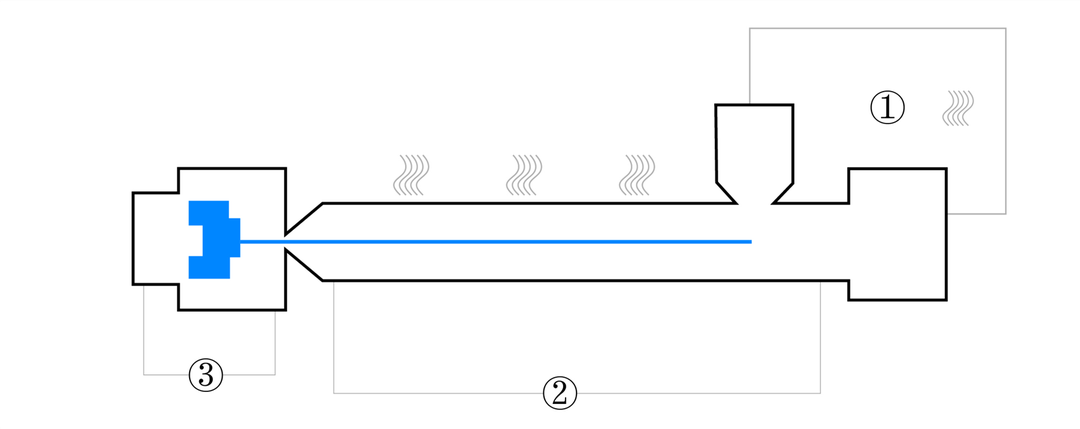
The following values are recommendations. We recommend desiccant / dry air dryers (moisture content below 0.1%).
To minimize fiber breakage and ensure optimal performance, a low-compression, general-purpose screw is highly recommended.
Parameter
Recommendation
Drying Temperature
80 - 100 °C
Drying Time
2 - 4 hours
Melt Temperature (Nozzle ③)
220 - 250 °C
Mold Temperature (Zone ②)
40 - 70 °C
Back Pressure
Low (to minimize fiber damage)
Case Study: Industrial Water Pump Impeller
Challenge
A pump manufacturer was using brass for their impellers. This was heavy, expensive to machine, and corroded with certain types of water. A standard PP GF20 (short fiber) failed because it would "creep" or deform under constant rotational stress and heat, losing pump efficiency.
Solution
LFT-G® PP LGF20-H was selected. The 20% long glass fiber (LFRT) skeleton provided the critical creep resistance to maintain the impeller's precise blade profile at high RPMs and temperatures. The Homopolymer PP base offered high heat resistance (HDT >155°C) and total chemical inertness.
Result
The LFT part was 70% lighter than brass and 45% cheaper to produce (via injection molding). It passed all 5,000-hour durability tests, maintaining dimensional stability and increasing the pump's service life.
Applications for Lightweight Structural LFT-PP
Automotive Fan Shrouds
The ideal material for large fan shrouds. LFT-G® LGF20-H provides the high heat resistance (HDT >155°C) for under-hood use and the stiffness to prevent warping or vibrating, at a much lower weight than standard PP GF20 or PA6.
Furniture Structural Frames
Replaces metal or weak unfilled PP. The long glass fiber skeleton provides excellent creep resistance, ensuring chair bases and armrests can withstand constant user load for years without sagging or breaking.
Water Meter Housings
A cost-effective replacement for brass. LFT-G® LGF20-H offers the long-term dimensional stability and creep resistance to maintain a perfect seal, and is completely immune to corrosion or mineral buildup.
Key Questions Answered
1. Is 20% glass filled polypropylene strong?
A: Yes, it is significantly stronger and stiffer than unfilled polypropylene. However, how it's strong matters. A standard PP GF20 (short fiber) is stiff but brittle. Our LFT-G® PP LGF20 (long fiber) grade is not only stiff but also has superior toughness and creep resistance, making it suitable for true structural parts.
2. What is the difference between homopolymer (Homo) and copolymer (Copo) PP?
A: Homopolymer PP (like this grade) is made from only propylene monomer, giving it higher stiffness and better heat resistance. Copolymer PP includes ethylene, which makes it much tougher and gives it better impact strength, especially at low temperatures. You choose Homopolymer for stiffness at a good price, and Copolymer for durability.
3. What is the disadvantage of glass filled polypropylene?
A: The main disadvantage of standard short-fiber PP GF20 is poor impact strength (brittleness) and low creep resistance (it deforms under constant load). This is precisely why Long Fiber (LFRT) technology was invented. The long fiber network creates a "skeleton" that solves these two problems, transforming PP into a true engineering-grade structural material.
Ready to Engineer the Next Breakthrough?
Elevate your product's performance with the lightweight structural strength of LFT-G® 20% Long glass fiber PP (Homo). Contact our material specialists today to discuss your project or request a material sample.


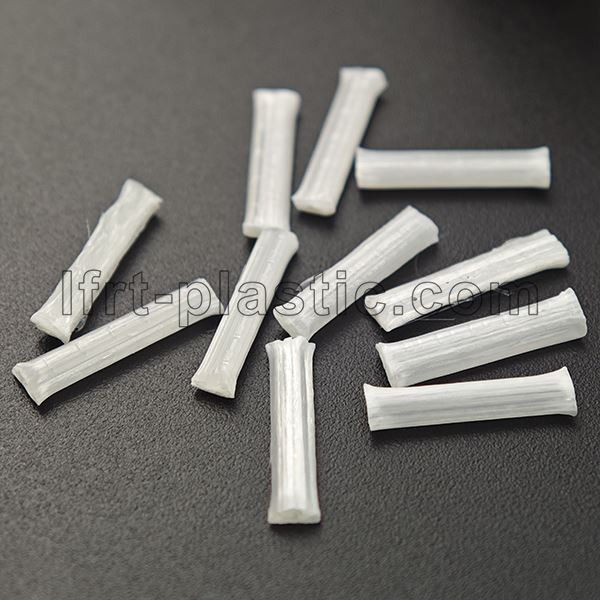
 LFT-G® PP LGF20-NG02H is the intelligent structural upgrade for designs specifying "PP GF20". While standard short-fiber PP GF20 provides a basic stiffness boost over unfilled PP, it lacks the long-term structural reliability needed for true load-bearing applications. This LFT-G® grade, a 20% long glass fiber (LFRT) reinforced Homopolymer PP, is engineered to solve that problem.