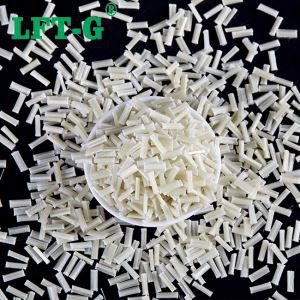


LFT-G® PA66 HLGF40 | High-Performance PA66 GF40 (+20% Strength)
LFT-G® 40% Long glass fiber PA66 (High Performance)
 Standard PA66 GF40 is widely used for high-heat automotive parts. However, in extreme applications-like turbo systems or high-pressure hydraulics-standard grades often operate dangerously close to their failure limits. LFT-G® PA66-HLGF40 provides the critical safety margin you need.
This High Performance (HLGF) grade elevates the standard by optimizing the chemical bond between the 40% Long Glass Fiber skeleton and the PA66 matrix. This results in mechanical properties that are 15-20% higher than our natural grade. It is specifically engineered to resist burst pressure at high temperatures (up to 240°C short term) and eliminate fatigue failure in high-vibration environments.
- √ Enhanced Stiffness (+20%): Flexural modulus exceeds 14,500 MPa, providing metal-like rigidity for parts that must not balloon or warp under pressure.
- √ Extreme Heat Aging Resistance: Maintains structural integrity after thousands of hours of exposure to hot oil or air, outlasting standard PA66 GF40.
- √ Superior Burst Strength: The long fibers bridge weld lines effectively, significantly increasing the pressure capability of injection-molded housings.
Typical Material Properties (High Performance)
The following values are typical data for LFT-G® PA66-HLGF40 (High Performance Grade) and are for reference only. Data is for Dry-As-Molded (DAM) state. Please contact us for the official Technical Data Sheet (TDS).
Mechanical Properties
| Property | Test Method | Value (DAM) |
|---|---|---|
| Tensile Modulus | ISO 527 | 14,000 MPa |
| Tensile Strength | ISO 527 | 235 MPa |
| Tensile Strain at Break | ISO 527 | 2.3 % |
| Flexural Modulus | ISO 178 | 11,800 MPa |
| Notched Izod Impact (23°C) | ISO 180/A | 39 kJ/m² |
| Notched Izod Impact (-30°C) | ISO 180/A | 20 kJ/m² |
Thermal & Physical Properties
| Property | Test Method | Value |
|---|---|---|
| Density | ISO 1183 | 1.47 g/cm³ |
| HDT/A (1.8 MPa) | ISO 75 | 258 °C |
| HDT/C (8.0 MPa) | ISO 75 | 225 °C |
| Melting Temperature | ISO 11357 | ~262 °C |
| Mold Shrinkage (Flow) | ISO 294-4 | 0.2 - 0.4 % |
Processing Information
The following values are recommendations. We recommend desiccant / dry air dryers (moisture content below 0.1%).
To minimize fiber breakage and ensure optimal performance, a low-compression, general-purpose screw is highly recommended.
| Parameter | Recommendation |
|---|---|
| Drying Temperature | 80 - 100 °C |
| Drying Time | 4 - 6 hours |
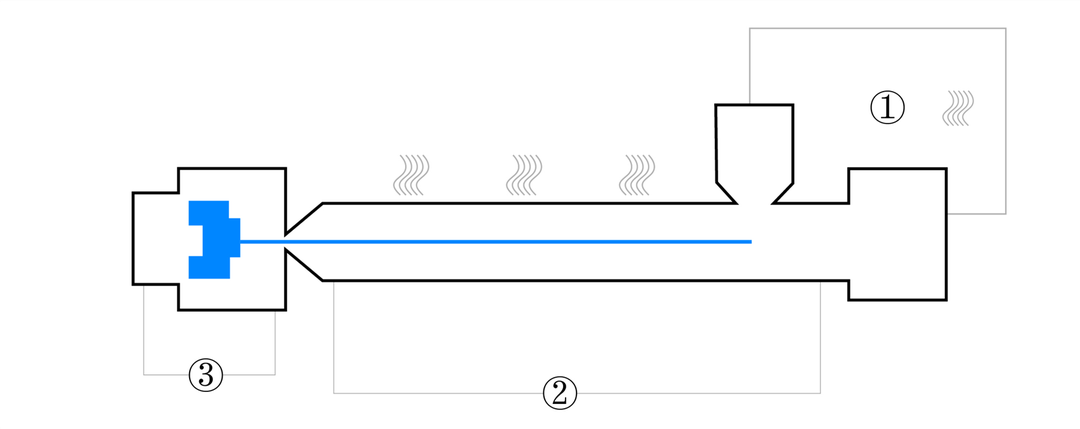
| Melt Temperature (Nozzle ③) | 280 - 300 °C |
| Mold Temperature (Zone ②) | 70 - 110 °C |
| Back Pressure | Low (to minimize fiber damage) |

Hot Tags: pa66 hlgf40 | high-performance pa66 gf40, China, manufacturers, suppliers, factory, buy, customized