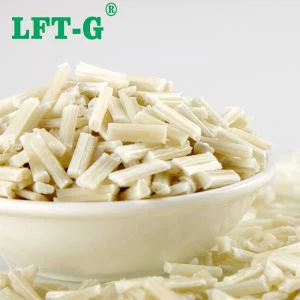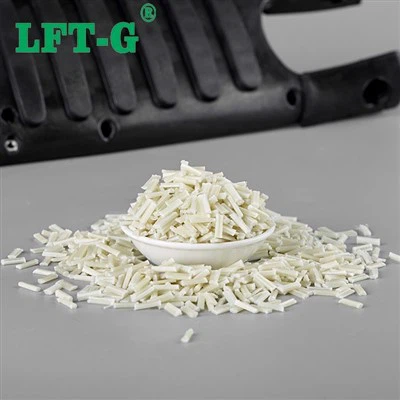

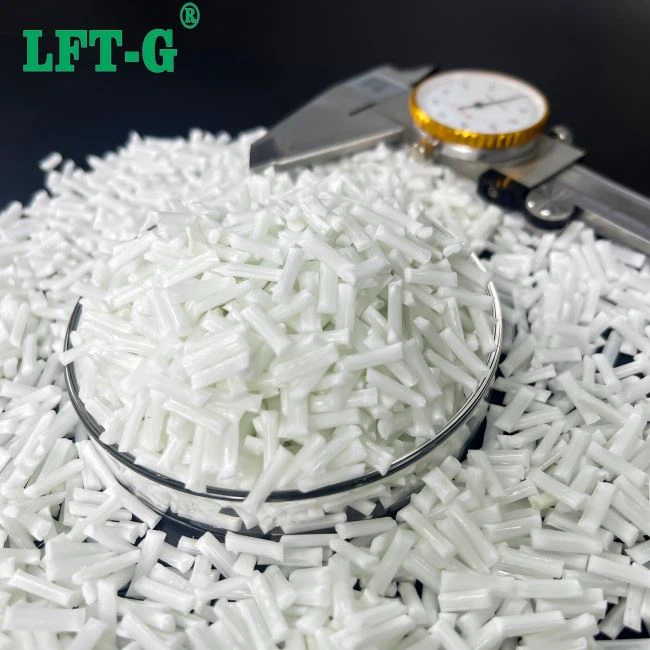
LFT-G® PBT LGF40 | Polybutylene Terephthalate

LFT-G® PBT LGF40 is a premium-grade 40% long glass fiber reinforced polybutylene terephthalate engineering thermoplastic compound, formulated with proprietary long-fiber impregnation technology to deliver unmatched structural performance and long-term reliability that vastly outperforms conventional short-glass-filled PBT grades in harsh, high-demand operating environments. Unlike standard short glass fiber PBT, which relies on fragmented, discontinuous fibers that provide only limited localized reinforcement, the LFT-G® PBT LGF40 formulation fully retains the integrity of continuous long glass fibers, which interlock to form a robust, three-dimensional reinforcement network throughout the PBT matrix.
Performance Comparison
LFT-G® PBT LGF40 vs Standard Short Glass Fiber PBT GF40
Superior Performance
LFT-G® PBT-LGF40
Continuous Fiber & Dimensional Stability: Long fiber network locks PBT matrix, eliminates warpage, maintains structural integrity
Superior Dielectric & Thermal Synergy: Retains PBT's stable insulation, holds performance under high temp & high voltage
Enhanced Chemical & Anti-Creep Performance: Preserves PBT's solvent resistance, resists long-term load and fatigue
Balanced Rigidity-Toughness & Processability: Uniform fiber dispersion balances strength & impact, suits thin-wall precision molding
Standard
PBT-GF40
Discontinuous Fibers & Dimensional Instability: Fragmented fibers cause uneven stress, high shrinkage, and warpage risk
Compromised Electrical-Thermal Performance: Short fibers degrade insulation stability, and poor high-heat reflow adaptability
Limited Environmental Durability: Fiber gaps accelerate chemical erosion, and poor creep resistance under cyclic loads
Unbalanced Performance & Process Limitation: Inherent rigidity-toughness conflict, poor flow for complex thin-wall parts
Core Performance Advantages of LFT-G® PBT LGF40
This performance comparison demonstrates the fundamental superiority of LFT-G® PBT LGF40 over conventional short glass fiber-filled PBT GF40. Where standard short fiber PBT is limited by fragmented reinforcement and inherent performance trade-offs.
LFT-G® PBT LGF40 delivers a balanced, all-round performance upgrade via its continuous 3D fiber network. It retains the core inherent advantages of PBT resin, while solving the key pain points of dimensional instability, high-temperature electrical performance decay, and poor molding adaptability of traditional reinforced PBT.
Overview of LFT-G® PBT LGF40 Production
|
IntroLFT-G® PBT LGF40 (40% Long Glass Fiber-Reinforced PBT) pellets are produced through a streamlined, high-precision process to ensure consistent fiber dispersion and mechanical strength. Here's our core production flow: Step-by-Step Production1. Fiber Roving Prep: Premium fiberglass rovings are unwound and aligned for uniform distribution, critical for maintaining 40% long glass fiber loading in PBT LGF40. 2. Polymer Melting: Virgin PBT resin and performance additives are melted in an extruder to create a homogeneous thermoplastic melt, optimized for fiber bonding. 3. Impregnation (Core Step): Fibers are saturated with molten PBT in an advanced impregnation die, ensuring full coating and a precise 40% fiber-to-resin ratio for PBT LGF40. 4. Pulling & Cooling: The composite strand is pulled to maintain tension, then cooled to solidify the matrix and preserve the 11mm fiber length that defines PBT LGF40 performance. 5. Granulation: The solid strand is cut into 0.5" / 11mm PBT LGF40 pellets, ready for downstream injection molding or extrusion. Core Applications Scenarios
New Energy HV Connector HousingsWidely used in new energy vehicle high-voltage connector housings, high-voltage distribution unit (PDU) insulating brackets, and busbar fixing parts. It maintains stable dielectric insulation under 150℃ long-term high-temperature & high-voltage conditions, with ultra-low molding shrinkage to ensure precise assembly fit, and excellent vibration resistance to adapt to complex vehicle operating environments. High Dielectric Insulation Ultra-Low Warpage Thermal Resistance
SMT Relay & Connector BasesIdeal for surface mount technology (SMT) relay skeletons, automotive electronic connector bases, and pin holders for circuit board components. It withstands 260℃ lead-free reflow soldering without deformation, and the continuous long glass fiber network eliminates post-molding warpage, ensuring accurate solder pin alignment during high-speed automatic mounting and stable long-term electrical performance SMT Reflow Resistance Dimensional Stability High Precision Molding
Automotive Headlight Mounting & Structural ComponentsSpecially designed for engine control unit (ECU) housings, body control module (BCM) shells, and automotive electronic controller mounting brackets. It replaces traditional die-cast aluminum to achieve 35%-45% weight reduction, while maintaining excellent structural rigidity and fatigue resistance in long-term high-temperature & vibration engine compartment environments, with inherent resistance to engine oil and automotive fluids. Lightweight Metal Replacement Vibration Fatigue ResistanceFluid Corrosion Resistance
Industrial Automation Servo Motor Structural PartsWidely applied in industrial automation, servo motor end covers, encoder structural housings, and stepper motor mounting brackets. The long glass fiber reinforcement system delivers exceptional flexural modulus and creep resistance, ensuring no deformation under long-term high-speed operation and continuous load, with outstanding wear resistance and lubricating oil compatibility to extend equipment service life. High Rigidity & Creep Resistance Oil & Wear Resistance Long Term Stability
FAQQ: Does LFT-G® PBT LGF40 have low molding shrinkage for precision parts? A: LFT-G® PBT LGF40 adopts a long glass fiber reinforced structure, featuring extremely low and uniform molding shrinkage. It effectively avoids warpage and deformation after injection molding and keeps consistent dimensional accuracy for long-term mass production of precision plastic parts. Q:Can PBT LGF40 be post-processed after injection molding? A: PBT LGF40 supports common post-processing operations for plastic parts, including conventional drilling, cutting, ultrasonic welding, and hot stamping. Its stable internal fiber structure ensures that the material will not crack or deform during regular post-processing, and can well adapt to the secondary processing and assembly needs of finished parts. Q: Does PBT LGF40 need drying treatment before injection molding? A: PBT LGF40 has good compatibility with common plastic color masterbatches, fully supporting custom color matching according to production and appearance requirements. It can maintain uniform color dispersion during high-speed injection molding, and will not affect the basic processing performance of the material while meeting the appearance and identification needs of finished products. |


 More Than Materials – Your Partner in Advanced ManufacturingTransform your designs with our next‑generation long‑glass‑fiber composites. Collaborate for uncompromised performance. |
Hot Tags: long fiber reinforced pbt, China, manufacturers, suppliers, factory, buy, customized