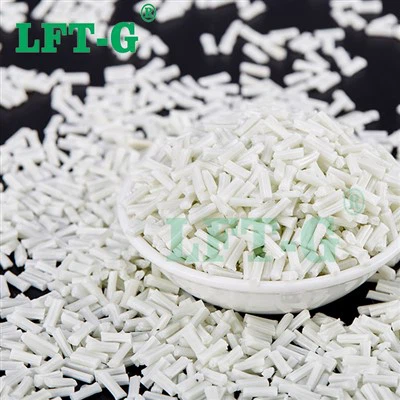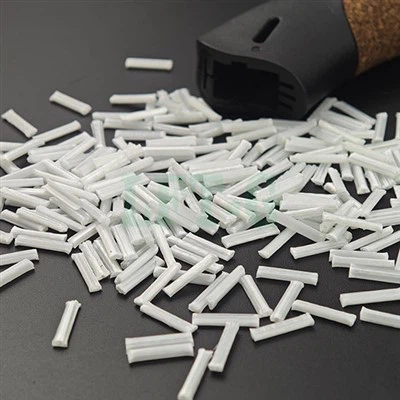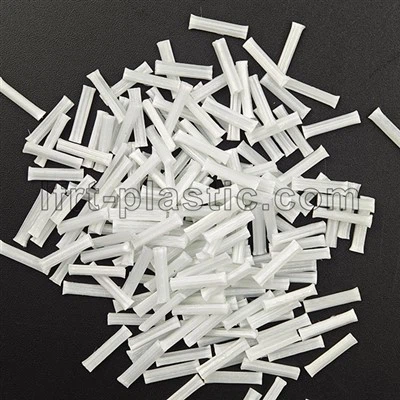


PLA LGF30 | Polylactic Acid Long Glass Fiber Composite

LFT-G® PLA LGF30 is a premium long glass fiber reinforced polylactic acid (PLA) compound, engineered to deliver exceptional stiffness, structural integrity, and environmental sustainability for demanding engineering applications. It bridges the gap between high mechanical performance and eco-friendly material solutions.
Featuring a continuous long-glass-fiber reinforcement system, this material delivers outstanding mechanical strength, excellent dimensional stability, and significantly improved heat resistance compared to unfilled PLA. The 3D long-fiber network forms an interconnected reinforcing architecture within the bio-based PLA matrix, enabling efficient load transfer, minimal warpage, and precision molding for high-value applications. It is an ideal sustainable alternative to petroleum-based engineering plastics.
Core Performance Advantages
-
Bio-Based & Compostable
Derived from renewable plant resources, PLA LGF30 offers a significantly lower carbon footprint compared to conventional plastics. It is industrially compostable under controlled conditions, supporting circular economy initiatives and reducing environmental impact.
-
High Stiffness & Mechanical Strength
The 30% long glass fiber reinforcement dramatically increases tensile strength, flexural modulus, and impact resistance. It delivers structural rigidity comparable to engineering plastics, making it suitable for load-bearing components previously reserved for petroleum-based materials.
-
Excellent Dimensional Stability & Low Warpage
The long-fiber network effectively reduces molding shrinkage and thermal expansion. Parts maintain tight tolerances and exhibit minimal warpage, ensuring precision fit and reliable assembly in complex geometries.
-
Improved Heat Resistance
Compared to standard PLA, the long glass fiber reinforcement significantly elevates the heat deflection temperature, allowing use in warmer environments and expanding the application window for bio-based materials.
-
Eco-Friendly & Sustainable
Combining renewable raw materials with high-performance reinforcement, PLA LGF30 helps manufacturers meet sustainability goals without compromising on mechanical properties or processability.
Performance Benchmark: Long Fiber vs. Short Fiber PLA
30% Glass Reinforced PLA: Long Fiber vs. Short Fiber Comparison
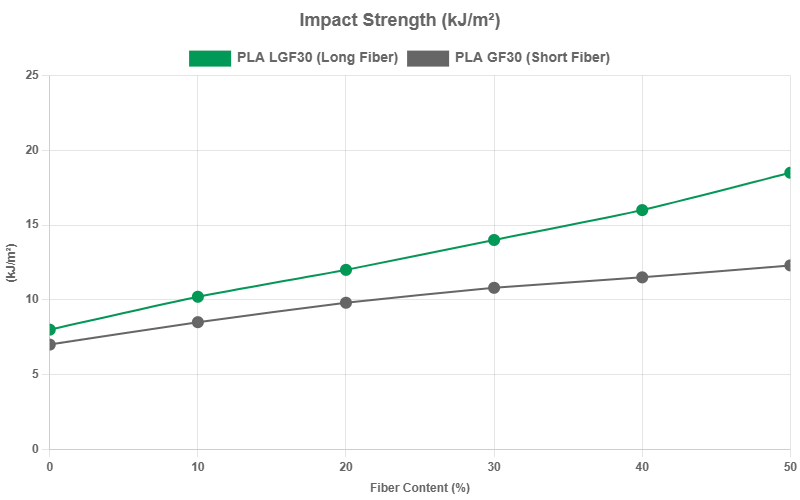
This comparison contrasts LFT‑G® PLA LGF30 (30% long glass‑fiber reinforced polylactic acid) with standard short‑glass PLA GF30. Most notably in impact strength, LFT‑G® PLA LGF30 delivers a 50% performance uplift over short-fiber PLA at 50% fiber loading.
It outperforms short‑fiber PLA across six key metrics: tensile strength, flexural modulus, impact toughness, heat deflection temperature, flexural strength, and dimensional stability.
Injection Molding Guidelines

| Parameter | Recommended Range | Key Notes for LFT-G® PLA LGF30 |
|---|---|---|
| Drying Temperature ① | 80 – 90 °C | Use a desiccant dryer to ensure moisture < 0.10% for optimal mechanicals |
| Drying Time ① | 4 – 6 hours | Thorough drying is critical to prevent hydrolysis-induced property loss |
| Melt Temperature (Nozzle) ③ | 190 – 220 °C | Maintain tight temperature control; avoid residence time > 6 min |
| Mold Temperature ② | 25 – 60 °C | Higher mold temperature improves surface finish and crystallinity |
| Injection Speed | Moderate to Fast | Balance fill speed and fiber integrity; optimize for thin-wall sections |
Critical Processing Tips:
Screw: Low-compression, high-wear-resistant screw design to minimize fiber attrition and shear degradation
Gating: Large-diameter, generously sized gates to reduce fiber breakage and pressure loss at entry points
Regrind: Maximum 10% regrind content; use only high-quality regrind and verify part properties
Typical High-Performance Applications
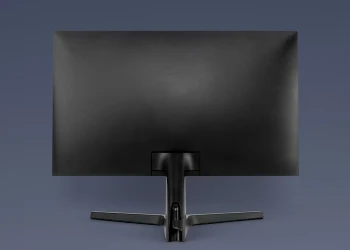
Consumer Electronics & Durable Goods
Ideal for laptop housings, TV back covers, smart speaker enclosures, and printer structural parts. Delivers sufficient rigidity and impact resistance for everyday use, while offering a sustainable, bio-based alternative to conventional plastics without sacrificing performance or aesthetics.
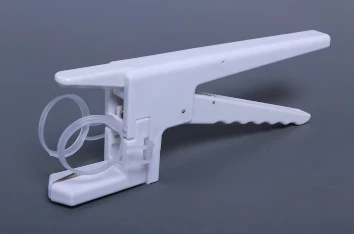
Automotive Interior & Trim Components
Widely used in door panel substrates, console brackets, pillar trims, and climate control components. The long glass fiber reinforcement provides excellent stiffness and heat resistance for interior environments, while the bio-based origin supports OEM sustainability targets and reduces vehicle carbon footprint.
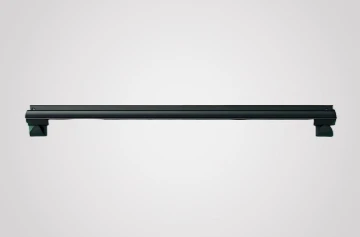
Furniture & Interior Design Components
With a high flexural modulus, minimal shrinkage, and strong creep resistance, PLA LGF30 suits chair frames, table supports, shelf brackets, and decorative structural elements. The material's dimensional precision ensures consistent assembly, while its compostable nature supports eco-friendly furniture design and end-of-life recycling.
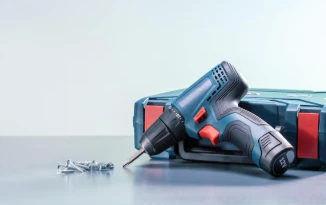
Industrial & Consumer Structural Parts
Suitable for power tool housings, office chair components, sporting goods fittings, and general machinery parts that require a high strength-to-weight ratio and thermal stability. The material's excellent fatigue resistance and long-term creep performance ensure structural integrity under repeated stress and sustained static loads.
Frequently Asked Questions
Q: How does PLA LGF30 compare to standard PLA in terms of heat resistance?
A: Standard PLA has limited heat resistance, with a heat deflection temperature around 55–60°C. The 30% long glass fiber reinforcement in PLA LGF30 significantly elevates the HDT to approximately 100–120°C, greatly expanding the application window for bio-based materials into warmer environments and durable goods.
Q: Does LFT-G® PLA LGF30 require special injection molding equipment?
A: Standard injection molding machines with moderate temperature capability (up to 220°C) are suitable. For optimal fiber retention and surface quality, we recommend a low-compression, wear-resistant screw and generously sized gating to minimize fiber attrition. Mold temperatures of 25–60°C are recommended to achieve optimal crystallinity and surface finish.
Q: Is PLA LGF30 compostable and what are the end-of-life options?
A: Yes. PLA LGF30 is industrially compostable under controlled conditions. It can be recycled in existing PLA recycling streams or composted in industrial facilities. For home composting, performance may vary; please consult local regulations. This makes it an excellent choice for brands seeking sustainable end-of-life solutions.

Hot Tags: pla lgf30 bio-based strength meets industrial performance, China, manufacturers, suppliers, factory, buy, customized