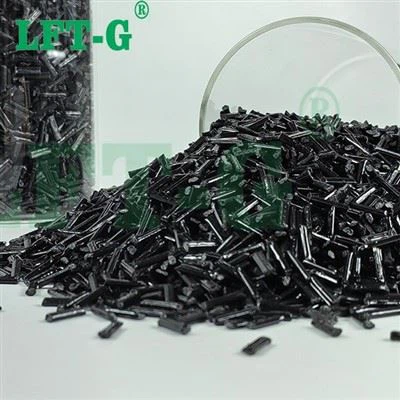


40% Long Glass Fiber PLA Material
What is Long Glass Fiber PLA?
Long glass fiber reinforced Polylactic Acid (LGF PLA) is a high-performance composite material created by combining a PLA polymer matrix with long glass fibers. Unlike short or chopped fibers, which are typically only a few millimeters in length, long glass fibers are intentionally left longer, often measuring 5-25 mm or more, depending on the manufacturing process. This greater length is key to the material's superior properties.
Key Performance Advantage
LGF PLA composite boasts unique comprehensive properties, making it a more advantageous alternative compared to traditional engineering plastics and even lightweight metals.

Outstanding rigidity and strength: Compared with polylactic acid without reinforcing materials, the flexural modulus (an indicator of rigidity) of polylactic acid-reinforced fiber composite materials can be several times higher, and the tensile strength can be several times greater. This enables the manufacture of components that are thinner and lighter than traditional materials while still maintaining their structural integrity.
Excellent impact resistance: These long and interwoven fibers can absorb and disperse impact energy, significantly enhancing the toughness and impact resistance of the material. This makes LGF PLA material suitable for applications that may suffer sudden impacts or heavy blows.
Enhanced heat resistance: The glass transition temperature (Tg) of ordinary polylactic acid (PLA) is higher than 50 °C, while the reinforcing effect of glass fibers can significantly increase the heat distortion temperature (HDT). This means that when this material is subjected to loads, it can withstand higher temperatures before deforming, thus being suitable for automotive and industrial applications.
Outstanding dimensional stability: The high rigidity of the fibers can prevent components from excessively contracting or deforming during cooling, achieving higher dimensional accuracy and smaller tolerance ranges. This is an important advantage for 3D printing and injection molding.
Typical Applications of LGF PLA Material
Automotive Parts: Interior components, brackets, and structural parts that require a good strength-to-weight ratio.
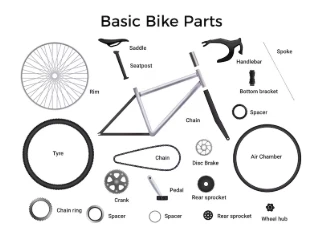
Sports and Leisure Equipment: Bicycle components, sporting equipment, and protective gear.
Consumer Electronics: Housings, frames, and internal components for devices that need to be rigid and durable.
Industrial and Robotics Parts: Grippers, end-of-arm tooling, and other parts for automated machinery.
Manufacturing and Applications
Long glass fiber reinforced polylactic acid compound resin is primarily used in injection molding, but is also available as a filament for 3D printing.
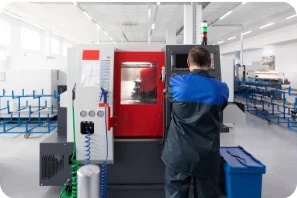
Injection Molding: This is the most common method for mass-producing LGF PLA plastic pellet parts. The material comes in pellet form, where the long fibers are pre-blended with the PLA. The careful design of the mold and injection process is crucial to ensure optimal fiber alignment and maintain fiber length.
3D Printing (GF PLA material): GF PLA (glass fiber) material is a popular choice for creating functional prototypes, jigs, fixtures, and end-use parts. However, the abrasive nature of the glass fibers requires the use of hardened steel, stainless steel, or ruby-tipped nozzles to prevent rapid wear of the nozzle and extruder components. Standard brass nozzles will wear out very quickly.
LGF PLA compound resin represents a step forward in creating more sustainable high-performance materials. By starting with a bio-based polymer like PLA, it offers a more environmentally friendly alternative to traditional petroleum-based composites like glass fiber reinforced nylon or polypropylene. As the demand for eco-conscious manufacturing grows, materials like LGF PLA material are poised to become more widespread, bridging the gap between performance and sustainability.
FAQ
Q: What impact does the content of glass fibers have on the material properties?
A: Increasing the fiber content usually enhances the strength, stiffness, and heat resistance of the material. However, it also makes the material more brittle and more difficult to process. The ideal fiber content is to find a balance between performance improvement and processing difficulty.
Q: What are the performance differences between GF PLA and LGF PLA composite?
A: The difference lies in impact toughness and stiffness. The long fibers in LGF PLA compound resin form a continuous network framework, which can effectively disperse stress. Its impact toughness and bending modulus are much higher than those of GF PLA material. GF PLA composite strengthens the material, while PLA-LGF elevates the material performance to an engineering level.
Q: Can LGF PLA material serve as a "green" alternative to carbon fiber nylon?
A: OK. Although carbon fiber nylon typically has a higher specific strength, the advantage of LGF PLA plastic pellet lies in its bio-based (PLA) nature, which is more sustainable.
Hot Tags: glass fiber pla material, China, manufacturers, suppliers, factory, buy, customized