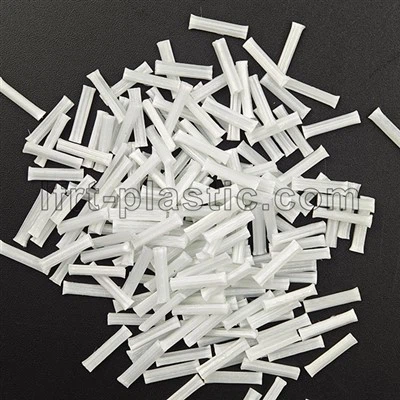


In the context of the continuous development of materials engineering towards lightweighting, high strength and sustainability, traditional biobased plastics have been unable to meet the performance requirements for structural applications. LGF40 PLA (40% Long Glass Fiber Reinforced PLA), as a long glass fiber reinforced polylactic acid composite material, has achieved a performance leap from an "environmental-friendly material" to an "engineering structural material" through structural reinforcement technology.
What is LGF40 PLA?
LGF40 PLA is an enhanced composite material formed by uniformly embedding long glass fibers into the resin matrix through a continuous impregnation and pulling segmentation process. Unlike short-fiber reinforced materials, the long glass fibers in the product maintain a longer effective length (typically 5–25mm), forming a three-dimensional reinforcement network structure.
This structure not only enhances the efficiency of stress transmission, but also effectively inhibits crack propagation and structural deformation, enabling the material to possess superior strength and durability under the bearing condition.
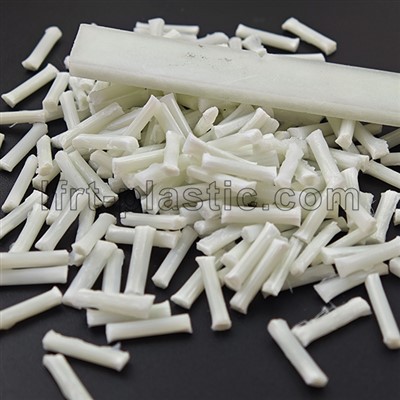
At the microstructure level, the LGF40 PLA plastic pellet exhibits a "resin-coated long fiber bundle" framework. During the processing, the fibers are not randomly distributed but form a certain orientation in the flow direction, thereby enhancing the axial strength and bending modulus.
The enhancement mechanism is mainly reflected in the following aspects:
- Stress dispersion mechanism: The long fibers bear the main load, reducing the stress concentration in the resin matrix.
- Crack arrest mechanism: The fibers bridge the cracks, delaying the fracture propagation.
- Anti-rheological structure support: The fiber network restricts the slip of molecular chains.
- Thermal stability enhancement effect: The glass fibers reduce the thermal expansion coefficient of the material.
What are the advantages of LGF40 PLA?
LGF40 PLA (40% long glass fiber reinforced polylactic acid) is not a simple modification by simply filling with ordinary PLA. Instead, it constructs an internal continuous reinforcing framework through long glass fibers, thereby significantly enhancing the overall performance of the material in terms of mechanical strength, heat resistance, dimensional stability, long-term reliability, and sustainability. Its advantages are manifested in multiple aspects such as mechanical strength, heat resistance, dimensional stability, long-term reliability, and sustainability.
High strength and high rigidity
The long glass fibers form a three-dimensional support network within the material, significantly enhancing the material's load-bearing capacity. Compared with ordinary PLA, its tensile strength and bending strength have been greatly improved.
Excellent heat resistance
After being reinforced with long fibers and optimized with crystalline structure, the heat distortion temperature of LGF40 PLA can be increased to above 100°C.
Low creep and dimensional stability
The long glass fiber structure effectively restricts the sliding of polymer molecular chains, significantly reducing the creep deformation under long-term loading. The linear thermal expansion coefficient of the material is reduced, and the shrinkage rate is stable.
Impact resistance
Compared with the short-fiber reinforced system, the long fibers can absorb more fracture energy under impact loads. The fiber bridging effect can delay crack propagation and reduce the risk of instantaneous failure.
Light weighting
The density of LGF40 PLA is significantly lower than that of metal materials. Its high modulus property supports the design of thin walls, enabling the reduction of material usage while maintaining strength, thus achieving structural weight reduction.
Fatigue resistance
The long fiber reinforced structure disperses cyclic load stress, reducing the formation of microcracks. The material exhibits higher durability and structural stability under repeated stress conditions.
Discoverable manufacturable products
LGF40 PLA, as a long glass fiber reinforced polylactic acid composite material, not only possesses engineering-level strength and heat resistance, but also retains the properties of a bio-based material. Therefore, its application scenarios are typically concentrated in product systems that require "structural strength + lightweight + sustainable attributes".
Silicon carbide equipment

Supporting framework
Strengthening rib structure component
Internal load-bearing framework
Modular assembly support frame
The long fiber reinforced structure enables the material to have a high bending modulus and excellent creep resistance.
Silicon carbide equipment

Equipment housing
Control module housing
Function protection cover
Structure Panel
The materials used for production need to take into account strength, stability and a certain degree of heat resistance. Its low shrinkage rate and high rigidity help to improve assembly accuracy.
Silicon carbide equipment

Internal support frame
Structural fastener
Load-bearing outer frame
Within the electronic structure, components typically require: maintaining stable dimensions, having a certain heat resistance capacity, and possessing high structural strength.
Silicon carbide equipment

Functional prototype component
Structural verification document
Small-batch load-bearing part.
The enhanced system increases the strength of the printed pieces, enabling them to be used beyond just for display models.
The Significance of the LGF40 PLA Appearance
When a product requires both structural strength and durability, while also aiming to reflect the value of green materials, LGF40 PLA (40% long glass fiber reinforced polylactic acid) plastic pellet offers a clear and mature material path. It represents the technological achievement of extending bio-based composite materials to structural-level applications, and also provides a more forward-looking option for the development of high-performance lightweight products.
Everything You Need to Know
Is LGF PLA suitable for long-term use in high-temperature environments?
The heat distortion temperature can reach 120°C or above. However, for continuous high-temperature environments, it is still necessary to conduct tests and confirm based on the actual operating temperature and load conditions.
Is an increased proportion always better?
Increasing the content of glass fibers can enhance rigidity and heat resistance, but it will reduce fluidity and increase processing difficulty. A balance needs to be struck between performance and molding.
Where does LGF PLA have an advantage over SGF PLA?
The fibers of short-fiber materials have limited length and low stress transfer efficiency. LGF PLA composite maintains a longer fiber structure, which is more stable in terms of impact performance, fatigue resistance and creep resistance, and has more balanced overall mechanical properties.
How to maintain the length of long fibers during the injection molding process?
The screw shear rate should be controlled, the back pressure should be reduced, and the flow channel design should be optimized to minimize fiber breakage and ensure the final mechanical properties.
Hot Tags: lgf40 pla composite, China, manufacturers, suppliers, factory, buy, customized