


Light Weight Material LCF30 PPS
High-performance Structural Materials For Extreme nvironments
LCF30 PPS is a new generation of structural composite material developed by combining high-performance PPS resin with 30% long carbon fiber reinforcement technology.
It is aimed at traditional engineering plastics in:
Strength decreases under high-temperature conditions.
Creep occurs under long-term loading
Precise structural dimensions are unstable.
Optimize issues such as excessive weight of the metal materials.
Through a continuous reinforcing network formed by long carbon fibers, LCF30 PPS can maintain the processing advantages of plastics while achieving structural properties close to those of metal materials, providing a more lightweight material option for the high-end manufacturing field.

Why is the LCF30 PPS Different?
Long Carbon Fiber Network Technology
From "Particle Reinforcement" to "Structural Reinforcement"
Traditional reinforced plastics mainly rely on the dispersion of short fibers for reinforcement.
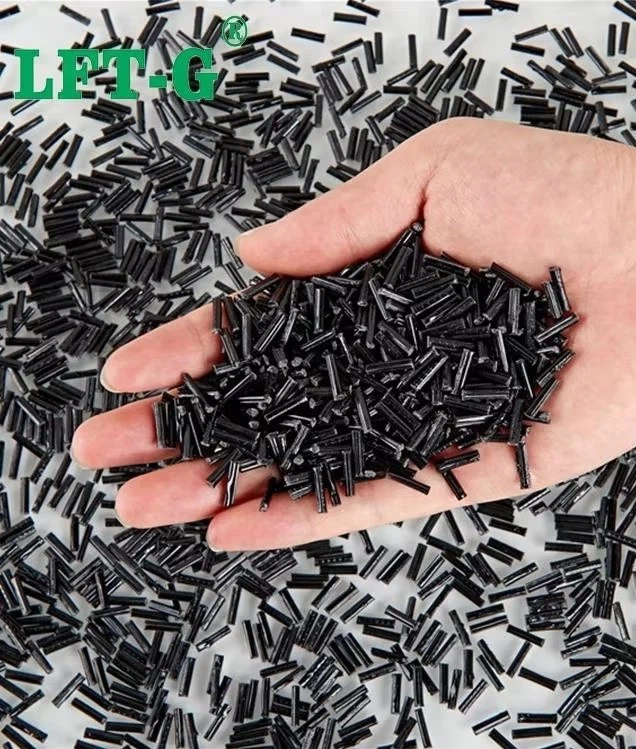
The LCF30 PPS adopts the long carbon fiber reinforcement technology, which enables the fibers to maintain a longer length within the material and form a continuous load-bearing network.
The improvements brought about:
Higher load transmission efficiency
Stronger shock resistance
Better fatigue life
More stable long-term performance
Core Difference:
Textile fibers:
Fiber reinforcement works locally
Long carbon fiber material:
Fiber network supports the whole structure
PPS Matrix + Carbon Fiber Dual Performance System
The LCF30 PPS does not merely increase strength; instead, it achieves:
Balancing heat resistance, structural performance and chemical stability.
PPS provides:
✔ High temperature stability
✔ Flame retardant property
✔ Resistance to chemical corrosion
✔ Low water absorption rate
Long carbon fibers provide:
✔ High rigidity
✔ High strength
✔ Anti-fatigue
✔ Dimensional stability
Formation:
A lightweight material system designed for demanding structural applications.
Metal Replacement Design Concept
The traditional metal components face the following issues:
High weight
Long processing cycle
Corrosion risk
Structural design limitations
The LCF30 PPS overcomes:
High strength-to-weight ratio
Injection molding Integrated design
Helping the product to be realized:
Weight reduction
Reducing manufacturing complexity
Enhancing design freedom

Why Choose LCF30 PPS? (Customer Pain Points)
Ordinary engineering plastics are unable to meet the requirements of high load.
The LCF30 PPS is reinforced with long carbon fibers, enhancing its load-bearing capacity and enabling plastics to be applied in structural fields.
The high-temperature environment leads to the degradation of material properties.
The PPS matrix possesses excellent heat resistance and can maintain stability even under long-term high-temperature usage conditions.
Metal substitution requires that both strength and weight be simultaneously met.
LCF30 PPS offers:
Lower density
High strength-to-weight ratio
More flexible manufacturing method
LCF30 PPS: Typical Applications
Automotive & EV Lightweight Structures
Battery structural components
Motor housing components
Thermal management parts
High-voltage electrical supports
Electrical & Electronics Precision Components
Connectors
Insulating brackets
Sensor housings
Coil components
Industrial Equipment
Pump components
Valve parts
Mechanical supports
Wear-resistant components

Common Problem
Why choose LCF30 PPS instead of metal materials?
LCF30 PPS provides a lightweight alternative to some metal components while maintaining high structural performance.
Can LCF30 PPS be used in high-temperature environments?
Yes. Thanks to the excellent thermal stability of PPS, LCF30 PPS can maintain reliable performance in high-temperature applications, making it suitable for automotive, electrical, industrial, and other demanding environments.
What processing method is recommended for LCF30 PPS?
LCF30 PPS is mainly processed by injection molding. Proper control of processing temperature, mold design, and injection parameters helps maintain fiber integrity and achieve optimal mechanical performance.
What is the difference between LCF30 PPS and SCF PPS?
The key difference is the fiber length and reinforcement structure.
Long carbon fibers create a continuous reinforcement network inside the material, providing better load transfer, higher impact resistance, improved fatigue performance, and greater long-term stability compared with short carbon fiber PPS.
The LCF30 PPS does not merely represent "enhanced PPS", but rather embodies a material solution that aligns with future manufacturing trends: Higher Performance + Lightweight Design + Long-Term Reliability.
It helps engineers break through the limitations of traditional plastic properties and achieve an upgrade from ordinary plastics to high-performance structural materials. LFT-G® is dedicated to manufacturing this type of material. We welcome your sharing!
Hot Tags: light weight material lcf30 pps, China, manufacturers, suppliers, factory, buy, customized


