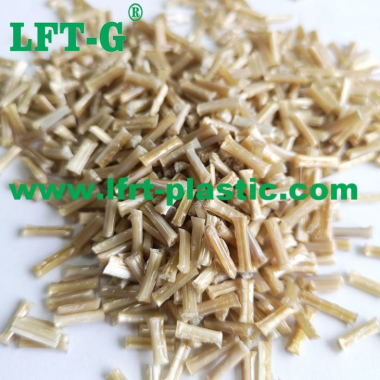

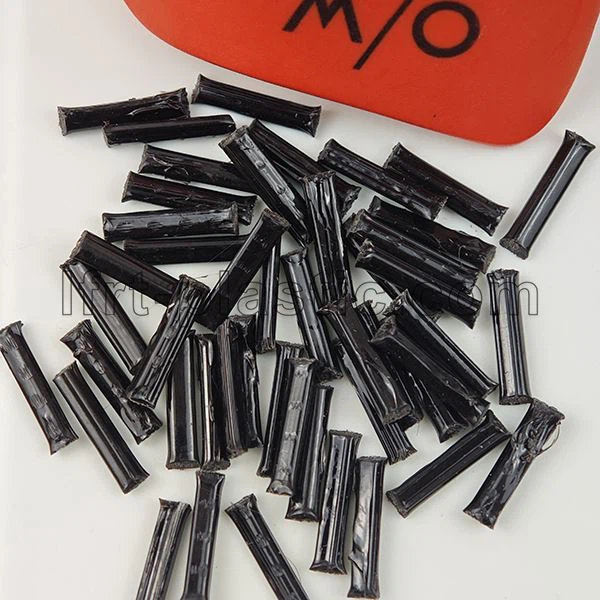
Long Carbon Fiber PPS Composite
In the pursuit of ultimate performance in industrial manufacturing, engineers often face a dilemma: using metals means greater weight, higher processing costs and susceptibility to corrosion; while using top-grade plastics like PEEK means high costs.
The emergence of LCF PPS (long carbon fiber reinforced polyphenylene sulfide) composite has perfectly filled this market gap. Not only does it inherit the original excellent high-temperature resistance and chemical resistance of PPS resin, but also through the reinforcing effect of the long carbon fiber framework, it endows the material with rigidity and strength comparable to those of metals.
Four Core Advantages: Beyond Traditional Materials
Light weighting
Challenges addressed: Solves the concerns of both new energy vehicles (EVs) and aerospace regarding range.
Performance: The weight of LCF PPS is lighter than that of aluminum alloy.
Customer benefits: While maintaining the same structural strength, the weight reduction of components can be much greater. This is crucial for reducing system energy consumption and improving dynamic response speed.
Mechanical strength of "plastic replacing steel"
Challenges addressed: Addressed the issues of short fiber plastic's susceptibility to creep under high loads and poor impact resistance.
Performance:
Creep resistance: Long carbon fibers form a "three-dimensional skeleton network" in the matrix, significantly enhancing dimensional stability at high temperatures. Even under 150℃+ long-term loading, it does not deform easily.
High specific strength: The tensile strength can typically reach over 180 MPA, and the bending modulus can reach 20-30 GPA, which is sufficient to replace die-cast aluminum, magnesium alloys, and some stainless steel components.
Natural EMI electromagnetic shielding
Problem-solving: Signal interference issues of electronic devices in complex electromagnetic environments.
Performance: Thanks to the high conductivity of carbon fiber, LCF PPS can provide electromagnetic shielding effectiveness without the need to add expensive conductive coatings or fillers. Customer benefits: Eliminates the need for metal inserts or secondary spraying of conductive paint, significantly reducing processing costs. It is an ideal material for millimeter wave radar brackets and electronic control unit housings.
Outstanding chemical resistance and hydrolytic stability
Challenges addressed: Solves the problem of high water absorption of nylon (PA), which leads to size expansion and performance degradation.
Performance: The PPS resin inherently has the characteristic of "low solubility in known solvents". When combined with long carbon fibers, the water absorption rate is extremely low. Customer benefits: In harsh conditions involving ethylene glycol coolant, fuel, and strong acids and bases, LCF PPS material can still maintain precise tolerances and is the preferred choice for wet conditions.
Where does LCF PPS Shine the Most?
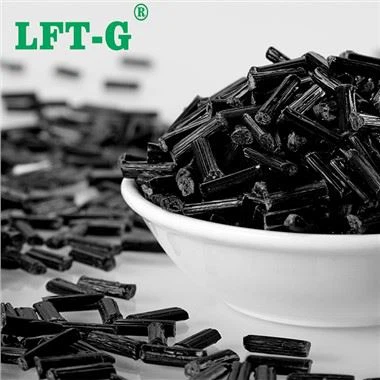
New Energy Vehicles (EV) - Innovators of Thermal Management Systems
Application Components: Electronic Water Pump Impeller, Thermal Management Module Housing, Battery Pack Cooling System Connector.
Alternative Solutions: Replace PPS-GF40 (short glass fiber) or Cast Aluminum.
Aerospace - Fasteners and Supports
Application Components: Internal structure supports for aircraft, fairing clips, drone arms.
Alternative Solution: Replace with aluminum alloy.
Industrial Equipment (Industrial) -- High-end Pumps, Valves, and Wear Parts
Application Components: Chemical pump impellers, sliding bearings, textile machine transmission gears.
Alternative Solutions: Replace with PEEK or stainless steel.
How to perform injection molding of LCF PPS Material?
As a long-fiber material, the core of processing lies in "preserving the fiber length" to ensure the performance of the final product.
Screw selection: It is recommended to use a screw with a low compression ratio and avoid using high shear elements to reduce fiber breakage.
Gate design: Appropriately enlarge the gate size to avoid fiber accumulation and blockage or severe breakage due to an overly small gate.
Mold temperature: LCF PPS compound resin is a semi-crystalline material, and it is recommended to control the mold temperature at a higher level. High-temperature molds can increase crystallinity, thereby achieving the best surface finish and heat resistance (HDT).
Back pressure control: Prevent excessive shear degradation of the material.
The emergence of LCF PPS compound resin was not aimed at engaging in low-price competition in the general engineering plastic market, but rather to address the challenging engineering problems such as "metal being too heavy, PEEK being too expensive, and nylon being unsuitable for hydrolysis". It represents a more intelligent material selection strategy - finding the optimal balance among light weighting, high strength, corrosion resistance and cost control.
FAQ
Q: What are the core advantages of LCF PPS compared to SCF materials?
A: The key lies in the "long fiber framework effect". Long carbon fibers form a three-dimensional network within the component. Compared to short fibers, their impact resistance strength is enhanced by several times, their anti-rheological performance is significantly improved, and they perform better in high-temperature fatigue tests. They are suitable for structural components that are subjected to long-term stress.
Q: How to effectively reduce fiber breakage when injecting LCF PPS?
A: Protecting the fibers is the core of the process. It is recommended to adopt the following measures: 1. Use a low compression ratio screw; 2. Employ a large-sized gate; 3. Set a low back pressure and a low rotational speed.
Q: In comparison to PEEK material, where does the cost-effectiveness of LCF PPS lie?
A: The LCF PPS plastic pellet has similar mechanical properties to PEEK, but its cost is lower than that of PEEK. In working conditions where a high level of wear resistance and corrosion resistance is required (such as in chemical pumps and electronic water pumps), it is currently the most cost-effective alternative solution.
Hot Tags: carbon fiber pps composite, China, manufacturers, suppliers, factory, buy, customized